Focaccia Recipe
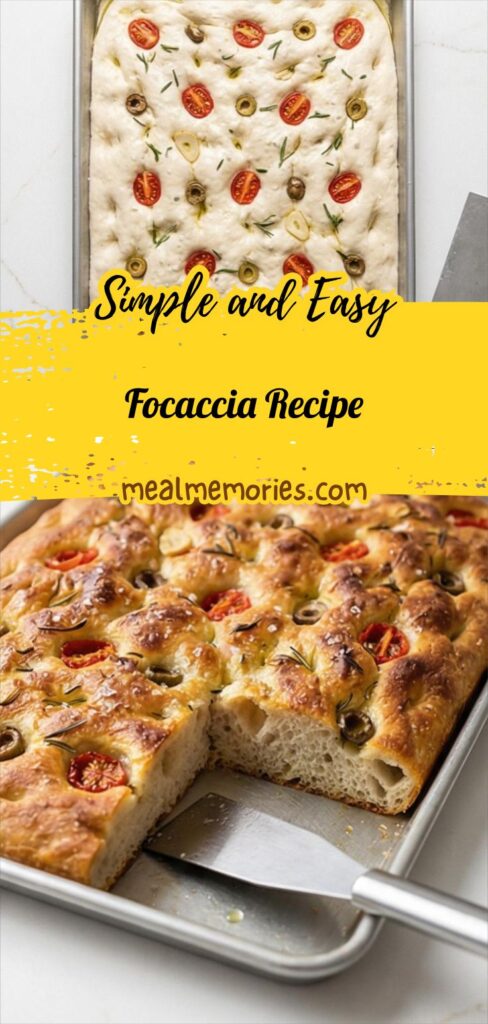
Make Focaccia Recipe today: bake a crisp-edged, olive oil-forward focaccia perfect for dipping or sandwiches.
Ingredients
- 375 g warm water (about 1 1/2 cups plus 1 tablespoon), at 100–110°F (38–43°C)
- 2 1/4 teaspoons instant or active dry yeast (1 standard 7 g packet)
- 1 teaspoon granulated sugar (4 g)
- 500 g bread flour (about 4 cups), at room temperature
- 10 g fine sea salt (about 1 3/4 teaspoons)
- 3 tablespoons extra-virgin olive oil (40 g), at room temperature, for the dough
- 1 tablespoon extra-virgin olive oil (13 g), for lightly greasing the mixing bowl
- 2 tablespoons extra-virgin olive oil (26 g), for oiling the baking pan
- 2 tablespoons extra-virgin olive oil (26 g), for drizzling on top before baking
- 1 1/2 tablespoons fresh rosemary leaves, finely chopped (or 2 teaspoons dried rosemary)
- 1 1/2 teaspoons flaky sea salt (such as Maldon) or coarse sea salt, for topping
- Optional: 12–16 cherry or grape tomatoes, halved
- Optional: 8–10 pitted olives, drained and halved
- Optional: 2 garlic cloves, very thinly sliced
- Optional: Freshly ground black pepper, for serving
Instructions
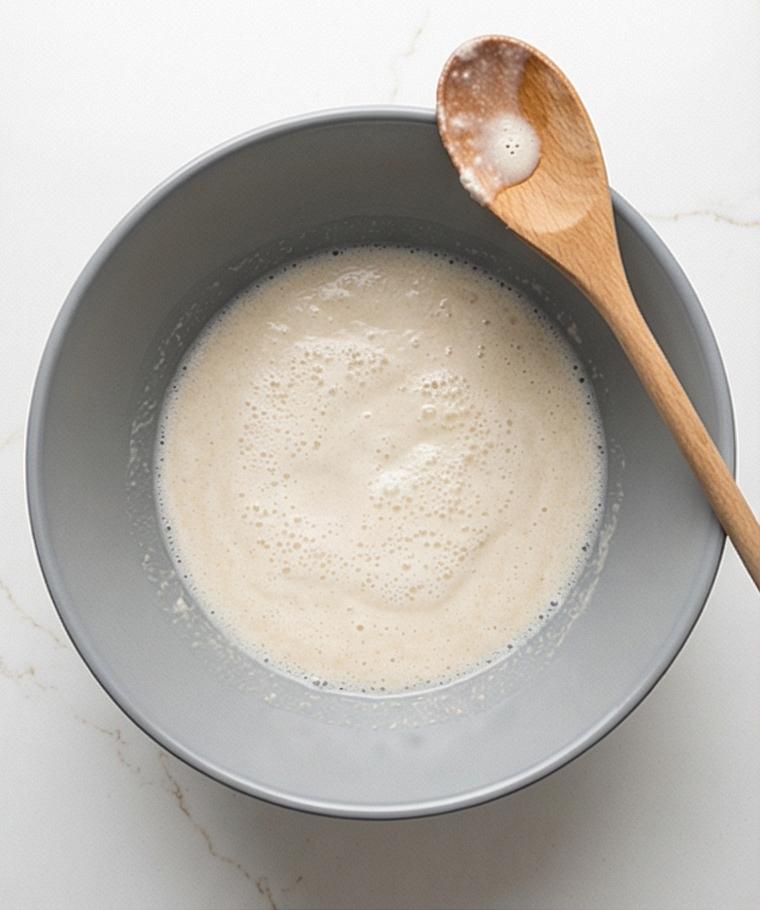
Step 1: Bloom the yeast
In a large matte grey ceramic mixing bowl combine the warm water, instant yeast, and a pinch of sugar; stir gently until the yeast dissolves and leave it undisturbed for 5–10 minutes so the surface becomes foamy and slightly creamy — that airy foam is your visual cue that the yeast is active and alive. Give a warm, everyday voice description of the foam texture, the tiny bubbles sitting on a slightly glossy liquid, and leave the vessel resting on the engineered Calacatta-like quartz surface, with a small glass measuring cup of extra olive oil and a tiny ramekin of sugar neatly nearby.
Step 2: Combine and whisk dry ingredients
In a separate white ceramic bowl whisk the bread flour and fine sea salt together until evenly blended and light in color; note the fine powdery texture, soft flour dust motes pooling slightly in the bowl’s corners, and the contrast of the matte grey mixing bowl and the white flour bowl against the bright marble-inspired surface.
Step 3: Bring the dough together
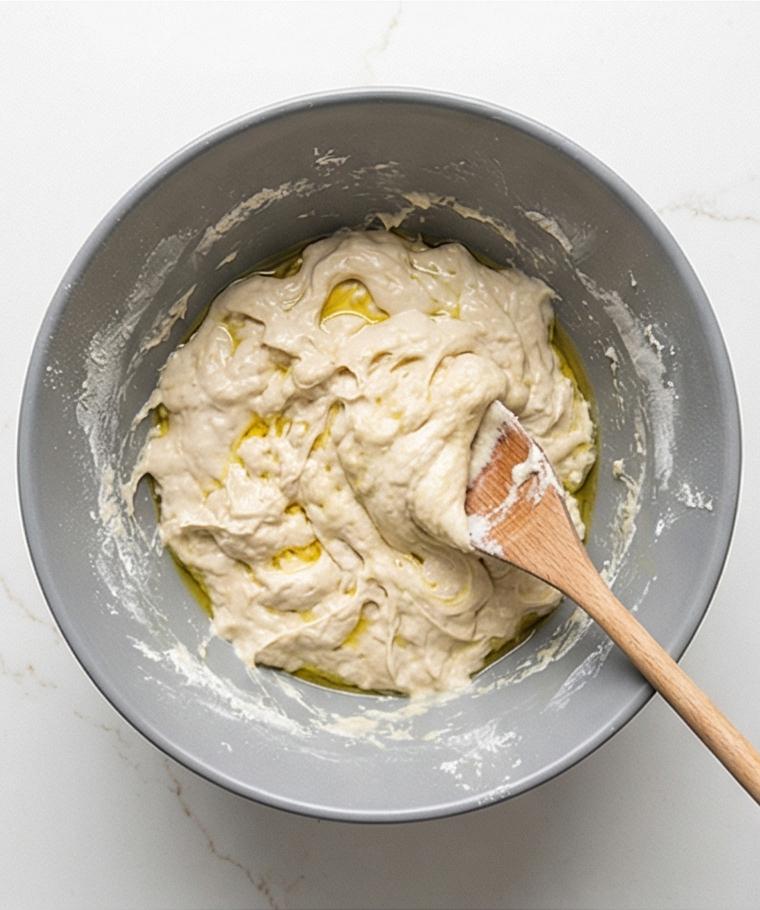
Pour the flour mixture into the foamy yeast bowl with three tablespoons of extra-virgin olive oil and stir with a sturdy wooden spoon until a shaggy, sticky mass forms and no dry patches remain — describe the sticky ribbons of dough clinging to the spoon, the rough torn edges of the shaggy dough, and the glossy sheen of olive oil working into the flour.
Step 4: Gentle stretch-and-fold knead
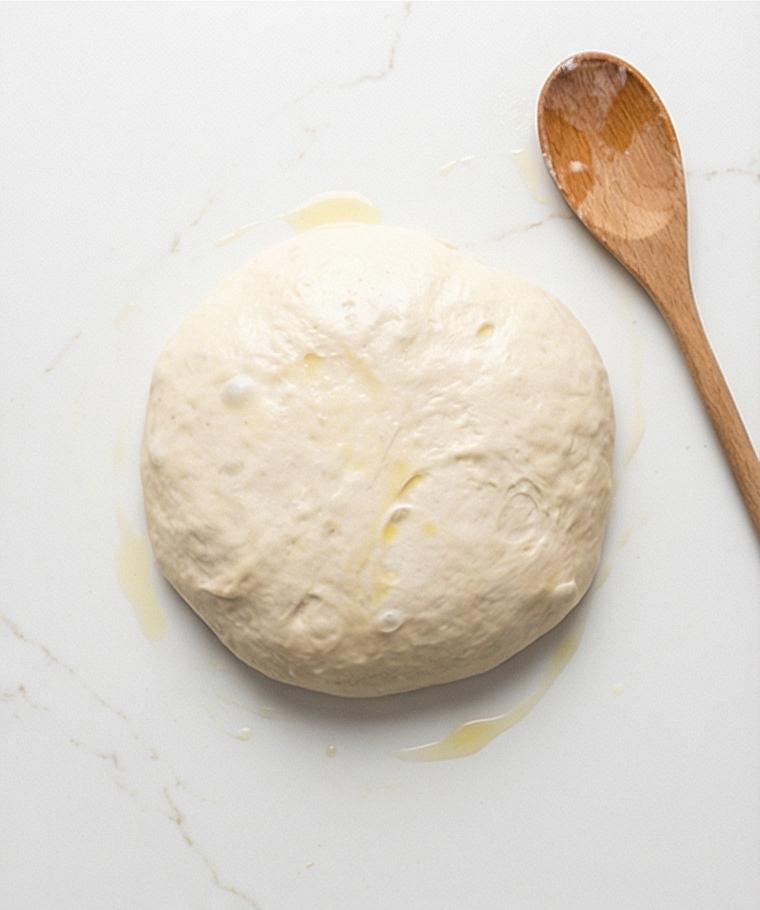
Turn the sticky dough onto the same lightly oiled quartz surface and with well-oiled hands perform gentle stretch-and-folds for 3–4 minutes; the dough should transform from rough and patchy to noticeably smoother and slightly elastic, showing small air bubbles beneath the surface and a tender, tacky skin that springs slowly when prodded.
Step 5: First rise in an oiled bowl
Lightly oil the large matte grey mixing bowl, shape the dough into a rough ball, place it seam-side down and turn once to coat; cover and let it rest in the bowl so it can become puffy and jiggle when the bowl is shifted — describe the dough’s surface smoothing out and the bowl’s interior dotted with a thin film of olive oil that keeps the skin supple.
Step 6: Dough doubled and ready
After about 60–90 minutes the dough should have doubled; describe the puffy, pillowy dome inside the matte grey bowl, the soft tensile bulges and faint shine where the dough has stretched against the bowl, and the light indentation left when you gently press a fingertip into the dough’s surface.
Step 7: Oil the pan and transfer
Generously oil a rectangular 9x13-inch metal baking pan with extra-virgin olive oil, scrape the dough from the bowl onto the pan, and with oiled hands gently press and coax the dough toward the corners; emphasize the way the dough clings and relaxes as you ease it into a mostly filled rectangle, and the oily sheen that prevents sticking while promising a crisp edge.
Step 8: Second rise while preheating the oven
Cover the oiled pan loosely and let the dough rise again until very puffy — about 30–45 minutes — while you preheat the oven; describe the dough gaining height, the surface becoming pillowy and slightly domed, and the pan’s corners gently rounded with a doughy wall beginning to form.
Step 9: Dimple, top, and season
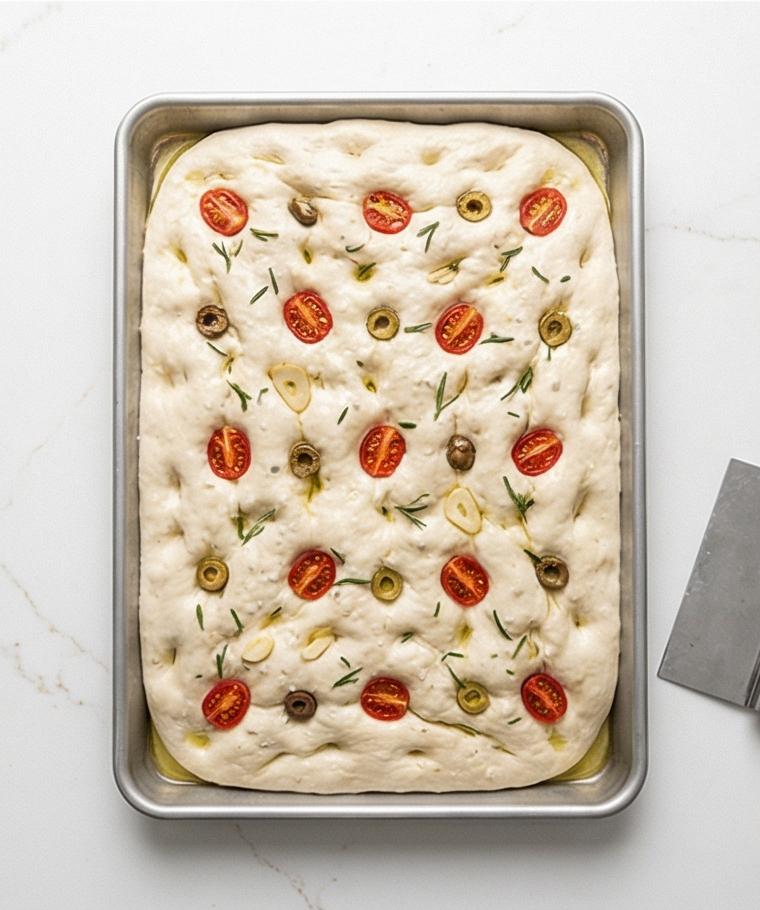
Uncover, drizzle two tablespoons of olive oil evenly across the surface, and use well-oiled fingertips to make deep, evenly spaced dimples that reach the pan; scatter finely chopped fresh rosemary, nestle optional halved cherry tomatoes, olives, and thin garlic slices into some dimples, and finish with flaky sea salt so the top glistens with oil and studded aromatics — this is the last raw, arranged state before baking.
Step 10: Bake, rest, finish, and serve
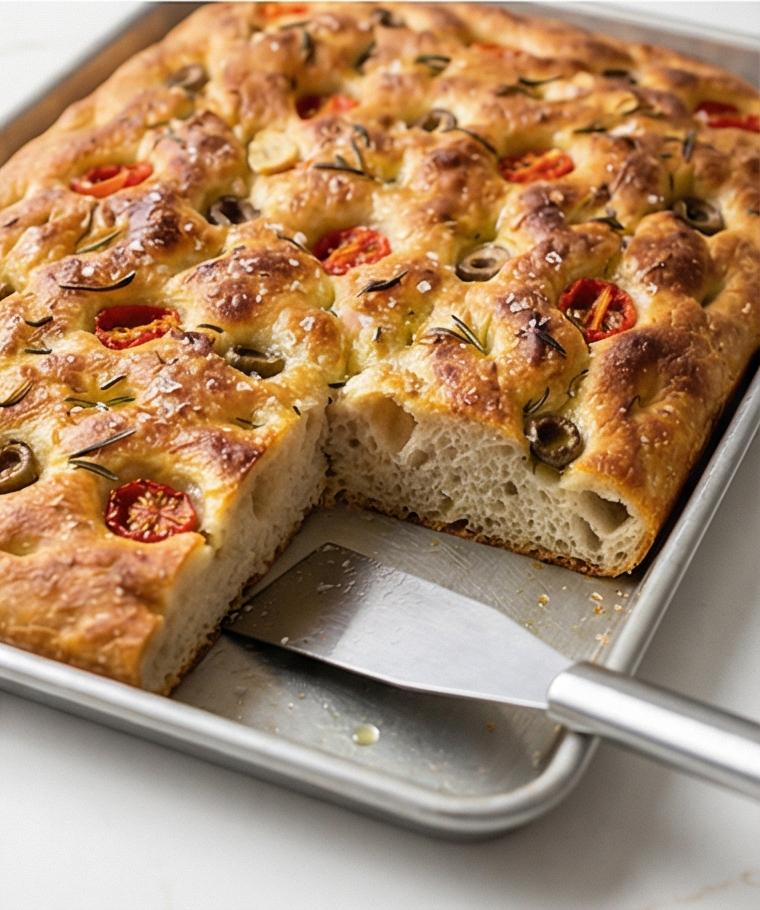
Bake until deep golden brown and crisp at the edges, then cool briefly in the same rectangular metal pan so the crumb sets; finish with an optional extra drizzle of olive oil and freshly ground black pepper, loosen the edges with a spatula and lift out rectangular pieces to serve warm or room temperature — describe the hot crust’s crackled sheen, the tender open crumb beneath, and the retained rectangular geometry of the pan that frames the finished focaccia.
Notes
- Use a kitchen scale for consistent results.
- If dough seems too sticky, let it rest 5 minutes and continue gentle folds.
- For deeper flavor, refrigerate the dough after the first rise for up to 24 hours.
- Be generous with olive oil in the pan to ensure crisp edges.
- Warm focaccia briefly before serving to revive crust and aroma.