Sangria Recipe
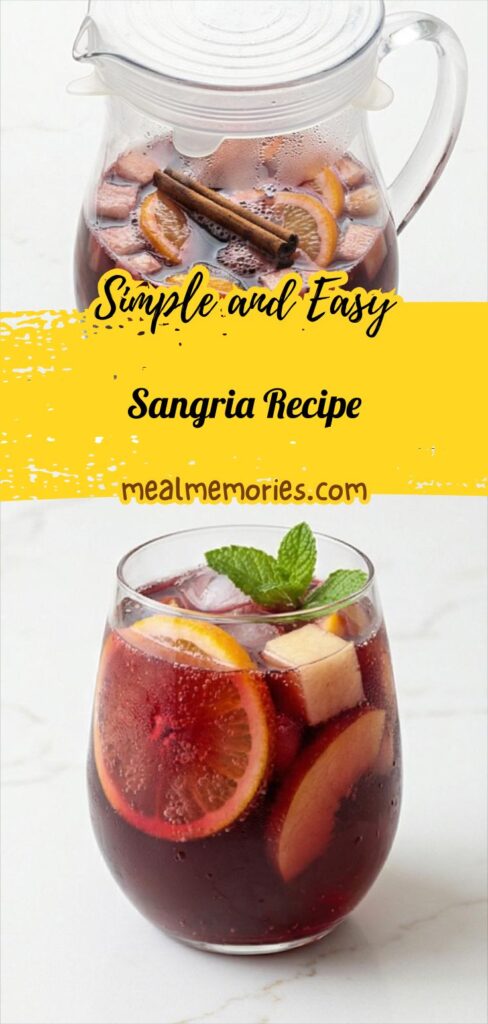
Make this Sangria Recipe with fresh fruit, brandy, and Rioja for a sparkling, party-ready pitcher.
Ingredients
- 1/4 cup (50 g) granulated sugar
- 1 large orange, well washed, half juiced and half thinly sliced into rounds (about 1/4 inch or 6 mm thick)
- 1 large lemon, well washed, half juiced and half thinly sliced into rounds (about 1/4 inch or 6 mm thick)
- 1/4 cup (60 ml) orange liqueur, such as Cointreau or triple sec
- 1/2 cup (120 ml) brandy
- 1 medium crisp apple (such as Gala or Granny Smith), cored and cut into 1/2-inch (1.25 cm) cubes
- 1 medium ripe but firm peach or nectarine, pitted and cut into 1/2-inch (1.25 cm) wedges or cubes
- 1 bottle (750 ml) dry Spanish red wine, such as Rioja or Tempranillo
- 1 small cinnamon stick (about 3 inches / 7–8 cm), optional
- 2 tablespoons (30 ml) honey, at room temperature, optional, to adjust sweetness
- 1 cup (240 ml) chilled sparkling water or club soda
- Ice cubes, for serving
- Additional thin orange and lemon slices, for garnish, optional
- Fresh mint sprigs, for garnish, optional
Instructions
Step 1: Prepare and transform the fruit
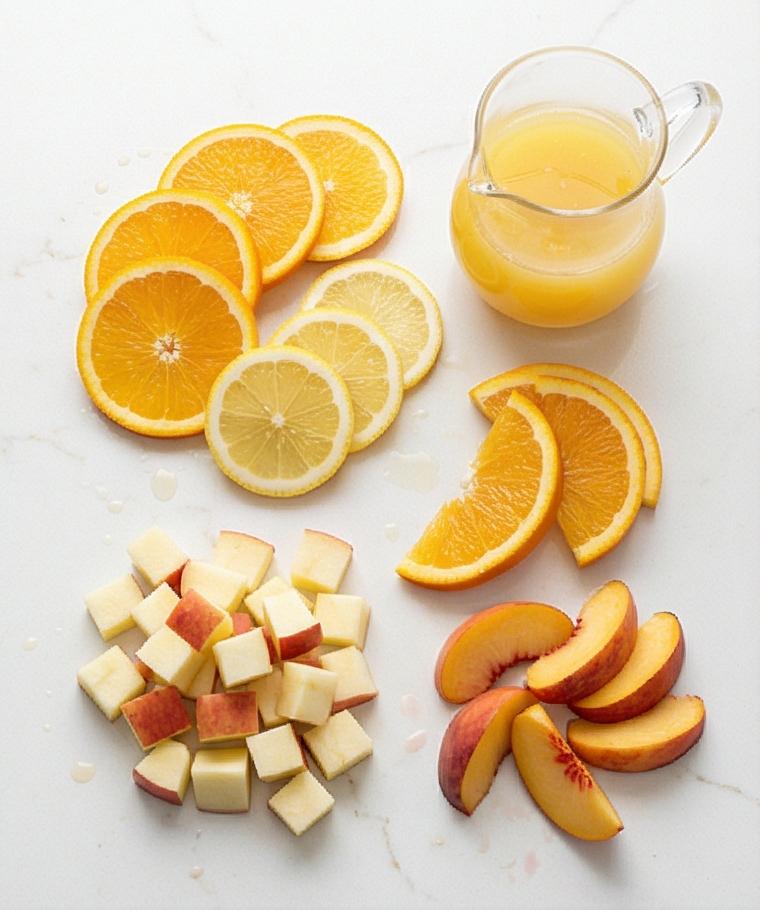
Rinse all fruit under cool running water and pat dry, then halve the orange and lemon. Juice one half of each into a small bowl, straining any seeds, and reserve the remaining halves to be cut into thin 1/4-inch (6 mm) rounds. Core the apple and cut it into 1/2-inch (1.25 cm) cubes; pit and cut the peach or nectarine into 1/2-inch wedges or cubes. Arrange the sliced citrus rounds and the cubed apple and peach on a clean cutting board and transfer the strained citrus juice into a small glass pitcher or bowl so it’s ready to dissolve sugar and marry with spirits. This step is all about bright, wet textures — the glossy citrus rinds, the translucent juice, the matte apple cubes and the soft, slightly fuzzy peach flesh, each prepared and resting on the Calacatta-like surface, ready for assembly.
Step 2: Build the citrus-sugar spirit base and dissolve
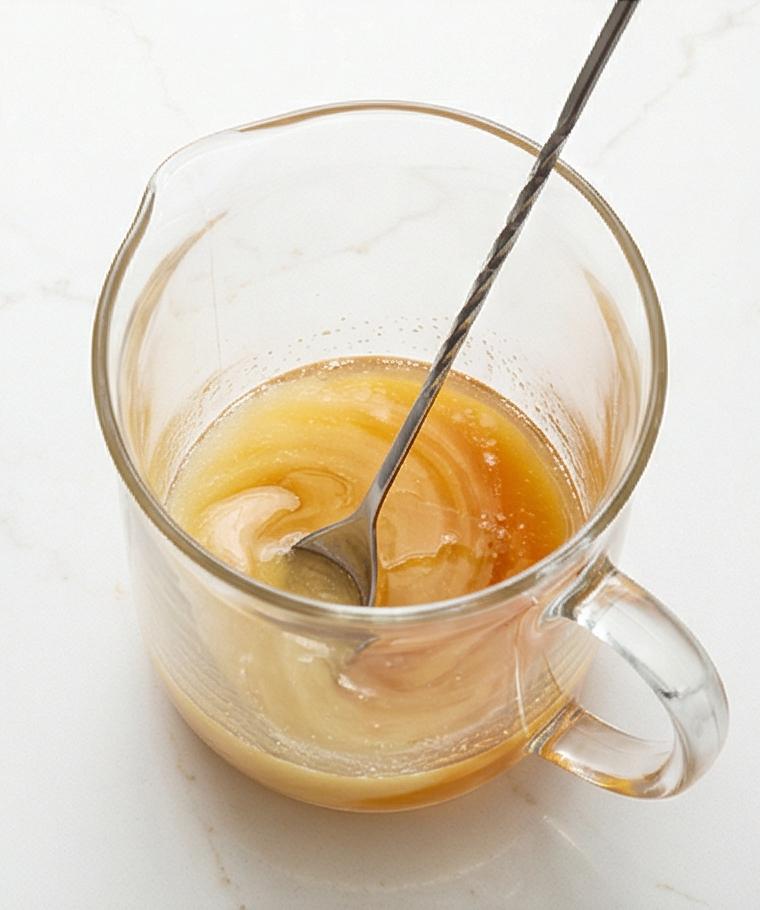
Place 1/4 cup granulated sugar into a large clear glass pitcher. Pour the freshly strained orange and lemon juices over the sugar, then add the orange liqueur and brandy. Using a long spoon, stir for 1–2 minutes until the sugar is mostly dissolved and the liquid takes on a slightly syrupy sheen. Photograph-ready details: the syrup clinging to the spoon, tiny juice droplets on the pitcher rim, and the way the pale gold of liqueur and amber of brandy swirl into the citrus — a glossy, viscous core that will season the wine.
Step 3: Add the cut fruit and lightly muddle
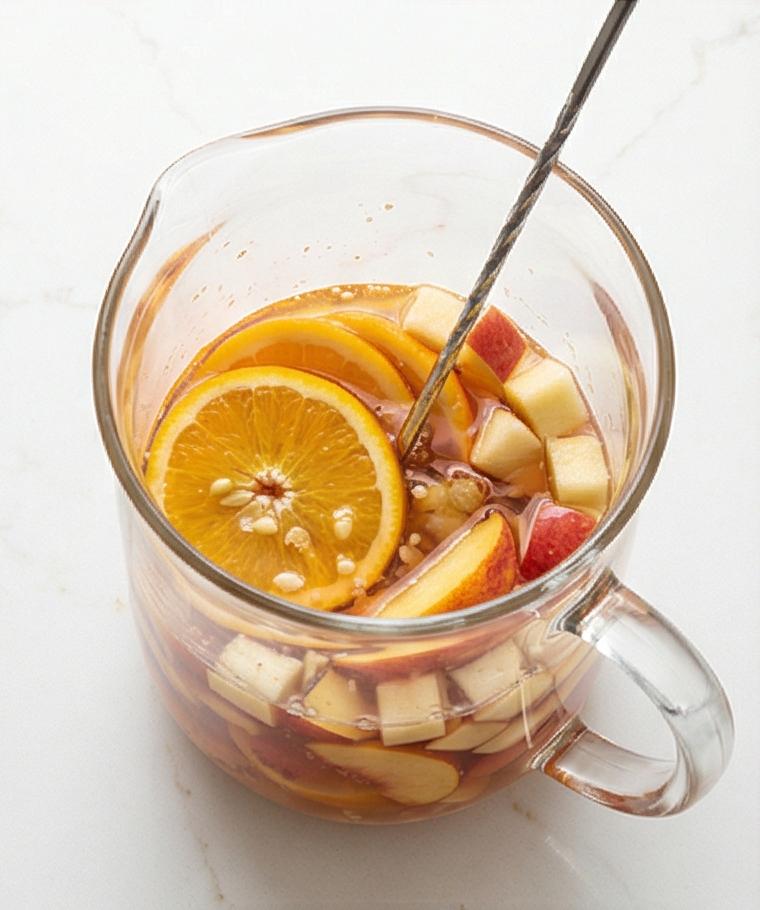
Drop the orange and lemon rounds, apple cubes, and peach pieces into the pitcher. Gently press the fruit against the glass with the back of the long spoon for about 20–30 seconds — releasing a few beads of juice and citrus oil without crushing the fruit. Capture the resulting tableau: fruit layered against the clear pitcher walls, pith and pulp visible, tiny suspended bubbles beginning to cling to apple edges, and wet flesh glistening. Keep the same clear pitcher and long spoon visible in-frame to show utensil persistence.
Step 4: Incorporate wine and aromatics, then chill to infuse
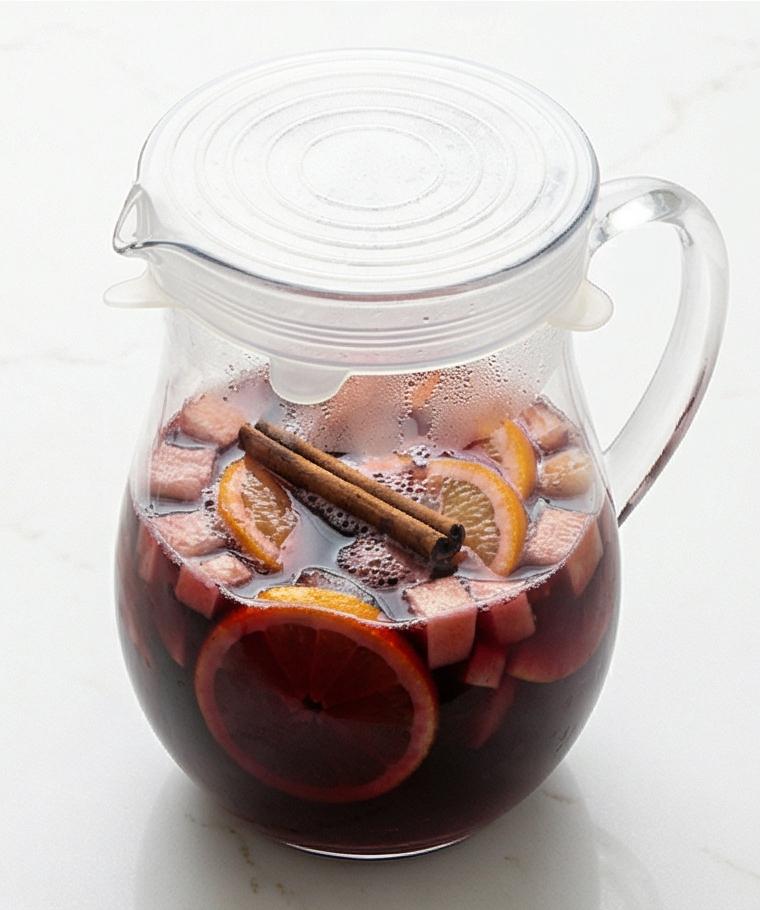
Slowly pour the entire bottle of dry Spanish red wine into the pitcher, stirring gently as you pour so the dark ruby liquid evenly envelops the citrus-spirit base and fruit. If using, nest a small cinnamon stick into the mix and stir briefly to distribute it. The pitcher should now read as a saturated, jewel-toned suspension: translucent citrus slices, saturated peach flesh, and apple cubes softened slightly at the edges, all buoyant in deep red wine. Cover and place on the cool surface (fridge refrigeration is implied) to chill and infuse for at least four hours — this is when flavors meld and fruit textures relax into the wine.
Step 5: Final balancing and effervescence
After chilling, return the pitcher to the surface and give a gentle stir. Taste and, if you want more sweetness, add honey teaspoon by teaspoon until you reach the desired balance — stir until fully dissolved so the honey becomes part of the glossy body. Just before serving, pour in the chilled sparkling water or club soda and stir very gently for about 10 seconds to retain carbonation. This step shifts the texture: the sangria brightens, tiny effervescent bubbles cling to fruit and glass, and the liquid lightens slightly in opacity from the soda.
Step 6: Serve and garnish
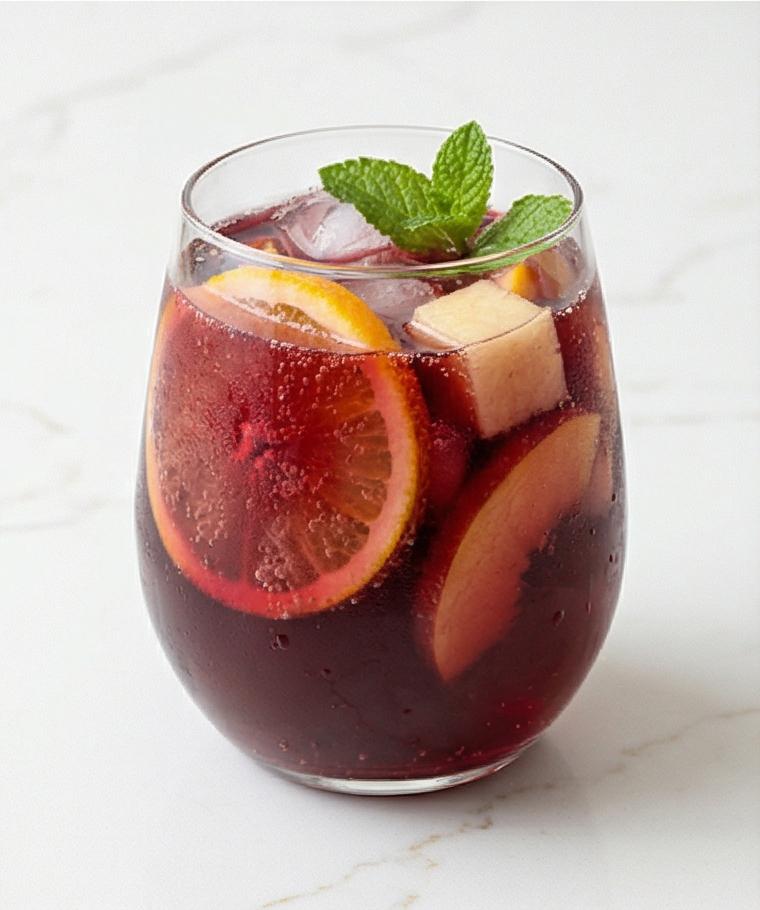
Fill individual glasses halfway with ice cubes, then use a ladle to scoop macerated fruit into each glass and pour the sangria over the ice and fruit, leaving a small headspace. Garnish each serving with a thin slice of orange or lemon and a fresh mint sprig. Present the final close-up as a very-close eye-level shot that emphasizes the chilled condensation on the glass, distinct fruit textures (glossy citrus wheels, juicy peach segments, and jewel-like apple cubes), the delicate fizz, and a fresh mint sprig standing upright — all set on the elegant Calacatta-inspired quartz surface, ready to drink.
Notes
- Chill the pitcher and glasses ahead for better presentation and longer-lasting fizz.
- Add sparkling water just before serving to retain carbonation.
- Taste after chilling and add honey or sugar gradually to adjust sweetness.
- Use firm but ripe fruit so pieces hold up during maceration.
- For nonalcoholic sangria, use nonalcoholic wine or grape juice and reduce added sugar.