Sourdough Bread Recipe
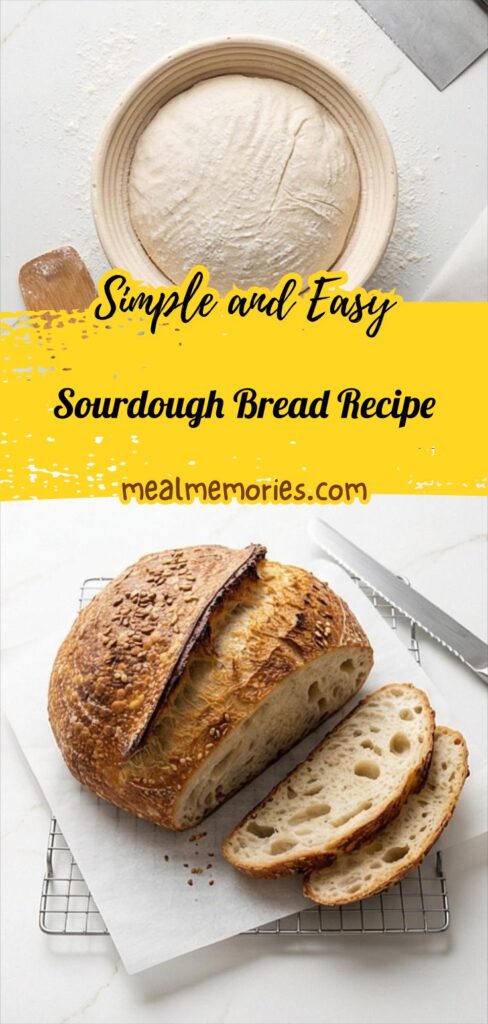
Make the Sourdough Bread Recipe at home: active starter, simple steps, and a crisp, crackly crust.
Ingredients
- 100 g (about 1/2 cup) active 100% hydration sourdough starter, at peak or recently fed (bubbly, domed, and at room temperature)
- 350 g (1 1/2 cups) filtered or spring water, at 75–80°F (24–27°C), plus a little extra as needed for wetting hands
- 400 g (about 3 1/4 cups) bread flour, unbleached
- 50 g (about 1/2 cup, lightly packed) whole wheat flour
- 10 g (1 3/4 teaspoons) fine sea salt
- 15 g (about 2 tablespoons) rice flour, for dusting the proofing basket (or a 50/50 mix of rice flour and bread flour)
- 1–2 teaspoons neutral oil or soft butter, for lightly greasing the bowl (optional)
- 1–2 tablespoons ice cubes or water for creating extra steam in the oven (optional)
- 1–2 tablespoons mixed seeds such as sesame, poppy, or sunflower seeds, for topping (optional)
Instructions
Step 1: Feed and Activate the Starter
Feed your sourdough starter 4–8 hours before you plan to mix so it becomes very active: it should roughly double, dome, and be visibly bubbly and aerated. When it’s at or just past peak it will float in a glass of water; that airy, fragrant starter is what you want to use to build lift and flavor for the dough.
Step 2: Make the Starter–Water Mix
Pour 350 g water (75–80°F / 24–27°C) into a medium measuring jug and stir in 100 g of the active starter until mostly dispersed; the liquid should look cloudy with a few small streaks of starter remaining and a light, yeasty aroma. This is the hydrating slurry that will jump-start gluten formation once it meets the flour.
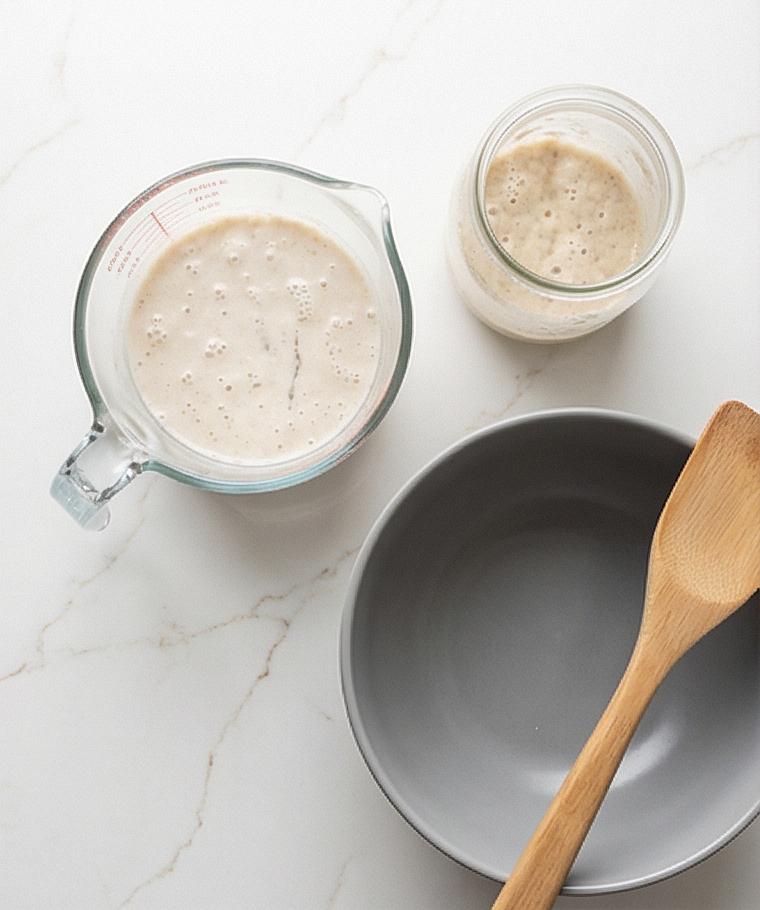
Step 3: Combine Flours and Form the Shaggy Dough
In a large mixing bowl combine 400 g bread flour and 50 g whole wheat flour until evenly blended. Pour the starter–water mixture into the flours and mix with your hand or a sturdy spatula until no dry flour pockets remain and you have a rough, shaggy, sticky mass. Scrape the bowl clean so the dough gathers into one sticky, irregular ball; this is intentionally coarse and tacky at this stage.
Step 4: Autolyse, Add Salt, and Integrate
Cover the bowl and let the dough rest for 30–45 minutes so the flour hydrates and the dough relaxes. After the rest, sprinkle 10 g fine sea salt evenly over the surface and, with a small bowl of water nearby to wet fingertips, pinch and fold the dough repeatedly until the salt is fully incorporated and you no longer feel grains. The dough will transform from floppy to slightly more cohesive.
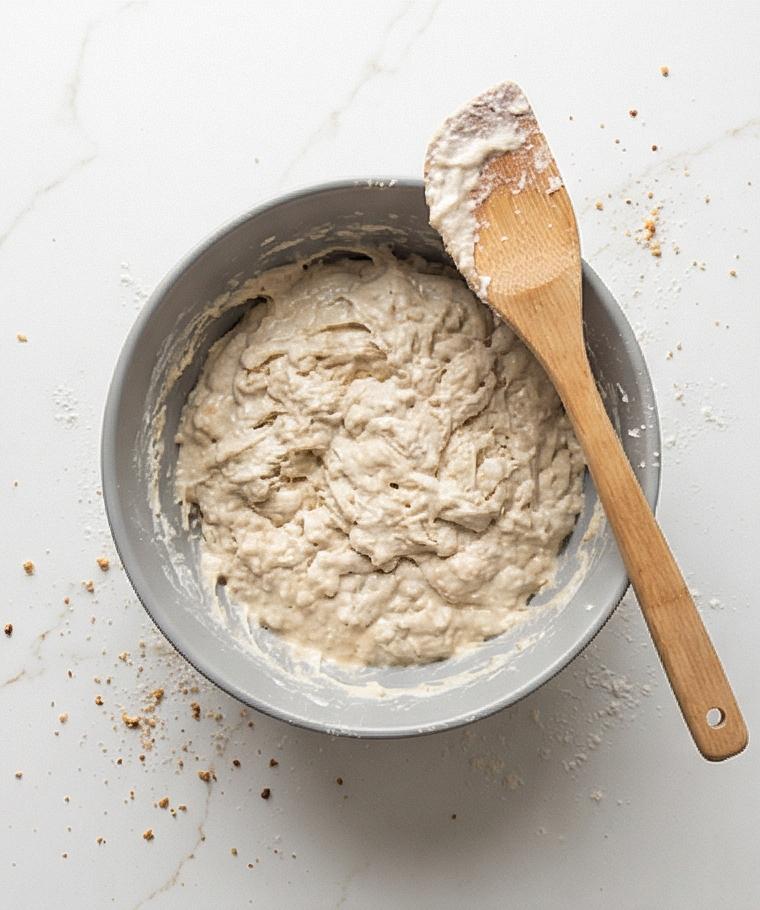
Step 5: Stretch-and-Fold Rhythm and Bulk Fermentation
Begin the series of stretch-and-folds: with slightly wet hands lift one edge, stretch until it resists, then fold it over; rotate the bowl and repeat 4–6 times. Rest 30 minutes and repeat this cycle two more times (three total; optionally a fourth if the dough is slack). Over the next 1½–3 hours the dough will rise ~50–75%, develop small bubbles along the sides, feel airier and jiggle slightly when you shake the bowl — that’s your bulk fermentation milestone.
Step 6: Pre-shape, Rest, and Prepare the Banneton
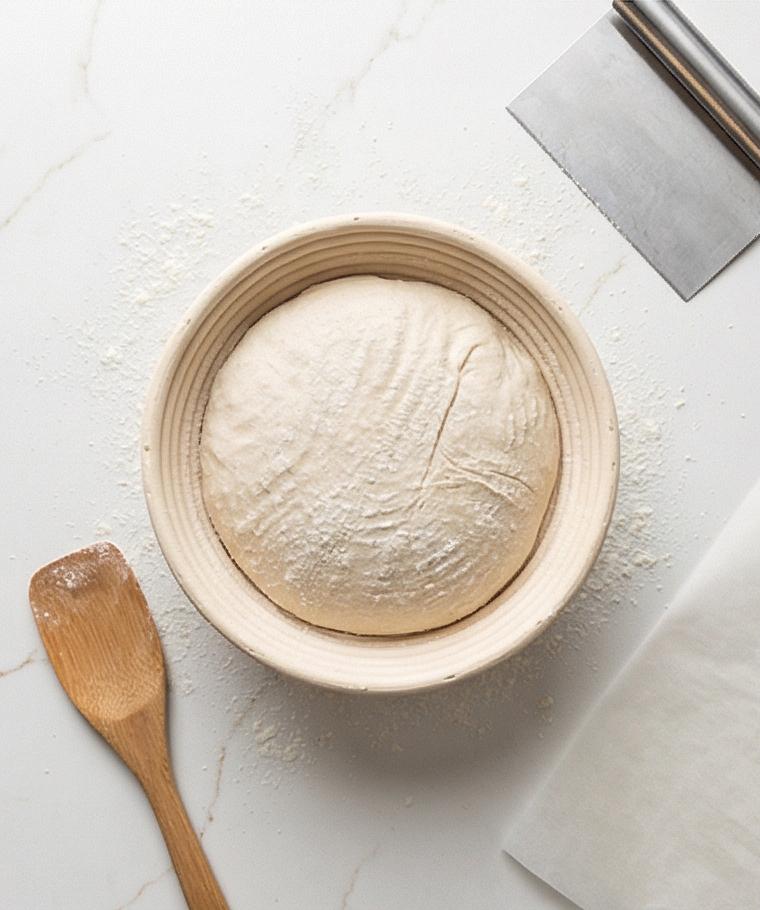
Lightly flour the bench and gently tip the dough out without deflating it. Pre-shape into a loose round by tucking edges toward the center, flip seam-side down and use the bench to create light surface tension. Let the pre-shaped round rest 20–30 minutes. While it rests, thoroughly dust your proofing basket with rice flour (or a 50/50 rice/bread flour mix) so the dough won’t stick.
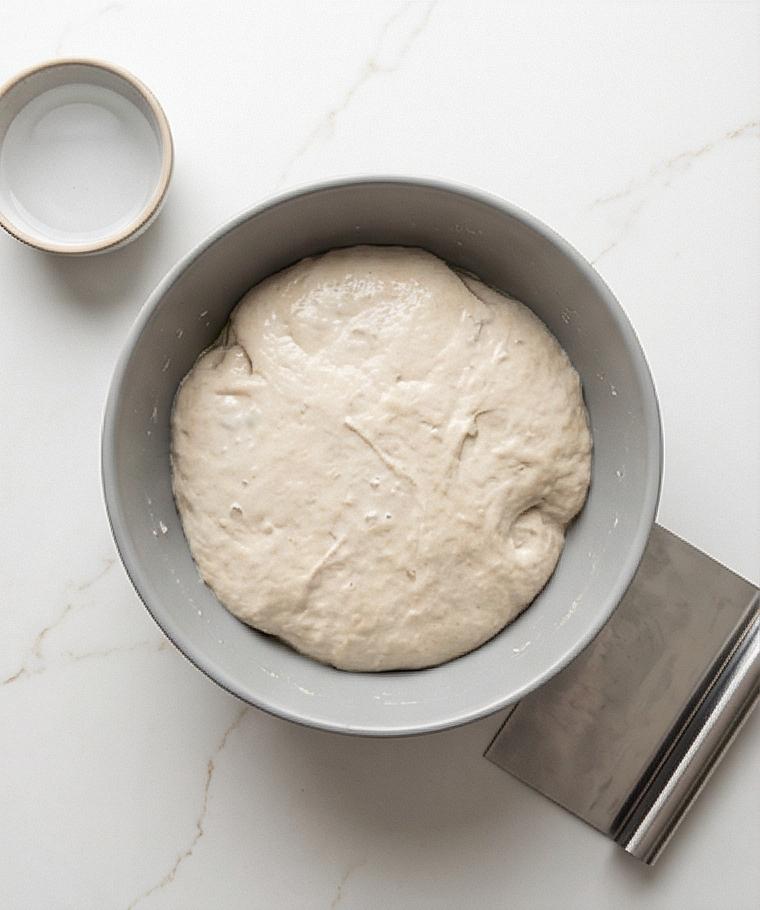
Step 7: Final Shape and Cold Retard
After the bench rest, lightly flour the top, flip the dough so the floured side is down, then fold the dough into a tight package (letter fold then side folds) and shape it into a taut round or oval. Place the shaped dough seam-side up into the prepared banneton, dust the surface lightly, cover tightly with plastic, and refrigerate at 38–42°F (3–6°C) for 8–16 hours until it puffs and firms.
Step 8: Preheat and Bake Preparation
About 45–60 minutes before baking, place a heavy lidded Dutch oven (or baking stone setup) on the middle oven rack and preheat to 475°F (245°C) so it’s blazing hot. When ready, place a piece of parchment over the banneton and invert it so the dough turns out seam-side down onto the parchment; gently remove the basket. If desired, mist the top lightly with water and sprinkle 1–2 tablespoons mixed seeds. Score decisively with a sharp lame or blade to control the oven spring, then transfer the parchment-and-loaf into the hot vessel and lower the oven temperature to 450°F (230°C).
Step 9: Bake, Cool, and Serve
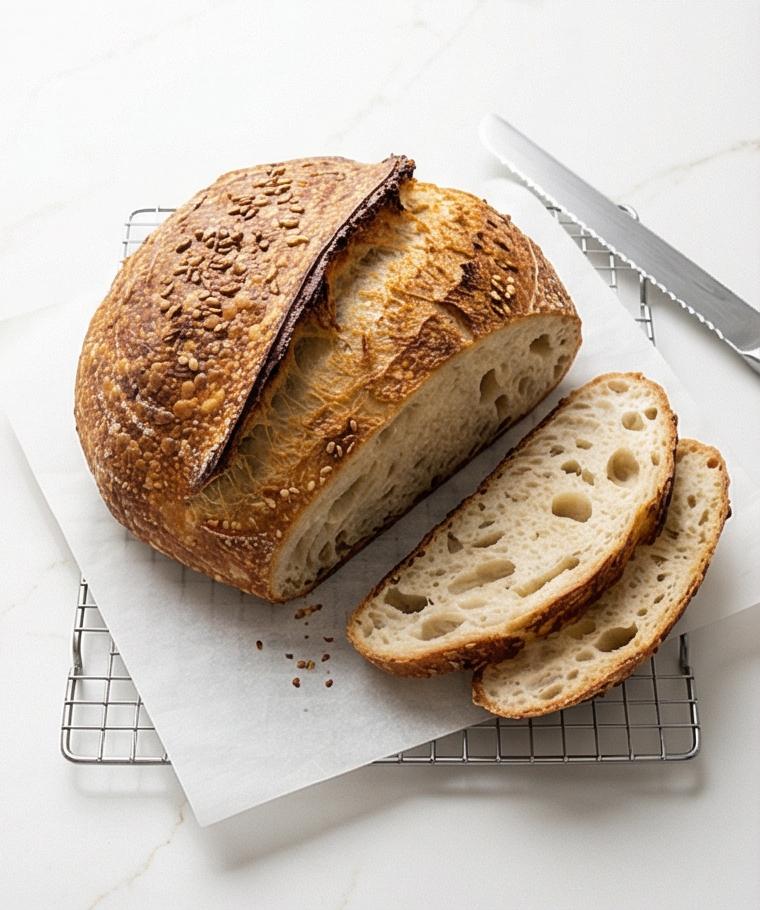
Bake covered at 450°F (230°C) for 20 minutes to trap steam, then remove the lid and continue uncovered for 20–25 minutes until a deep golden-brown crust forms, the ear has opened, and the loaf sounds hollow when tapped; internal temperature should reach 205–210°F (96–99°C). Remove the loaf and cool completely on a wire rack for 1–2 hours before slicing. Store at room temperature in a paper bag for 2–3 days or freeze sliced for longer keeping.
Notes
- Ensure your starter is at peak activity before mixing.
- Use a digital scale for consistent results.
- Dust banneton liberally with rice flour to prevent sticking.
- Allow the loaf to cool completely before slicing to set the crumb.
- Freeze slices for longer storage and toast directly from frozen.