Mimosa Recipe
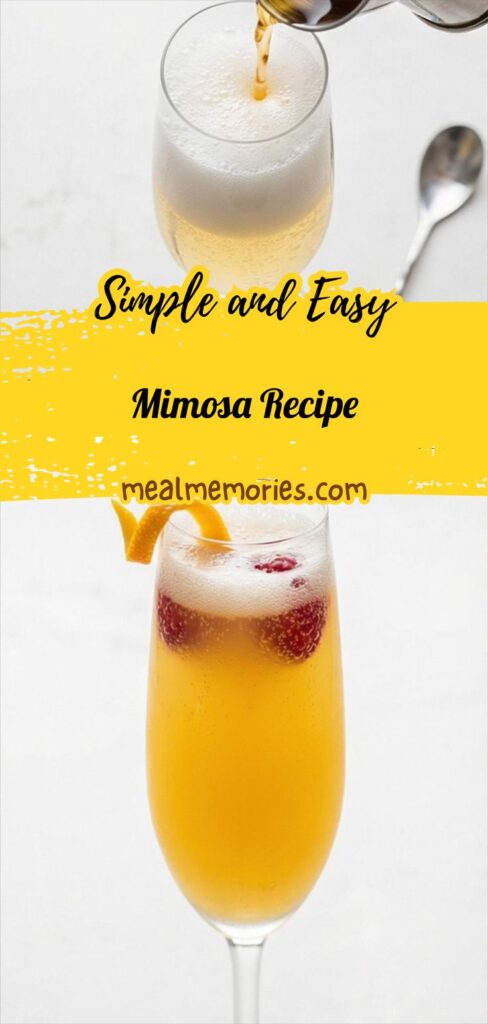
Make this Mimosa Recipe for bright, bubbly brunch drinks that are easy and elegant.
Ingredients
- 1 (750 ml / 25.4 fl oz) bottle dry sparkling wine (such as Brut Champagne, Cava, or Prosecco), well chilled to 39-41°F (4-5°C)
- 3 cups (720 ml) pulp-free orange juice, freshly squeezed if possible, well chilled to 39-41°F (4-5°C)
- 4 tablespoons (60 ml) orange liqueur (such as Cointreau or Triple Sec), chilled (optional, for extra depth of flavor)
- 1/2 cup (120 ml) cold water, for chilling glasses (optional)
- 1 cup (about 140 g) ice cubes, for chilling glasses (optional; do not add directly to the drink)
- 4 thin orange half-wedges or twists, well washed, for garnish (optional)
- 4-8 fresh raspberries or strawberries, rinsed and patted dry, for garnish (optional)
Instructions
Step 1: Chill the sparkling wine and orange juice
Place the unopened bottle of dry sparkling wine and the orange juice into the refrigerator at least three hours before serving so both reach 39–41°F (4–5°C). This step preserves the fine carbonation and keeps the finished mimosa bright and effervescent; think of it as locking in texture and temperature so you never need ice in the drink itself. Keep the juice in a clear glass carafe or jug so you can see its pulp-free, opaque golden-orange color while it chills.
Step 2: Chill the flutes and prepare garnishes
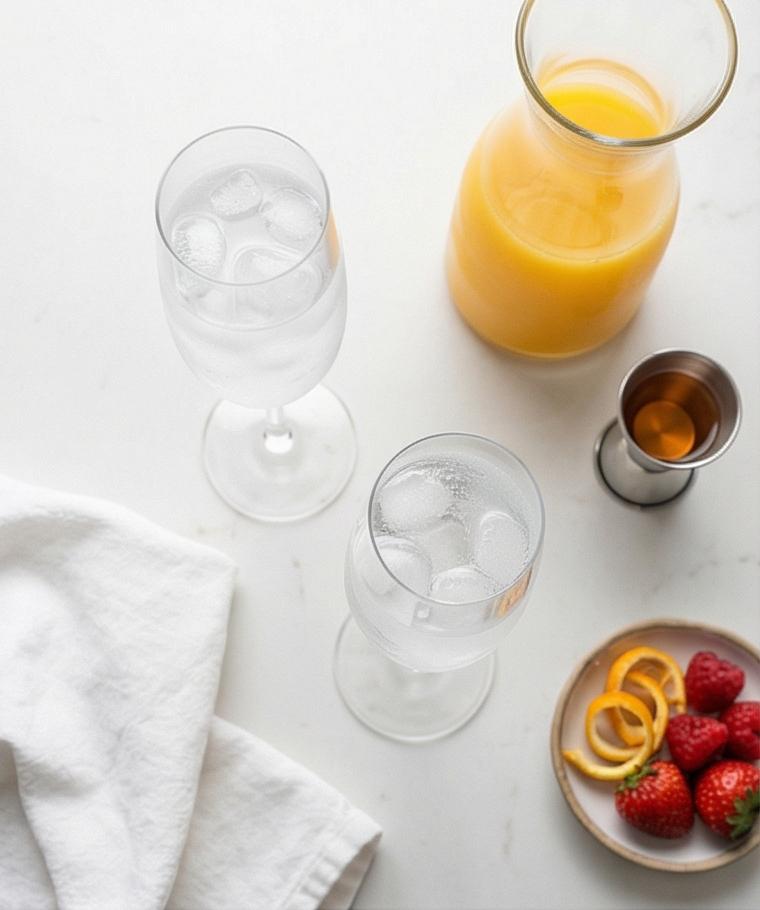
About 15 minutes before serving, chill your champagne flutes: either fill each flute halfway with cold water and a few ice cubes or place them empty in the refrigerator/freezer for 10–15 minutes until the glass feels very cold to the touch. While they chill, rinse and thinly slice 4 oranges into half-wedges or twists and gently rinse 4–8 raspberries or small strawberries, then pat everything completely dry with a clean towel so no surface water dilutes the drink. Keep the prepared garnishes arranged in a small ceramic dish and the juice in the same clear carafe mentioned earlier for visual continuity.
Step 3: Empty and dry the chilled glasses, stage the service
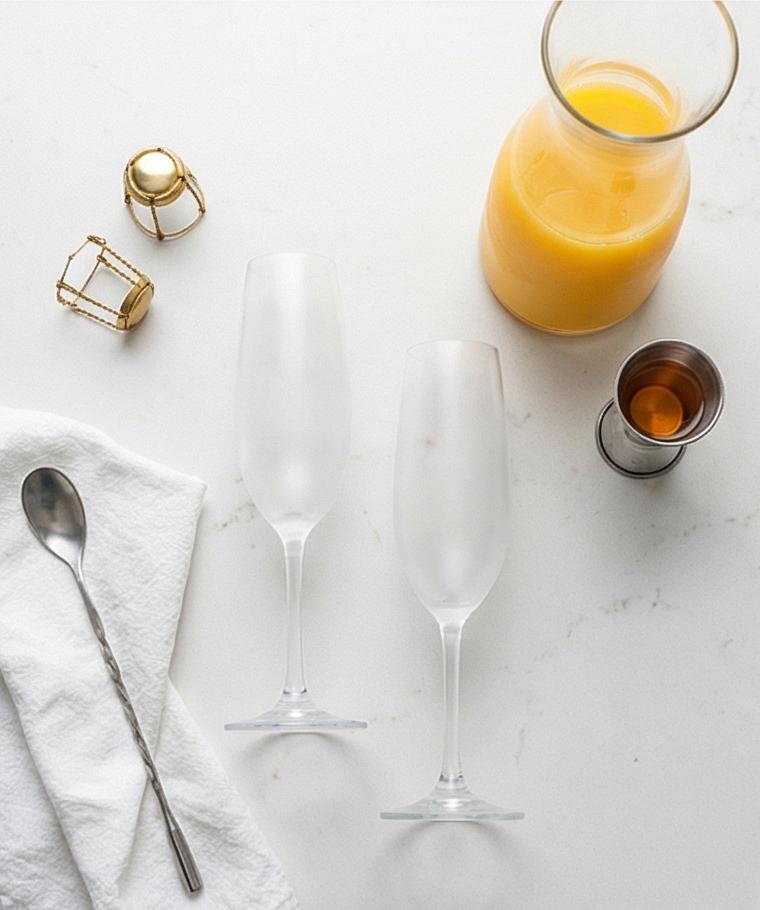
Quickly discard the ice water from the flutes if you used it, and dry the inside of each glass with a clean towel so the glass is cold but not wet — the goal is cold surface contact without melting or dilution. Arrange the cold, dry flutes on the quartz surface in a neat row next to the juice carafe, a small chilled jigger for optional liqueur, and a narrow bar spoon resting beside a small bowl holding the dried garnishes; these tools persist through the next steps so keep them in frame.
Step 4: Open the sparkling wine carefully
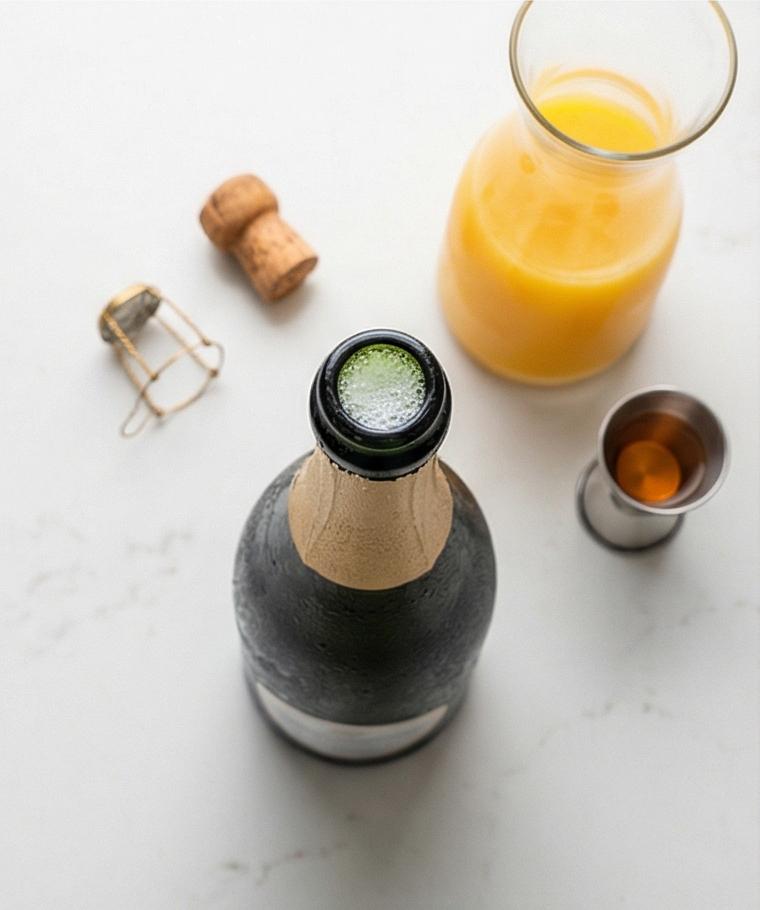
Place the well-chilled bottle on the surface at a slight angle (no hands shown) with the foil removed and the loosened wire cage set nearby; gently ease the cork free by holding the bottle at 45 degrees and twisting the bottle (not the cork) so it slips out with a soft sigh rather than a loud pop — preserve as much carbonation as possible. Show the opened bottle with a thin froth at the mouth and the cork resting beside it on the quartz surface; keep the same clear juice carafe and jigger visible to maintain utensil persistence.
Step 5: Pour the sparkling wine and optionally add orange liqueur
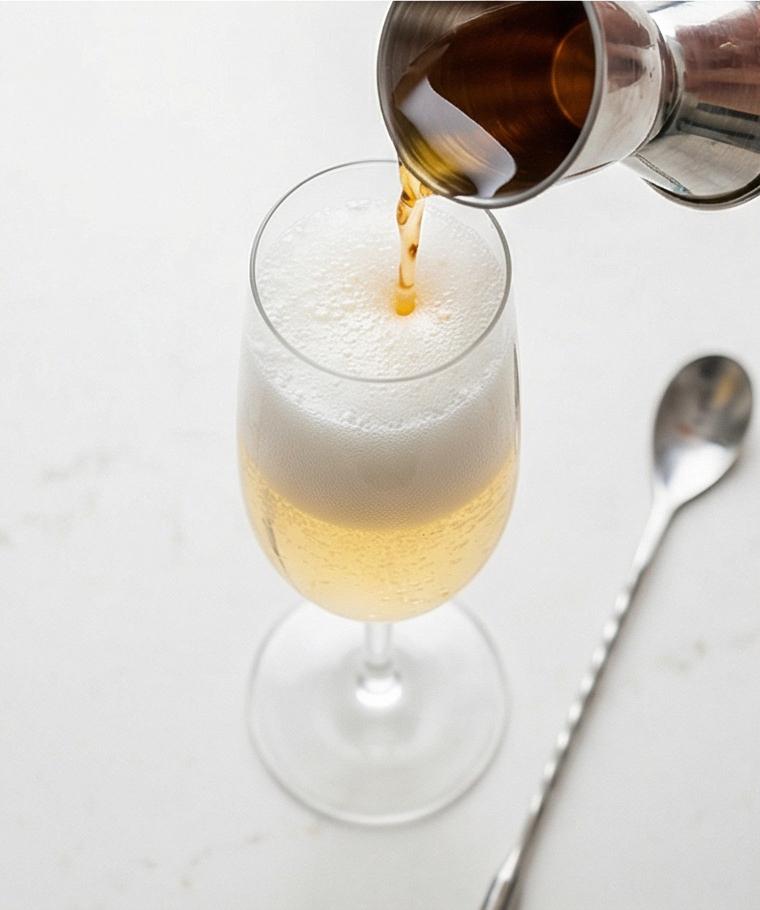
Hold each chilled flute nearly upright and slowly pour 3 ounces (90 ml) of chilled sparkling wine down the side so it forms a thick, foamy head that settles in a few seconds; the glass should sit about half-full. If you’re using orange liqueur, gently measure and pour 1 tablespoon (15 ml) into each flute from a small chilled jigger so it nestles into the sparkling wine. Keep the pours steady and the bubbles tight and fine — the texture here is a delicate froth and shimmering micro-bubbles.
Step 6: Add the orange juice and lightly combine
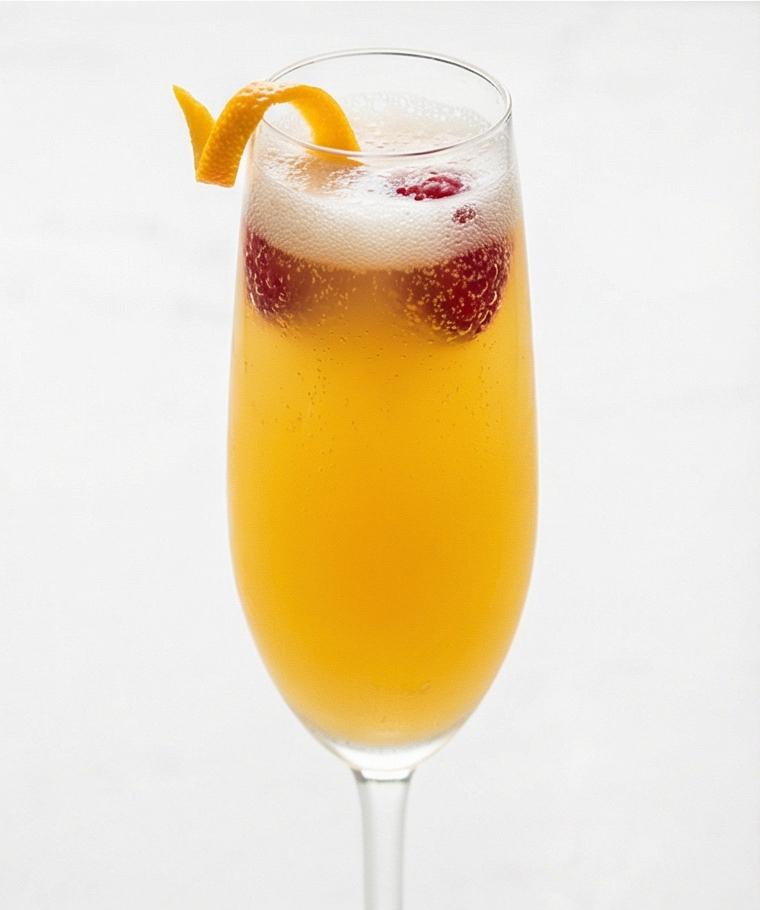
Keeping the flute nearly upright, slowly pour an equal measure (3 ounces / 90 ml) of chilled, pulp-free orange juice into the center of each glass so it mixes naturally with the sparkling wine without foaming over. Very gently stir once with the narrow bar spoon, keeping the spoon just below the surface to coax the liquids together without knocking out carbonation; the finished interior should be an even, opaque golden-orange with fine bubbles rising steadily, and a soft, settled foam on top.
Step 7: Garnish and serve immediately
Place a thin orange half-wedge or twist on the rim and drop 1–2 dry raspberries or a small strawberry into the drink; ensure garnishes are completely dry to avoid dilution. Serve each mimosa right away while it is very cold and effervescent. If serving a crowd, keep the remaining bottles and carafe chilled at 39–41°F (4–5°C) and assemble each glass to order rather than pre-mixing.
Notes
- Chill both the sparkling wine and orange juice for at least 3 hours for best bubbles
- Use pulp-free juice and dry the garnishes to avoid dilution
- Pour sparkling wine slowly down the side of the glass to preserve carbonation
- If you need to save opened sparkling wine, use a proper stopper and consume within 24 hours