Stuffing Recipe
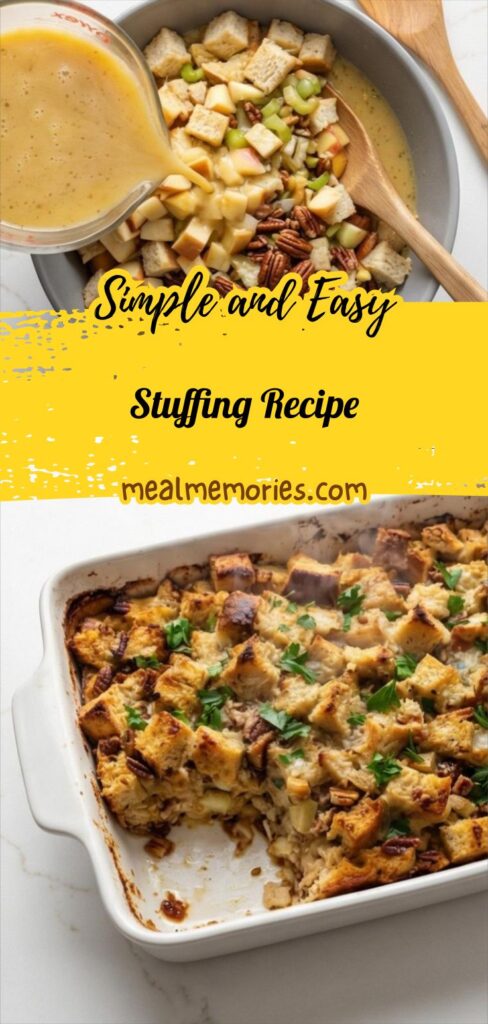
Bake this Stuffing Recipe for a tender, savory side that complements any roast.
Ingredients
- 1 pound (450 g) day-old crusty bread, such as French or Italian, cut into 1/2-inch (1.25 cm) cubes
- 8 tablespoons (1 stick / 113 g) unsalted butter, plus more for greasing the baking dish
- 2 cups (about 300 g) yellow onion, finely diced
- 1 1/2 cups (about 165 g) celery, finely diced (from about 4 medium stalks)
- 3 cloves (about 9 g) garlic, minced
- 1/4 cup (15 g) fresh flat-leaf parsley leaves, finely chopped, plus more for garnish
- 2 tablespoons (about 4 g) fresh sage leaves, finely chopped, or 2 teaspoons dried rubbed sage
- 1 tablespoon (about 2 g) fresh thyme leaves, finely chopped, or 1 teaspoon dried thyme
- 1 teaspoon (about 1 g) fresh rosemary, finely chopped (optional)
- 1 1/2 teaspoons fine sea salt, plus more to taste
- 3/4 teaspoon freshly ground black pepper
- 3 to 3 1/2 cups (720 to 840 ml) low-sodium chicken stock or vegetable stock, warmed
- 2 large eggs (about 100 g), at room temperature, lightly beaten
- 1/2 cup (about 60 g) chopped toasted pecans or walnuts (optional)
- 1 cup (about 150 g) tart apple, such as Granny Smith, peeled, cored, and cut into 1/2-inch (1.25 cm) dice (optional)
- 2 tablespoons (about 30 ml) olive oil or melted butter, for drizzling on top (optional)
Instructions
Step 1: Dry the Bread and Prep the Baking Dish
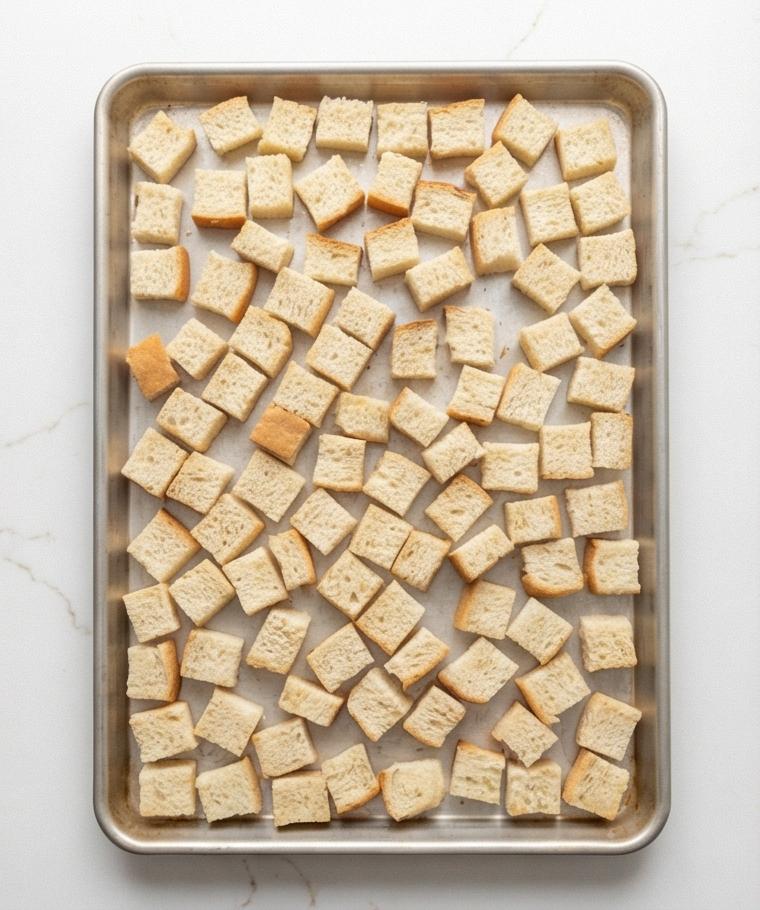
Spread the cubed, day‑old crusty bread in a single layer on a large rimmed baking sheet and dry it gently in a low oven until the cubes are dry and slightly crisp but not browned; let them cool for at least 10 minutes so they’re airy and ready to soak up flavor. While the bread cools, increase the oven temperature to 350°F (175°C) and quickly grease a 9 x 13‑inch rectangular baking dish with a thin layer of butter — you want a lightly coated vessel so the stuffing slides out cleanly after baking.
Step 2: Prepare the Aromatics and Herbs
Finely dice the yellow onion and celery, mince the garlic, and trim and finely chop the parsley, sage, thyme, and optional rosemary. Keep the chopped herbs separated from the diced vegetables so their fresh green color and delicate texture remain distinct when you bloom them later; this keeps the flavors bright and the visual contrast crisp when you assemble the stuffing.
Step 3: Soften the Vegetables and Bloom the Herbs
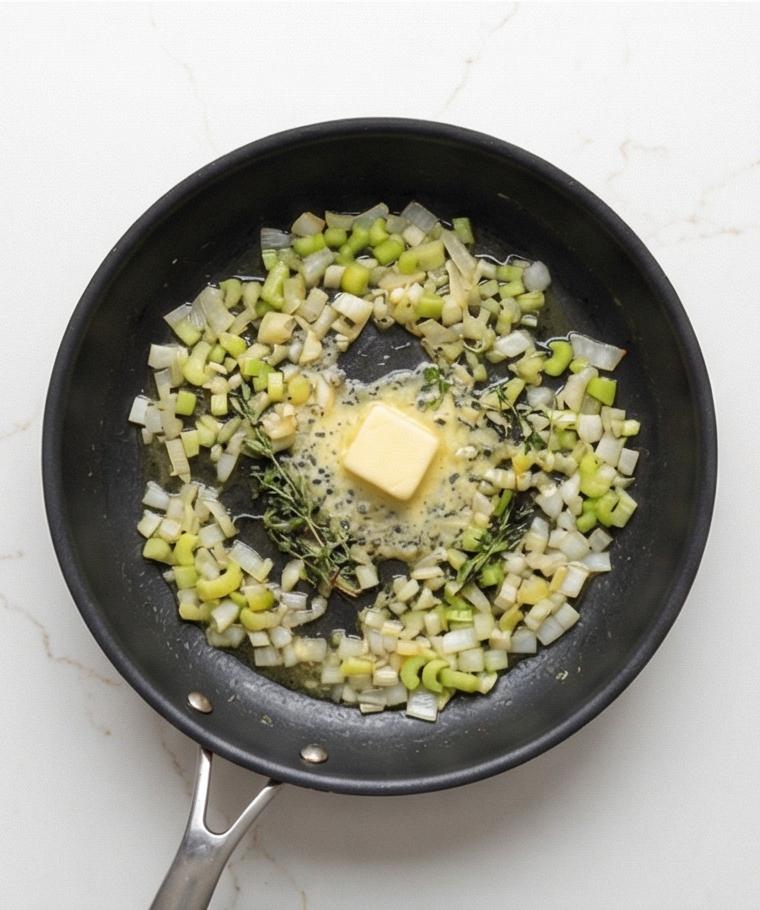
Melt the butter until foamy in a shallow skillet and add the diced onion and celery with a pinch of salt, cooking until the vegetables are very soft and translucent. Stir in the garlic for just a minute until fragrant, then add the chopped herbs briefly off the heat to bloom, releasing fragrance and a glossy, herb‑flecked butter that will cling to the bread. Remove the skillet from heat and let the vegetable‑herb mixture rest so it cools slightly before meeting the bread.
Step 4: Combine Bread, Vegetables, and Mix‑Ins
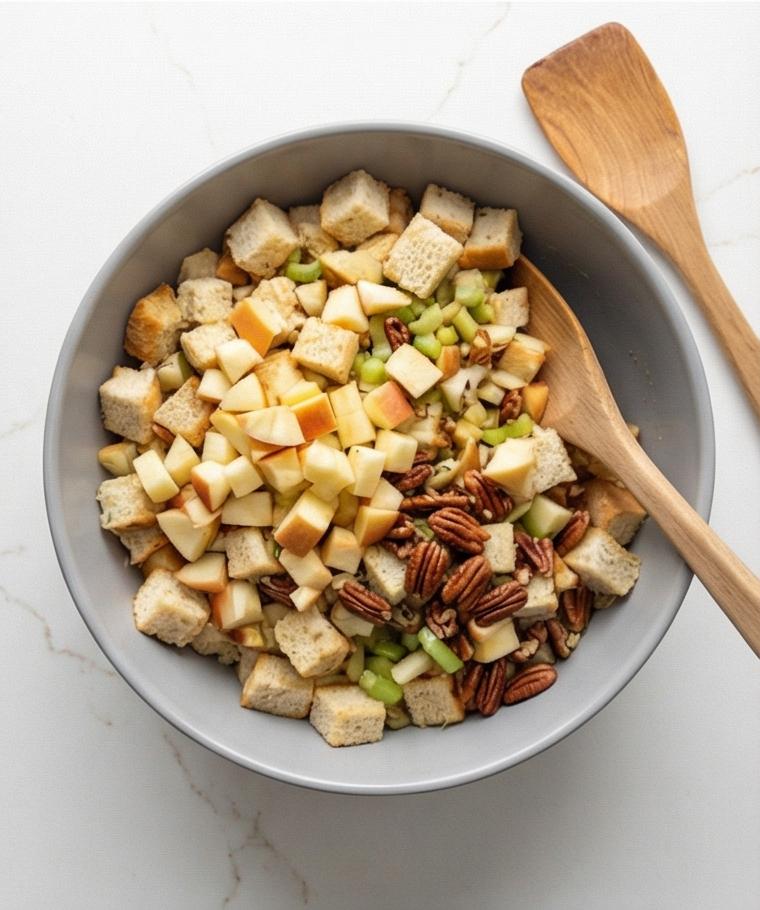
Transfer the dried bread cubes into a large mixing bowl and add the warm buttery vegetable and herb mixture along with the remaining salt, pepper, and optional mix‑ins — chopped toasted pecans or walnuts and diced tart apple. Gently toss with a spatula so every cube gets an even coating of butter, herbs, and small pockets of nuts and apple; the result should look loose and textured, with individual cubes still visible, studded with green parsley and pale apple dice.
Step 5: Whisk the Stock and Eggs
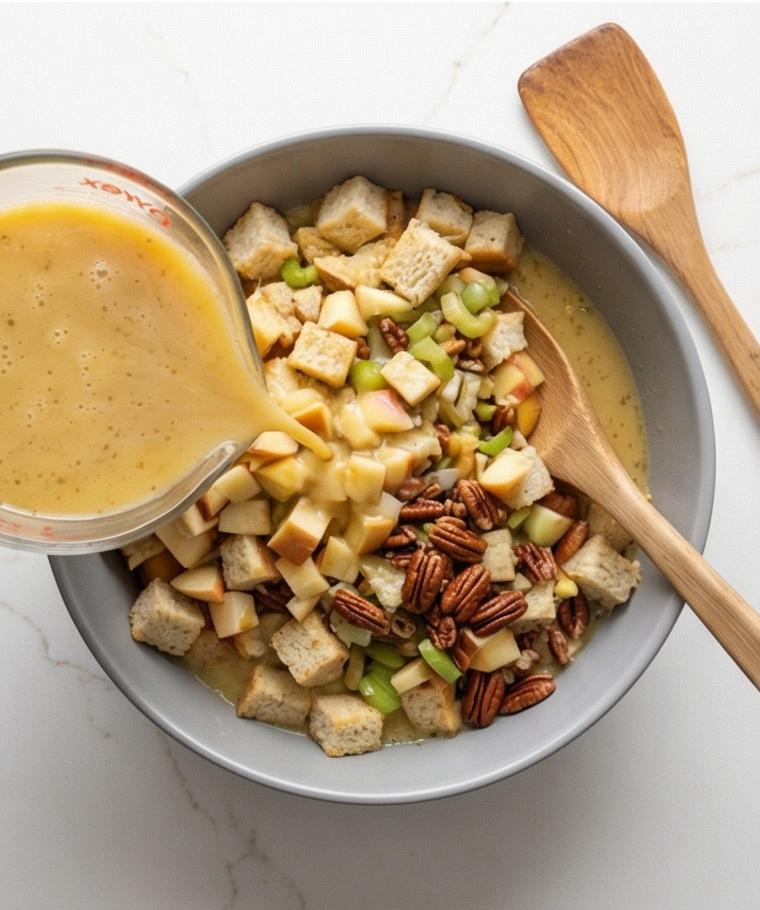
In a separate jug or medium bowl, whisk together the warmed low‑sodium stock and the lightly beaten eggs until fully emulgated and smooth; the mixture should be glossy and slightly viscous so it will coat and bind the bread without making it soupy. Keep the warm liquid in a jug for controlled pouring so the bread absorbs evenly.
Step 6: Hydrate the Bread and Let it Rest
Slowly pour the warm stock‑and‑egg mixture over the bread while tossing gently with a spatula to ensure even absorption; the goal is an evenly moistened mix that holds its shape. Add small additional splashes of stock only if you find dry pieces. Once moistened, let the mixture rest for about 10 minutes, tossing once halfway through so the liquid distributes and the cubes become cohesive but still airy.
Step 7: Transfer to the Baking Dish and Cover
Spread the hydrated stuffing into the greased rectangular 9 x 13 baking dish in an even, loose layer without packing. If you like a crisp top, drizzle with olive oil or melted butter, then cover tightly with foil to keep the interior moist as it gently cooks and sets in the oven.
Step 8: Bake, Uncover to Crisp, Rest, and Serve
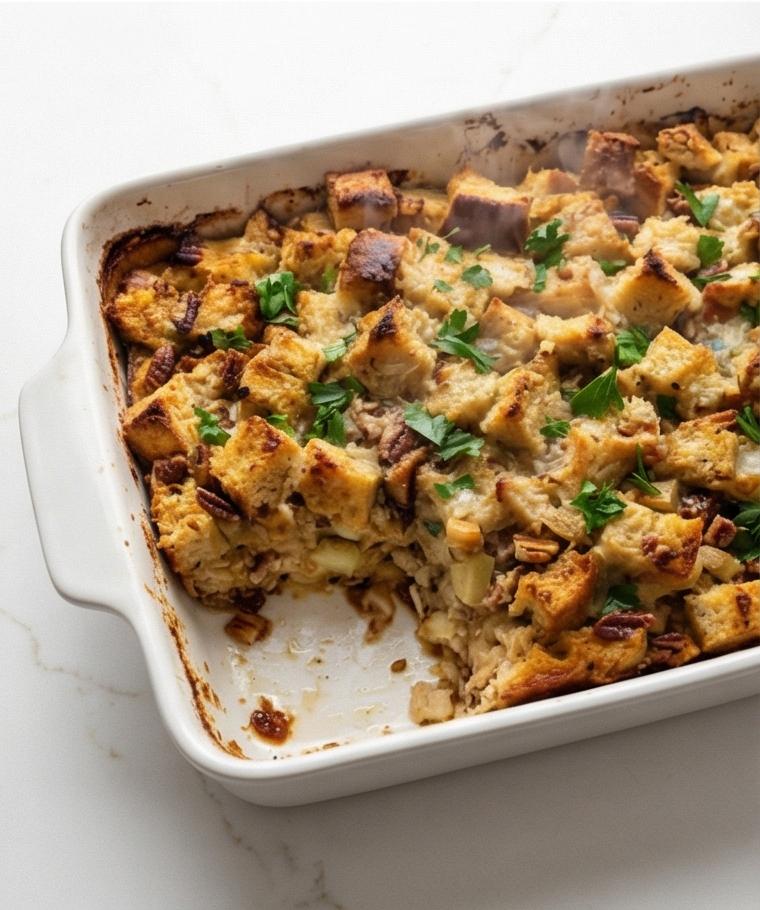
Bake the covered dish until the stuffing is heated through and set, then remove the foil and continue baking until the top is golden brown and crisp at the edges while the interior remains moist. Let the dish rest for 10–15 minutes so it firms slightly for clean serving, finish with a sprinkle of fresh parsley and a light pinch of salt if desired, and serve warm alongside roasted proteins or vegetables.
Notes
- Dry the bread in a low oven and cool completely for best texture
- Warm the stock before adding so the bread absorbs evenly
- Add optional mix-ins like nuts or apple sparingly to keep balance