Ciabatta Recipe
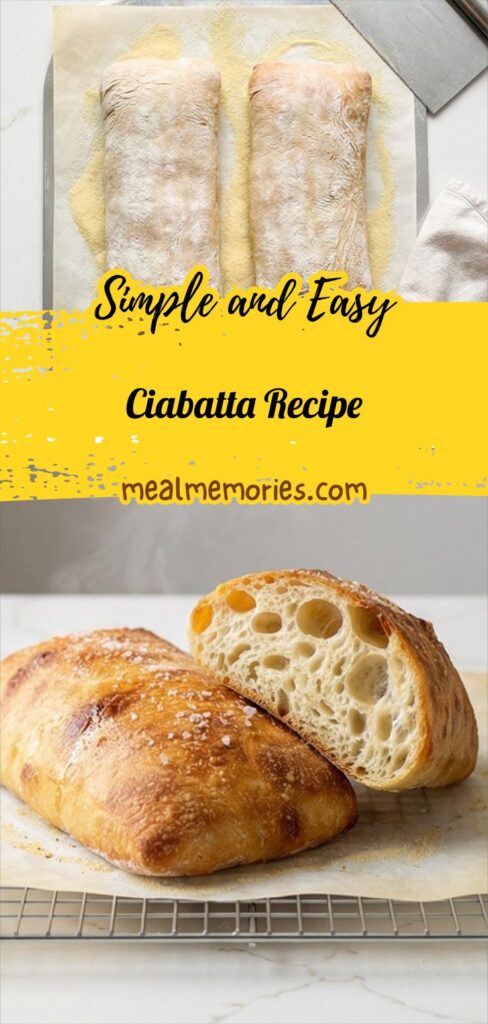
Bake airy, golden loaves with this Ciabatta Recipe — make the biga, shape gently, and enjoy crisp crust and open crumb.
Ingredients
- 300 g bread flour (about 2 1/3 cups), at room temperature
- 210 g water (about 7/8 cup or 210 ml), at room temperature (68–72°F / 20–22°C)
- 0.4 g instant yeast (about 1/8 teaspoon)
- 300 g bread flour (about 2 1/3 cups), at room temperature
- 100 g all-purpose flour (about 3/4 cup + 2 tablespoons), at room temperature
- 260 g water (about 1 1/8 cups or 260 ml), lukewarm (80–85°F / 27–29°C)
- 12 g fine sea salt (about 2 teaspoons)
- 3 g instant yeast (about 1 teaspoon)
- 20 g extra-virgin olive oil (about 1 1/2 tablespoons), plus more for greasing
- 30 g bread flour (about 1/4 cup), for dusting the work surface and dough
- 15 g fine cornmeal or semolina flour (about 2 tablespoons), for dusting the baking peel or parchment (optional but recommended)
- Room-temperature water for creating steam in the oven (about 1/2 cup if using a preheated pan)
- Olive oil, for brushing finished loaves (optional)
- Flaky sea salt, for sprinkling on warm loaves before serving (optional)
Instructions
Step 1: Build the biga (preferment)
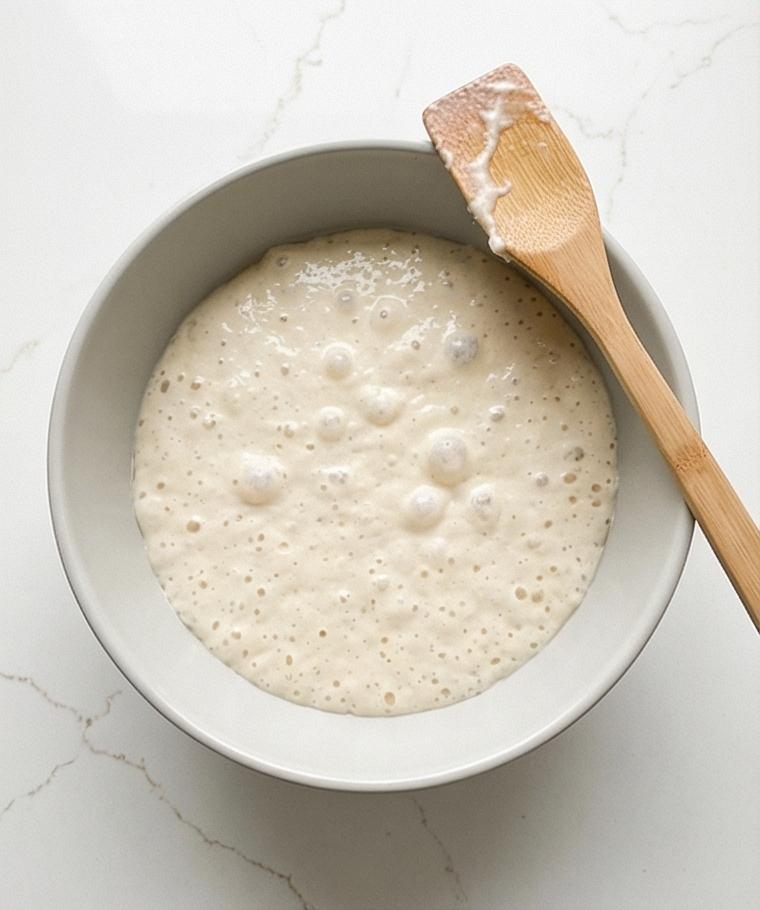
In a medium matte grey ceramic bowl, whisk together 300 g bread flour, 210 g room-temperature water, and a tiny pinch of instant yeast until every speck of flour is hydrated and you have a shaggy, thick batter-like dough with no dry patches. Cover the bowl tightly with plastic wrap or a reusable lid and leave it to ferment at a cool room temperature (about 68–72°F / 20–22°C) for 12–16 hours. The biga is ready when it has risen noticeably, the surface is bubbly and slightly domed, and it smells sweetly yeasty with a mild nutty aroma.
Step 2: Assemble the final dough
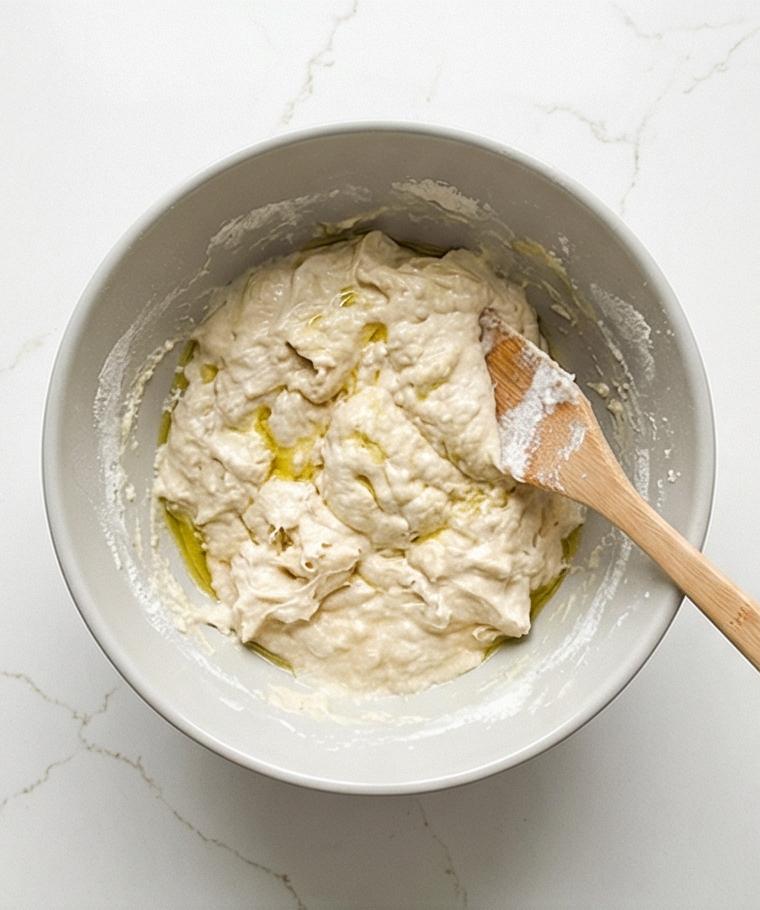
In a large mixing bowl (use the same matte grey ceramic bowl for continuity) whisk together 300 g bread flour, 100 g all-purpose flour, 12 g fine sea salt, and 3 g instant yeast until evenly combined. Add 260 g lukewarm water and 20 g extra-virgin olive oil, then tear the ripe biga into several pieces and add them in. Using a sturdy wooden spatula or a dough scraper, mix until no dry flour remains and the dough comes together into a very sticky, rough mass — glossy, tacky, and elastic in clumps. Scrape the tools and bowl clean; the spatula resting on the rim with dough clinging to it signals this stage.
Step 3: Rest and bulk fermentation with stretch-and-folds
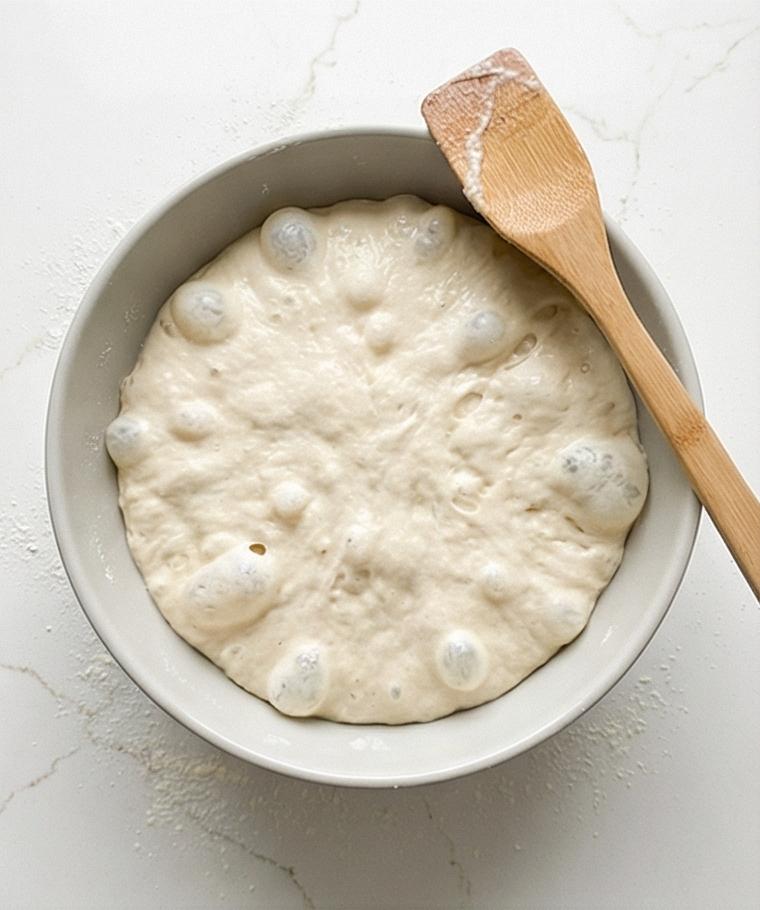
Cover the dough and let it rest for 20–25 minutes to autolyse; the surface will feel slightly smoother and the mass less ragged. Wet one hand and perform a set of 4–6 stretch-and-fold motions: slide under the dough, gently stretch until it resists, then fold it over. Repeat every 30 minutes for two more sets during a 1½–2 hour bulk ferment. Over this time the dough should transform from a sticky blob to an airy, jiggly mass with visible bubbles along the sides and surface — soft, extensible, and buoyant when given a gentle poke.
Step 4: Turn out, divide, and shape with minimal handling
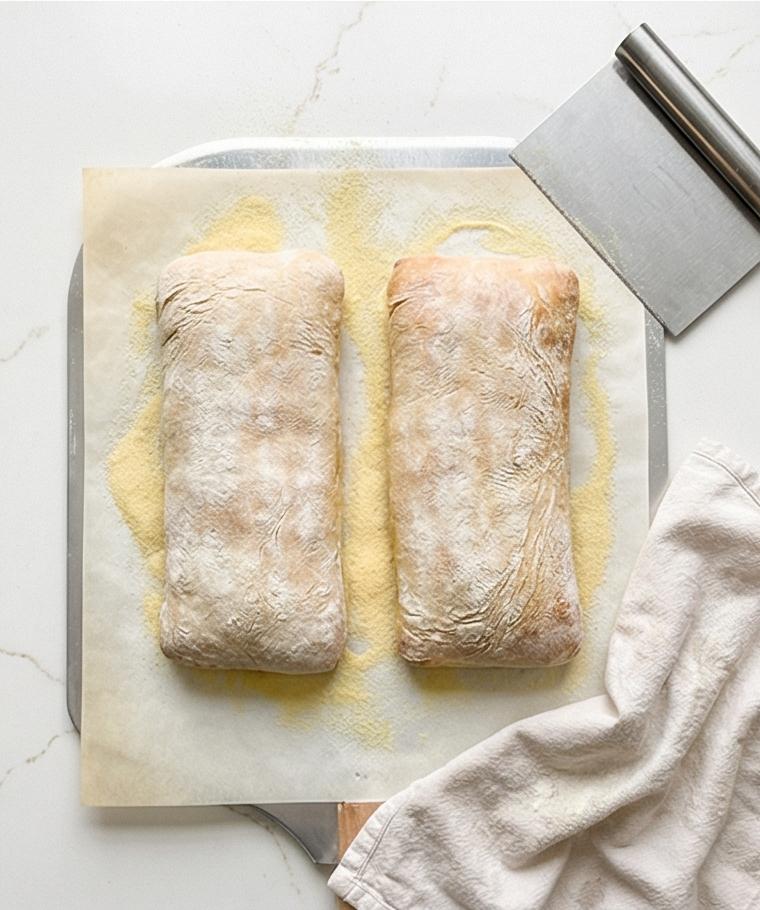
Generously flour the engineered quartz surface with part of the 30 g dusting flour and dust a bench scraper and your hands. Gently scrape the dough onto the floured surface, preserving as many air pockets as possible. Pat the dough into a loose 10 x 8 inch rectangle without kneading; use a floured bench scraper to cut the rectangle into two equal lengthwise strips. Working one piece at a time, lift and very gently stretch each strip to about 10–12 inches, folding any too-thin edges underneath to create a slightly irregular slipper shape. Transfer the two loaves onto a parchment-lined peel or inverted baking sheet that has been dusted with fine cornmeal or semolina, spacing them at least 3 inches apart.
Step 5: Proof, finish, bake and cool
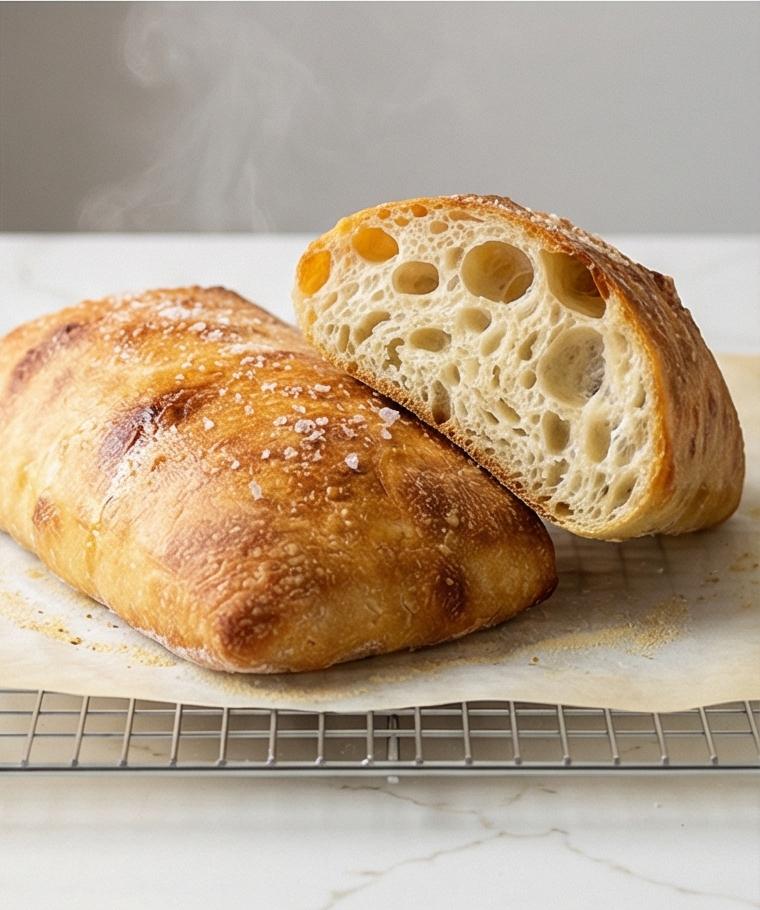
Cover the loaves loosely and proof at room temperature for 35–45 minutes until noticeably puffy and springy to a floured fingertip. Preheat a baking stone or inverted sheet in a hot oven (475°F / 245°C) and have a metal steam pan on the lower rack. Right before baking dust the tops lightly with flour and optionally dimple a few spots with fingertips to encourage a rustic crust. Slide the parchment and loaves onto the preheated stone, create a burst of steam by pouring boiled water into the preheated pan, and bake until the crust is deep golden brown and the loaves sound hollow when tapped (about 22–28 minutes total). Transfer the hot ciabatta to a wire cooling rack on the same minimal quartz surface, brush lightly with olive oil for shine and sprinkle flaky sea salt if desired. Let cool at least 45–60 minutes before slicing.
Notes
- Allow the biga 12-16 hours at cool room temperature for best flavor
- Handle the dough gently to keep large air pockets intact
- Use a dusting of semolina or cornmeal on the peel to prevent sticking
- Let loaves cool at least 45-60 minutes before slicing to set the crumb
- Freeze sliced leftovers for quick toasts and reheat from frozen
- Create steam by pouring boiled water into a preheated pan at the start of baking