Whole Wheat Bread Recipe
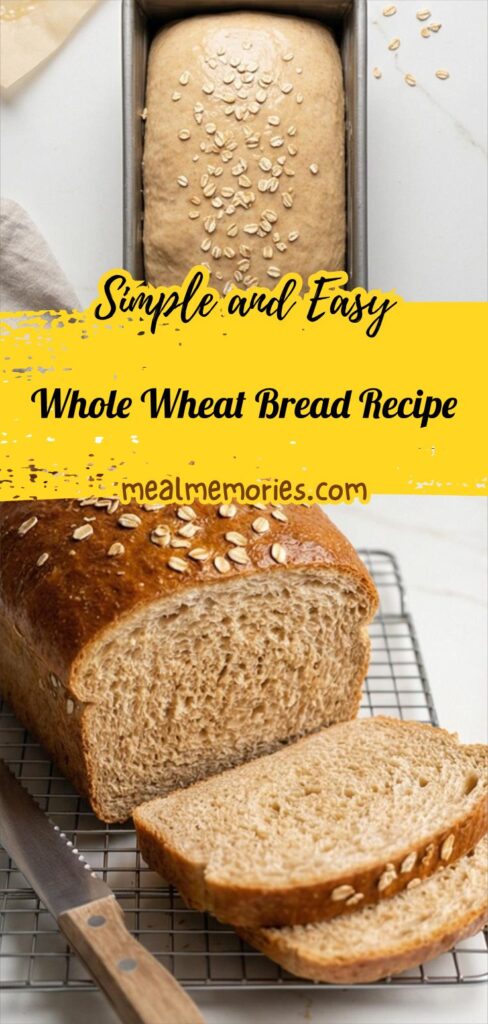
Bake a comforting Whole Wheat Bread Recipe with simple steps for a tender, nutty loaf — perfect for sandwiches and breakfasts.
Ingredients
- 3/4 cup (180 ml) warm water, 105-115°F (40-46°C)
- 1/2 cup (120 ml) warm whole milk, 105-115°F (40-46°C)
- 3 tablespoons (60 g) honey, at room temperature
- 2 1/4 teaspoons (7 g) active dry yeast
- 3 cups (360 g) whole wheat flour, plus up to 1/4 cup (30 g) extra for kneading
- 1 1/2 teaspoons (9 g) fine sea salt or table salt
- 3 tablespoons (40 g) neutral vegetable oil (such as canola or sunflower), at room temperature
- 1 tablespoon (14 g) unsalted butter, melted, for brushing the crust (optional)
- 1-2 tablespoons (8-16 g) old-fashioned rolled oats, for topping (optional)
- Additional neutral oil or nonstick cooking spray, for greasing the bowl and pan
Instructions
Step 1: Bloom the yeast
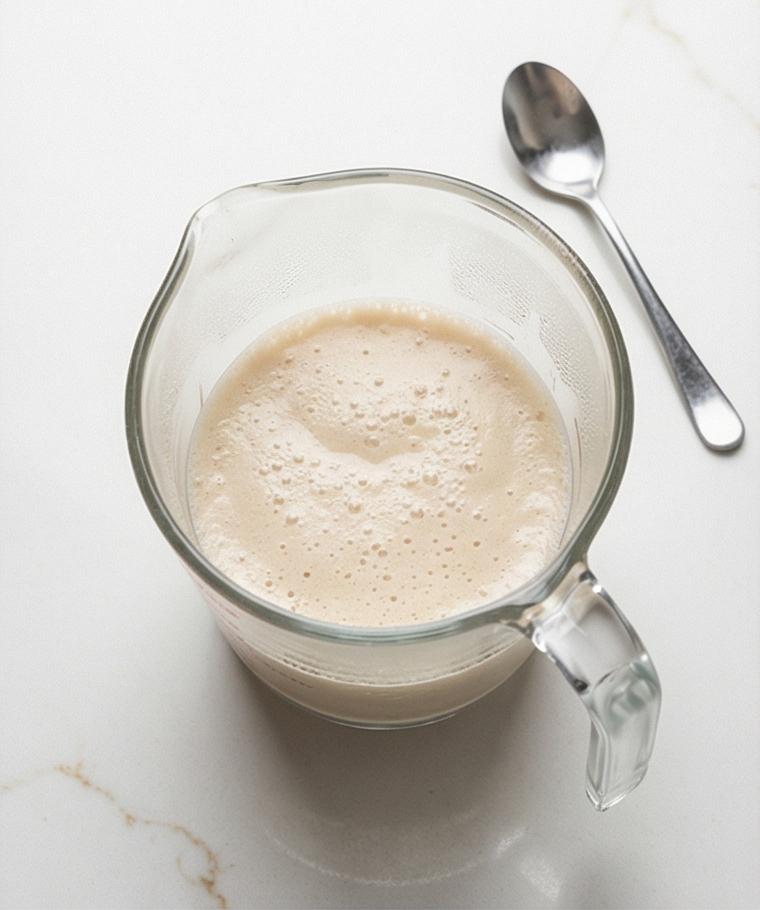
Warm the water and milk until they feel comfortably warm to the wrist, stir in the honey until fully dissolved, then sprinkle the active dry yeast over the surface and let it sit undisturbed. After 5–10 minutes the mixture should be visibly foamy with a light yeasty aroma; that glossy, bubbly surface is your signal the yeast is alive and ready to leaven. Treat this as a gentle, patient moment — keep the vessel clean and still so the foam can develop properly.
Step 2: Combine dry ingredients and add wet
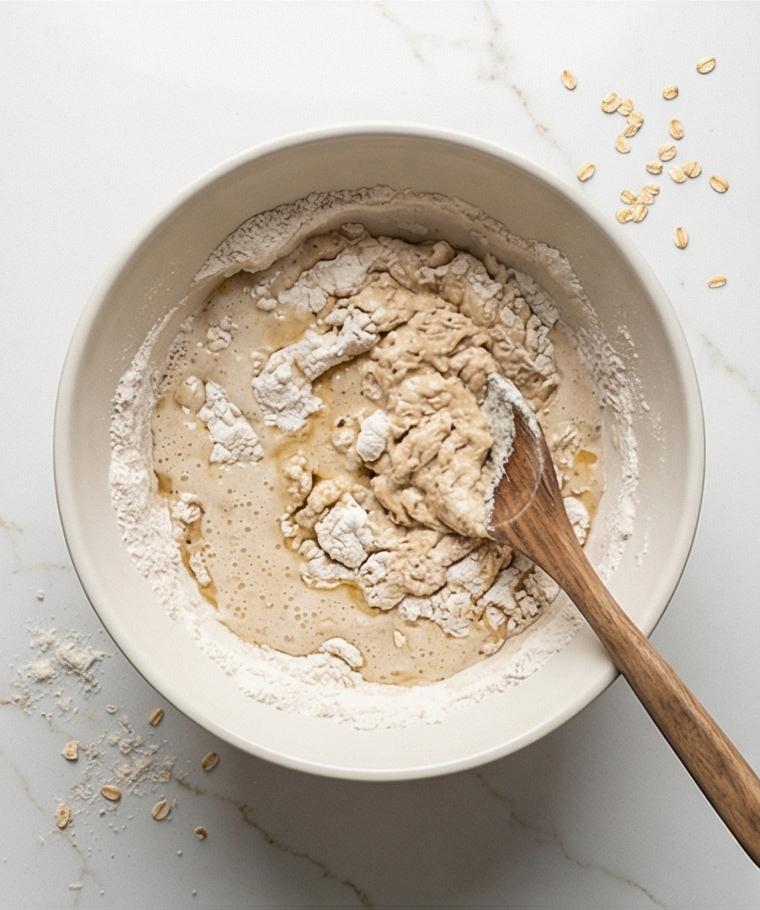
In a large mixing bowl whisk the whole wheat flour and salt thoroughly so the salt is evenly distributed. Make a well in the center, pour in the foamy yeast mixture and the neutral oil, then stir from the center outward with a sturdy wooden spoon or spatula until the dough comes together into a shaggy mass with no dry pockets. If it feels excessively wet, dust in 1–2 tablespoons of the reserved flour until it holds shape as a rough, cohesive dough.
Step 3: Knead to a smooth, elastic dough
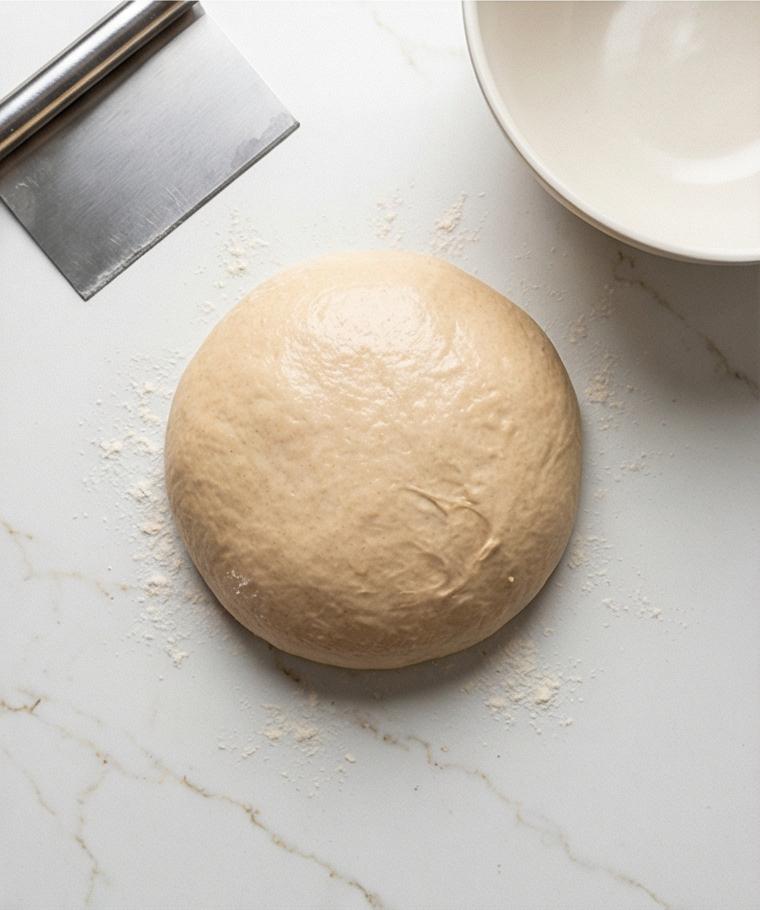
Turn the shaggy dough onto a lightly floured surface and knead by hand for 8–10 minutes (or with a stand mixer 5–7 minutes on low) until the exterior becomes smoother and the interior springs back when pinched; the final dough should be slightly tacky but not gluey. Keep only small dustings of flour to prevent sticking — you want a supple, elastic ball with visible gluten sheen and a satiny surface.
Step 4: Bulk rise in an oiled bowl
Lightly grease a clean mixing bowl with a film of neutral oil, shape the dough into a smooth ball and turn it once to coat. Cover tightly with plastic wrap or a clean, damp towel and let it rise in a warm, draft-free spot until doubled in size, about 60–75 minutes. The dough is ready when a fingertip indentation springs back slowly but doesn’t disappear completely — that gentle resilience tells you the gluten is relaxed and airy pockets have developed.
Step 5: Shape into a loaf and proof in the pan
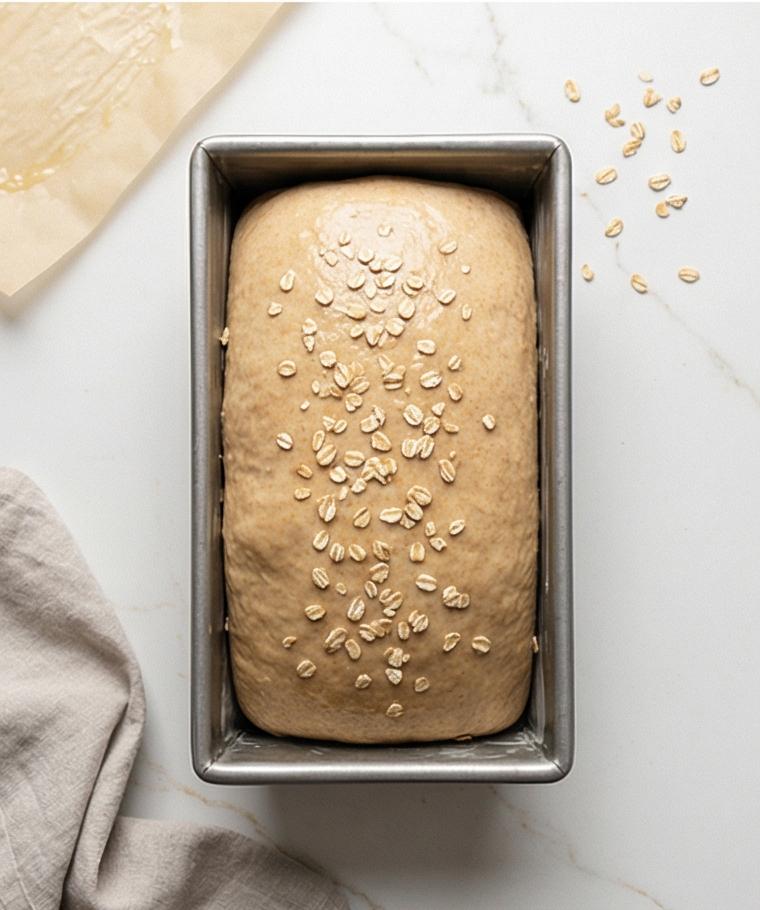
Gently deflate the risen dough, turn it out, and pat it into an 8 x 10 inch rough rectangle with the short side toward you. Roll from the short edge into a tight log, seal the seam and tuck the ends under to form a neat loaf. Lightly grease a 9 x 5-inch loaf pan and place the shaped dough seam-side down, centered in the pan. Cover loosely and let it proof a second time until it rises about 1 inch above the rim and looks puffy; if using toppings, brush gently with warm water or melted butter and press 1–2 tablespoons of rolled oats onto the surface.
Step 6: Bake, cool, and serve
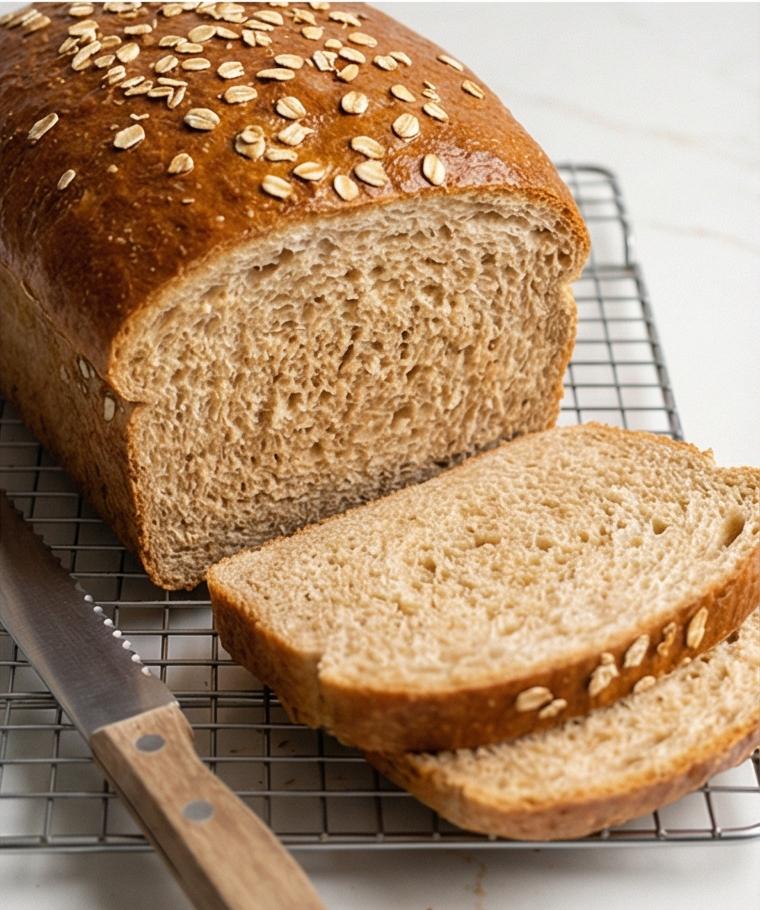
Preheat the oven to 375°F (190°C) and bake the loaf for 30–35 minutes until the crust is deep golden brown and the loaf sounds hollow when tapped, or registers 195–200°F (90–93°C) at the center. If the top browns too fast, tent loosely with foil for the last 10–15 minutes. Remove from the pan immediately onto a wire rack, brush with melted butter if desired, and cool completely (ideally 1½–2 hours) before slicing so the crumb sets and stays tender. Slice with a serrated knife and store fully cooled in an airtight bag at room temperature for up to 3 days or freeze for up to 2 months.
Notes
- Use an instant-read thermometer to check for 195–200°F inside the loaf for perfect doneness.
- If the top browns too quickly, tent with foil for the last 10–15 minutes.
- For more tender crumb, replace up to 25% of the whole wheat flour with bread flour.
- Store sliced bread in an airtight bag and freeze any extra slices for quick toasting.
- If yeast doesn't foam, discard and start again with fresh yeast and properly warmed liquid.