French Toast Recipe

Make French Toast Recipe with custardy brioche, warm vanilla, and maple syrup for a rich weekend breakfast.
Ingredients
- 4 large eggs (about 200 g), at room temperature
- 1 cup (240 ml) whole milk, at room temperature
- 1/4 cup (60 ml) heavy cream, at room temperature (for richer custard; can substitute additional milk)
- 2 tablespoons (25 g) granulated sugar
- 1 teaspoon (5 ml) pure vanilla extract
- 1/2 teaspoon ground cinnamon
- 1/8 teaspoon ground nutmeg (optional), freshly grated if possible
- 1/4 teaspoon fine sea salt or kosher salt
- 8 slices brioche or challah bread, each about 3/4 inch (2 cm) thick, preferably day-old
- 2 tablespoons (28 g) unsalted butter, divided, for greasing the pan or griddle
- 1 tablespoon (15 ml) neutral oil (such as canola or vegetable oil), divided, for greasing the pan or griddle (helps prevent the butter from burning)
- 1 cup (240 ml) pure maple syrup, at room temperature, for serving
- 1 cup (150 g) fresh berries (such as strawberries, blueberries, or raspberries), rinsed and patted dry, for serving (optional)
- 1 cup (240 ml) lightly sweetened whipped cream, cold, for serving (optional)
- 2 tablespoons (16 g) powdered sugar, for dusting just before serving (optional)
Instructions
Step 1: Warm the oven and prep a holding rack
If you plan to keep finished slices warm, preheat the oven to a low 200°F (95°C) and place a wire rack over a rimmed baking sheet — this simple set-up keeps French toast crisp without steaming. Arrange the rack and sheet on the quartz surface so they are ready to receive cooked slices; if you don't need the oven, simply set a single wire rack on the surface for resting warm toast.
Step 2: Whisk the custard until silky and slightly aerated
Crack the eggs into a medium matte charcoal ceramic mixing bowl and whisk until the yolks and whites are fully blended and lightly frothy, about 30–45 seconds. Pour in the whole milk and heavy cream and whisk until perfectly smooth and uniform. Add the granulated sugar, vanilla extract, cinnamon, nutmeg (if using), and salt, then whisk until the sugar is mostly dissolved and the custard looks smooth and gently speckled with spice flecks — glossy, fluid, and ready for soaking. Keep the whisk resting in the bowl so the tool reads as active.
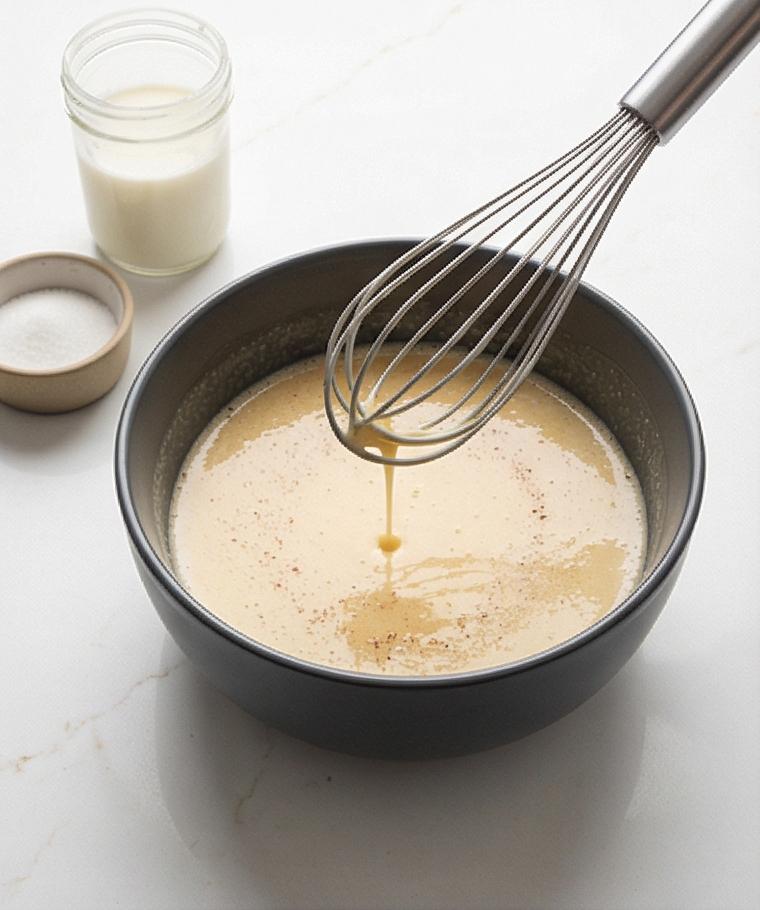
Step 3: Transfer the custard and prepare the bread for even soaking
Pour the finished custard into a shallow wide ceramic pie plate so a slice can lie flat and soak evenly. Lay the brioche or challah slices in a single layer on a cutting board; if the bread is very fresh, let the slices air-dry on the board for 10–15 minutes so they absorb custard without falling apart. Working in small groups, transfer 2–3 slices into the shallow dish and let them soak 15–20 seconds per side until the bread feels moist but still intact. Let excess drip back into the dish and place the soaked slices on the board, ready to cook. Keep the shallow dish, whisk, and the same charcoal bowl visible nearby for continuity.
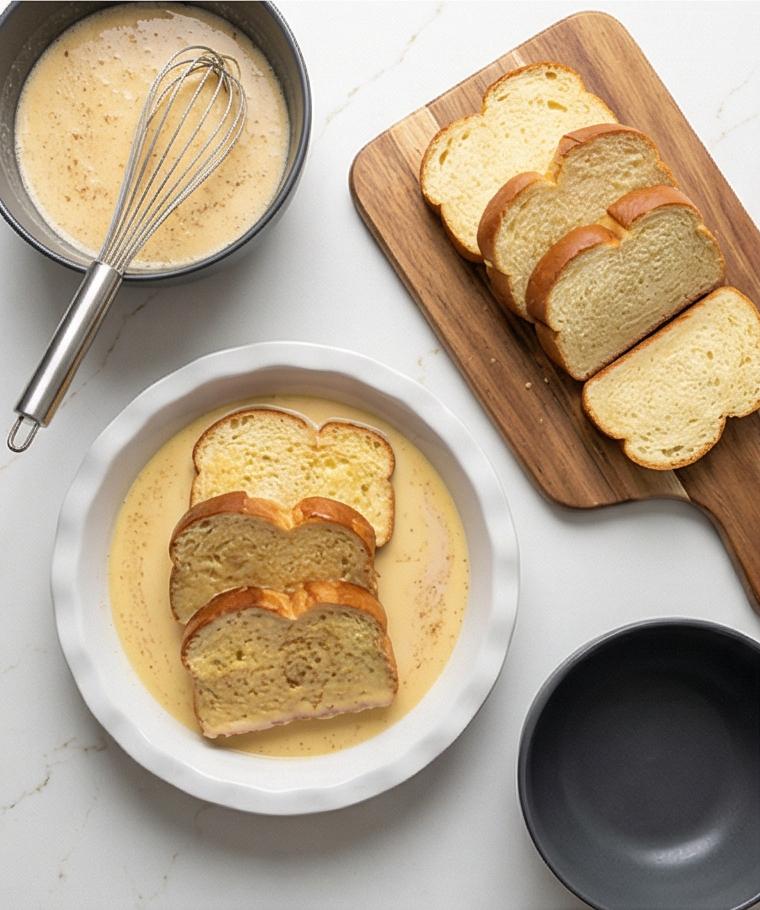
Step 4: Cook batches to a deep, even golden brown and rest on the rack
Instead of showing the stove, display the result: golden-brown French toast slices arranged in a single layer on the wire rack over the rimmed sheet on the quartz surface. Beside them, show small ramekins holding the measured unsalted butter and neutral oil used for greasing, a small spatula resting nearby, and a tiny butter knife with a smear of softened butter — evidence of gentle, controlled cooking where edges are crisp and centers remain custardy. The underside visible from above should show even caramelized color and crisp edges, while the tops hint at tender interior springiness.
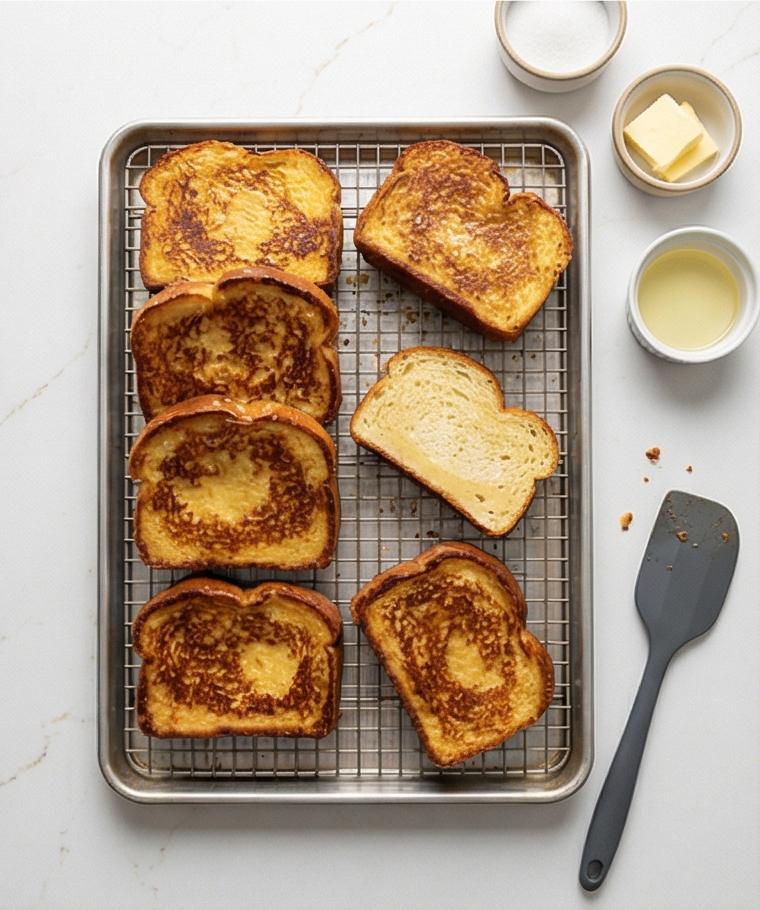
Step 5: Assemble and garnish two-slice servings with syrup, berries, and cream
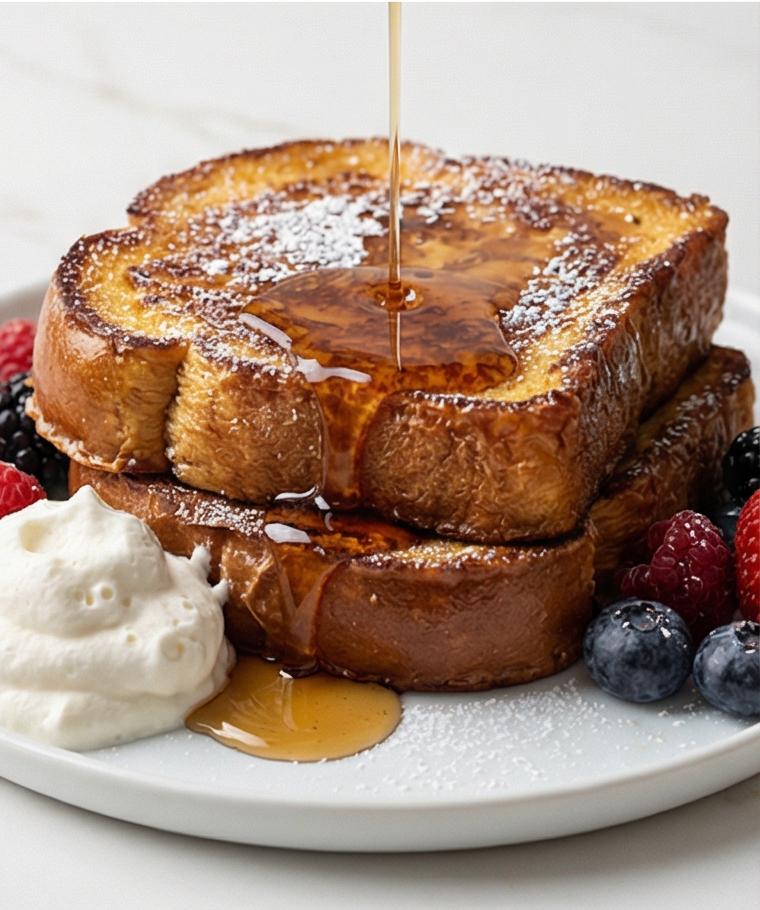
Plate two slices per serving on a low, wide white ceramic plate (or a rectangular platter if you prefer a linear presentation) set directly on the marble-like quartz. Nearby, show a room-temperature glass jug of maple syrup, a small bowl of rinsed fresh berries, a chilled bowl of lightly sweetened whipped cream, and a fine-mesh sifter with powdered sugar residue for dusting. Drizzle syrup from the jug so the flow and pooling textures are visible in plan view, arrange berries and a spoonful of cream, and leave the powdered sugar sifter poised to be dusted.
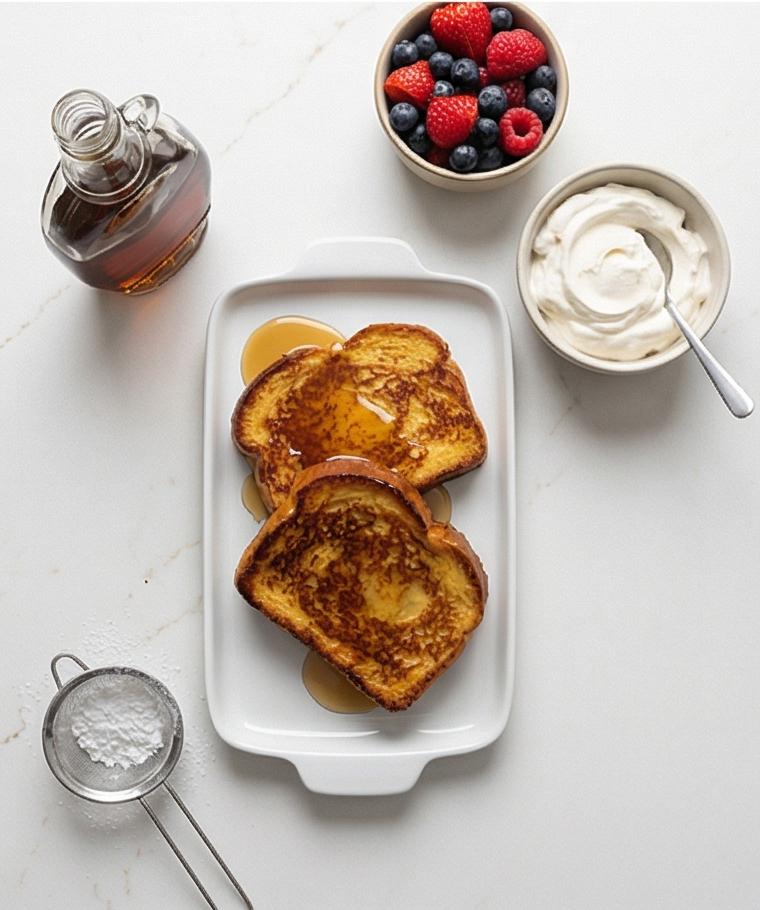
Step 6: Final presentation — hot, crisp, custardy French toast plated and ready
Plate two steaming, golden slices with crisp, deeply caramelized edges and a pillowy, custardy interior. Generously drizzle room-temperature maple syrup so it clings to edges and pools slightly at the plate's base, crown the stack with fresh berries and a cold quenelle of whipped cream, and dust a whisper of powdered sugar across the top. Capture a close, eye-level, very tight view that emphasizes texture contrasts: the fragile powdered-sugar dusting, glossy syrup ribbons, matte brioche crumb, and the velvety cream.
Notes
- Use day-old brioche or challah for best absorption and texture.
- Test-soak one slice to gauge soak time if your bread is very fresh.
- Keep finished slices on a wire rack in a low oven to stay crisp while you finish the batch.
- For extra flavor, toast slices briefly before soaking for a nuttier edge.
- Clarified butter can be used to prevent burning at higher heat.