Crème Brûlée Recipe
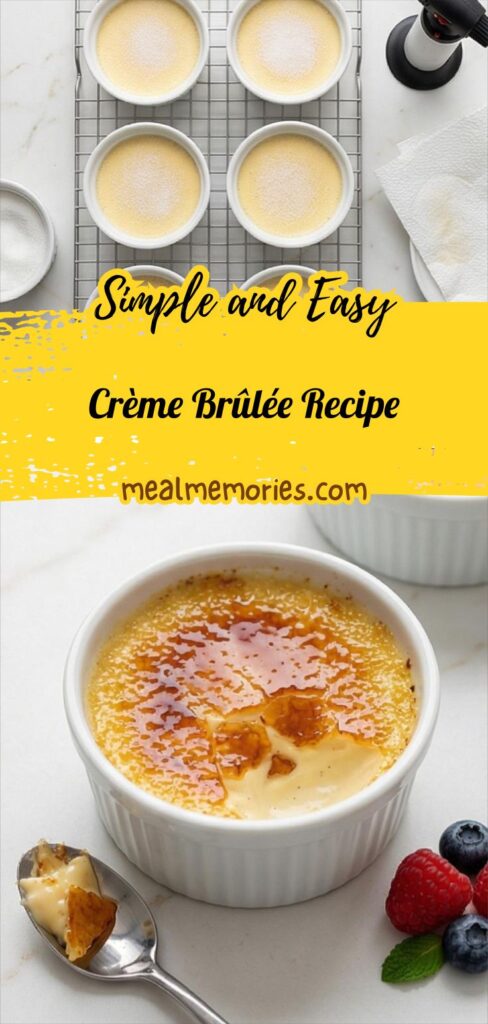
Make Crème Brûlée Recipe: silky vanilla custard with a crisp caramel top, perfect for elegant weeknight desserts.
Ingredients
- 2 1/2 cups (600 ml) heavy cream (minimum 36% fat)
- 1 whole vanilla bean, split lengthwise and seeds scraped (or 2 teaspoons pure vanilla extract, room temperature)
- 6 large egg yolks (about 110 g), at room temperature
- 1/2 cup (100 g) granulated sugar, plus 6–8 teaspoons (24–32 g) more for caramelizing the tops
- 1/8 teaspoon fine sea salt
- Fresh berries (such as raspberries, strawberries, or blueberries), for optional garnish
- Small fresh mint leaves, for optional garnish
Instructions
Step 1: Preheat and set the bain‑marie
Preheat the oven to 300°F (150°C) and place a neatly folded kitchen towel in the bottom of a deep roasting pan. Arrange six 4‑ounce (120‑ml) clean white porcelain ramekins on the towel, spaced evenly so steam and gentle heat will circulate. Set a kettle of water to heat until very hot so it’s ready for the water bath; this step is about setting the gentle, even environment the custards will bake in and making sure your vessels are perfectly steadied and ready on the single surface.
Step 2: Whisk the yolks and sugar to a ribbon
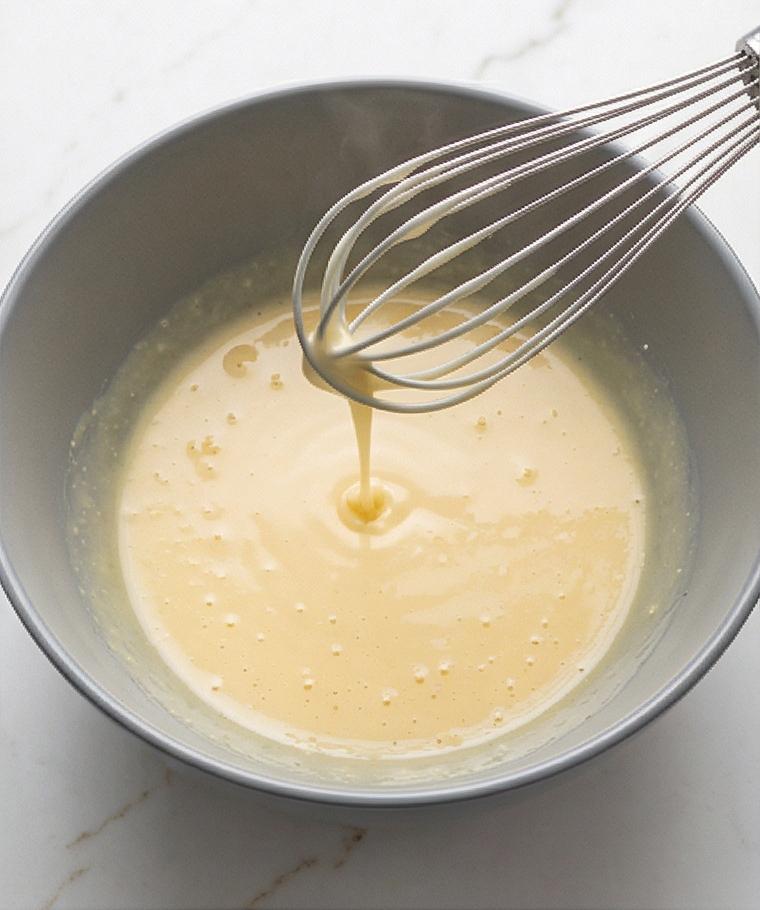
In a modern matte grey ceramic mixing bowl, whisk together six large egg yolks with 1/2 cup (100 g) granulated sugar and 1/8 teaspoon fine sea salt. Vigorously whisk until the mixture becomes silky, pale and slightly thickened — you should be able to lift the whisk and see a slow ribbon that barely holds its shape. Rest the polished stainless whisk across the rim of the bowl, leaving faint streaks of pale custard clinging to the wires; this is the visual of aeration and structure.
Step 3: Warm the vanilla‑flecked cream and temper the yolks
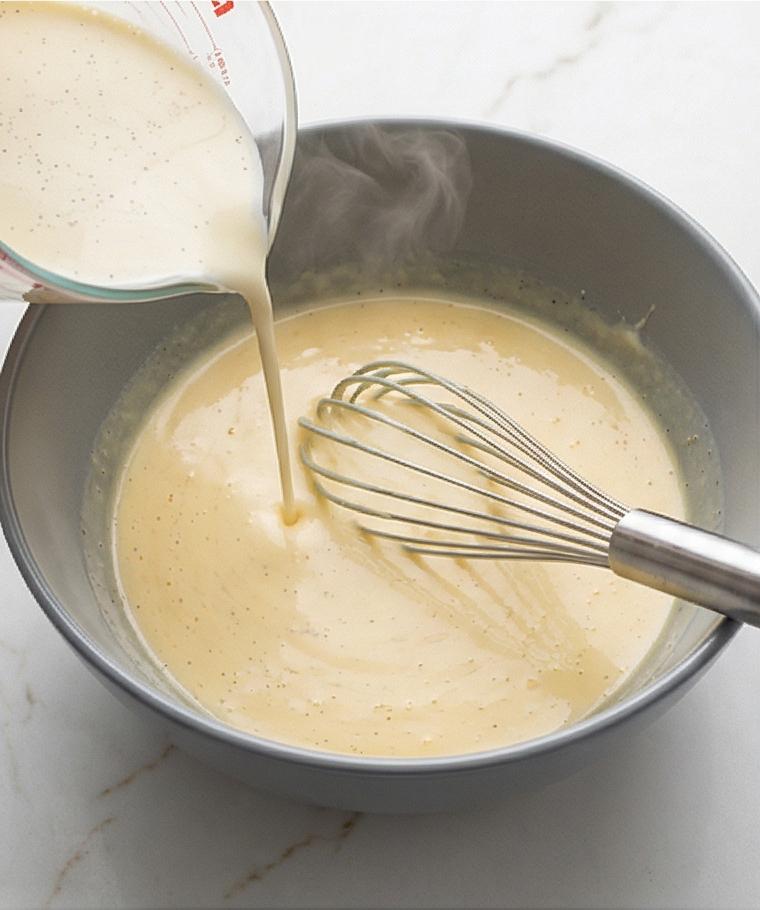
Warm 2 1/2 cups (600 ml) heavy cream in a glass measuring jug or pale enamel pitcher until steaming with tiny bubbles at the edges; if using a vanilla bean, the speckled seeds cling to the cream and the pod rests nearby in a small dish. Remove from heat, let cool a moment, then slowly ladle a thin stream — about 1/2 cup at a time — of the warm cream into the yolk mixture while whisking in the same matte grey bowl until the yolks are gently warmed and loosened. The bowl shows a glossy, ribboned custard now thinned to a silky pourable state, flecked with vanilla.
Step 4: Strain and portion into ramekins, prepare the water bath
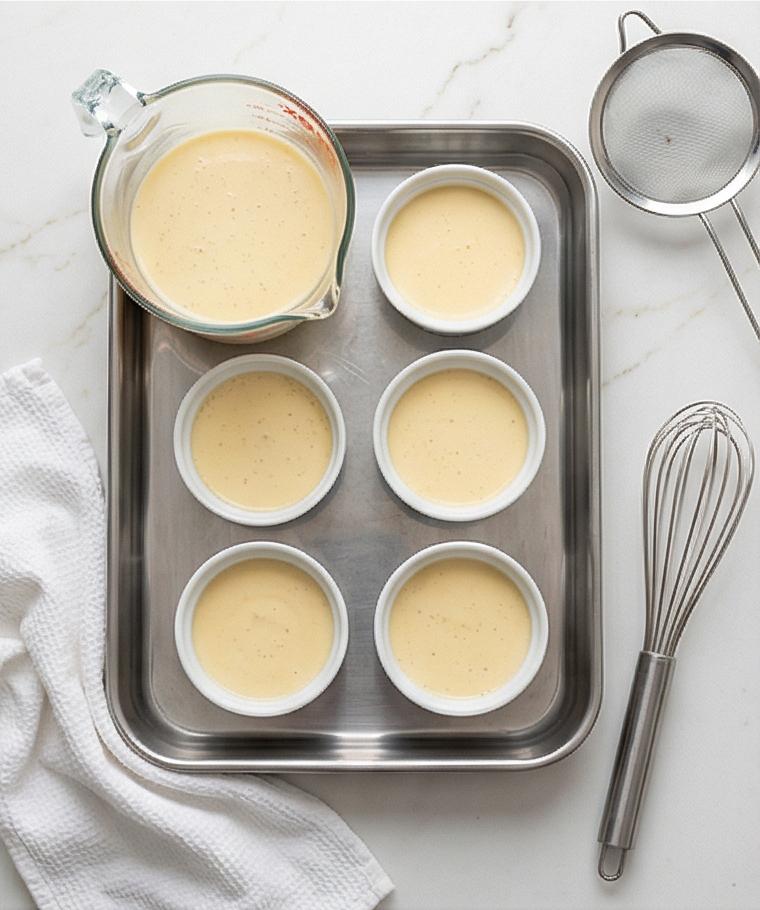
Set a fine‑mesh sieve over a clear measuring jug and pour the custard through to ensure a glassy, bubble‑free texture; skim any foam and discard. Carefully divide the smooth, pale custard evenly among the six white ramekins, filling each to about 1/8 inch (3 mm) below the rim. Place the filled ramekins back into the prepared roasting pan on the towel. Pour very hot water into the pan until it reaches about halfway up the ramekin sides — the calm, reflective water line communicates gentle, even baking. The whisk and the grey bowl remain nearby, tidy and present.
Step 5: Cool, chill, and sugar the tops for caramelizing
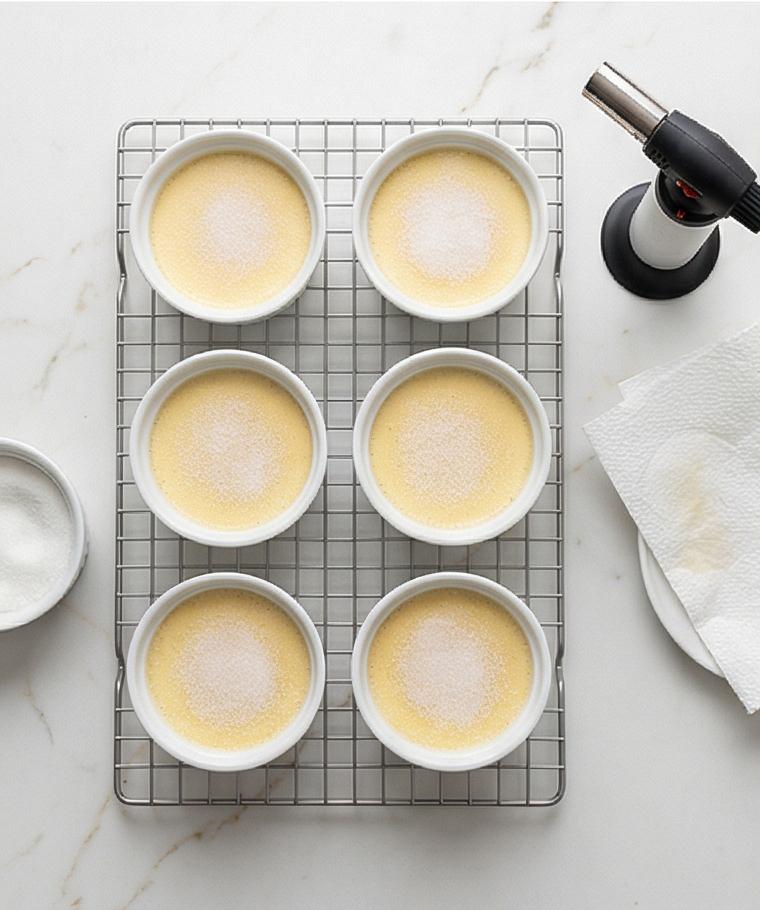
After baking until the edges are set and centers wobble softly, lift the ramekins out of the water bath and let them cool to barely warm on a wire rack on the same surface. Once near room temperature, cover each ramekin with plastic wrap (not touching the custard surface) and refrigerate until fully set, ideally 8–24 hours. Before serving, blot any surface moisture with a paper towel, then evenly sprinkle 1–1 1/2 teaspoons granulated sugar across each top, tilting and tapping to create a thin, uniform crystalline layer. Arrange a small butane torch nearby on the marble surface, ready but not lit — the sugared, matte white tops glisten faintly with raw granules.
Step 6: Caramelize and present the final crème brûlée
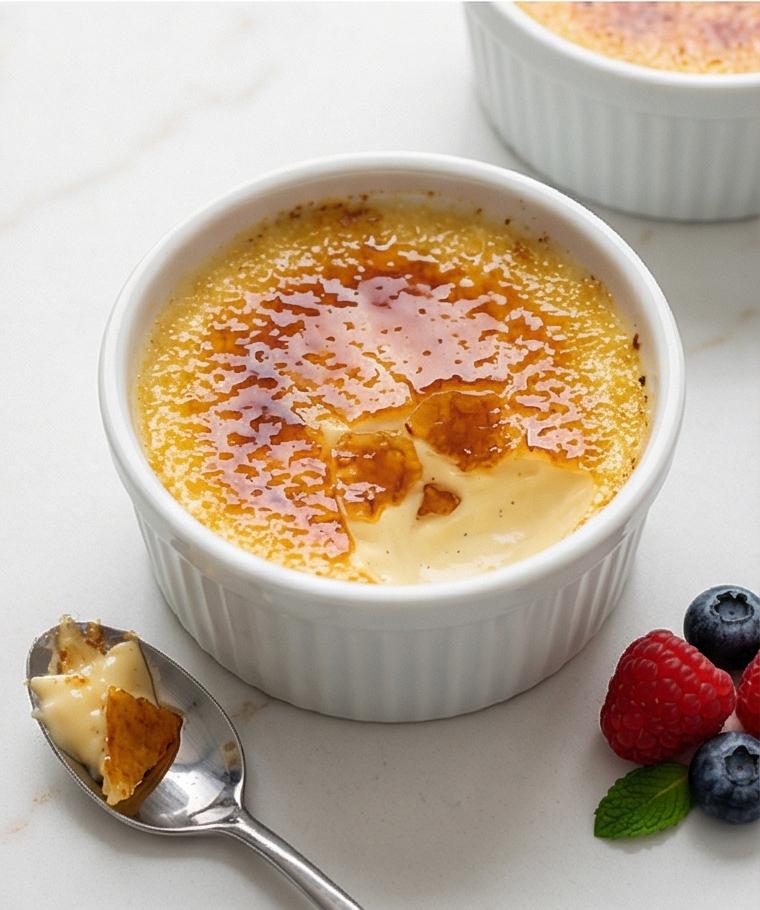
Use a kitchen torch or broiler to melt and caramelize the sugar until a deep golden‑amber, glassy shell forms; allow the caramel to cool and harden for a few minutes. Present each ramekin chilled, the cracked, brittle caramel contrasting with the custard’s satin interior. Garnish sparingly with a couple of fresh berries and a tiny mint leaf if desired. The final plating is a very close, eye‑level view of a single white porcelain ramekin: a thin, glossy amber dome, hairline crack revealing the creamy pale custard beneath, fine vanilla flecks visible in the custard, and soft luminous highlights on the caramelized surface — the tactile invitation to tap through the shell with a spoon.
Notes
- Use full-fat heavy cream for the creamiest texture.
- Temper the egg yolks slowly to avoid curdling and strain the custard for a silky finish.
- Chill custards 8-24 hours for best texture before caramelizing.
- Use a kitchen torch for even caramelization; a broiler works as a backup.
- Store uncaramelized custards covered in the refrigerator for up to 3 days.