Crab Cakes Recipe

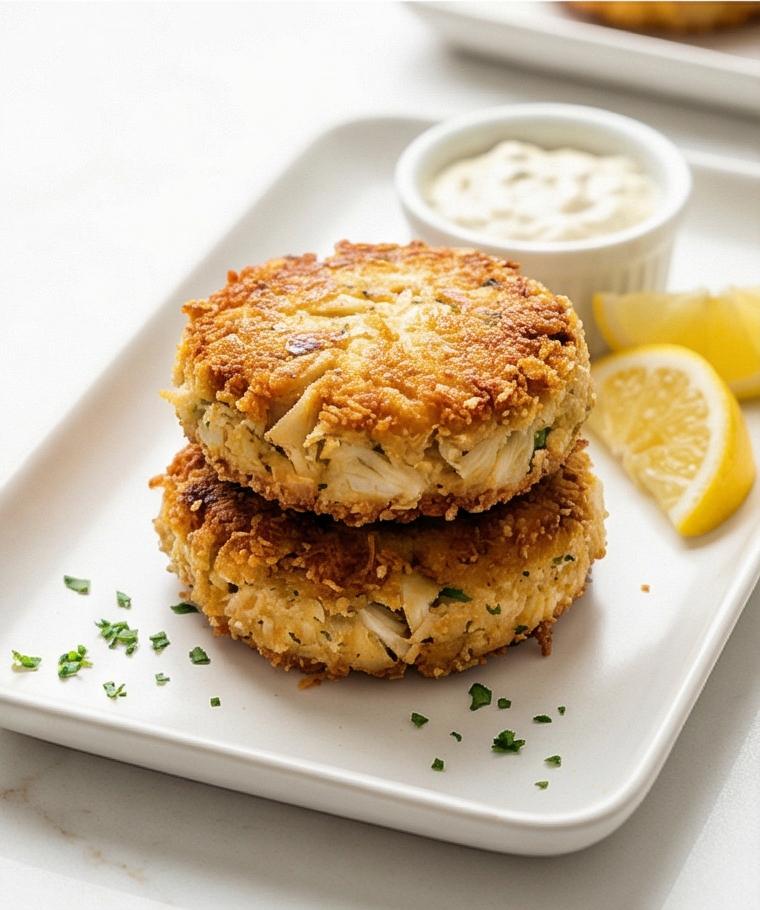
Make this Crab Cakes Recipe for golden, crisp crab cakes with a tender, flaky center—perfect for parties or weeknight dinners.
Ingredients
- 1 lb (450 g) lump crab meat, well-drained and picked over carefully for shells and cartilage
- 1 large egg (about 50 g), at room temperature
- 1/4 cup (60 g) mayonnaise, at room temperature
- 2 teaspoons (10 ml) Dijon mustard
- 1 teaspoon (5 ml) Worcestershire sauce
- 1 tablespoon (15 ml) freshly squeezed lemon juice
- 1/2 teaspoon (2–3 ml) hot sauce (such as Tabasco), optional
- 1 1/2 teaspoons (4.5 g) Old Bay seasoning or other seafood seasoning
- 1/4 teaspoon (1.5 g) fine sea salt
- 1/4 teaspoon (0.5 g) freshly ground black pepper
- 2 tablespoons (8 g) finely chopped fresh flat-leaf parsley, plus more for garnish
- 1 tablespoon (3 g) finely sliced fresh chives or green onion tops
- 1/2 cup (25 g) panko breadcrumbs, plus up to 2 tablespoons (8 g) more if needed for consistency
- 1/3 cup (18 g) panko breadcrumbs, for coating the crab cakes
- 3 tablespoons (45 ml) neutral oil with a high smoke point (such as canola, grapeseed, or vegetable oil)
- 2 tablespoons (28 g) unsalted butter, chilled and cut into small pieces
- Lemon wedges, for serving (about 1 lemon, cut into wedges)
- Tartar sauce or remoulade, for serving (about 1/2 cup / 120 ml)
- Extra finely chopped fresh parsley, for optional garnish
Instructions
Step 1: Prepare the crab
Place the lump crab meat in a fine-mesh strainer set over a bowl and let excess liquid drain for 5–10 minutes. Gently press with the back of a spoon to coax out remaining moisture, then transfer the crab to a clean mixing bowl and carefully pick through it with your fingers to remove any shells or cartilage, keeping the large flaky lumps as intact as possible. Treat the crab gently so the texture stays lumpy and delicate rather than shredded.
Step 2: Make the binding mixture
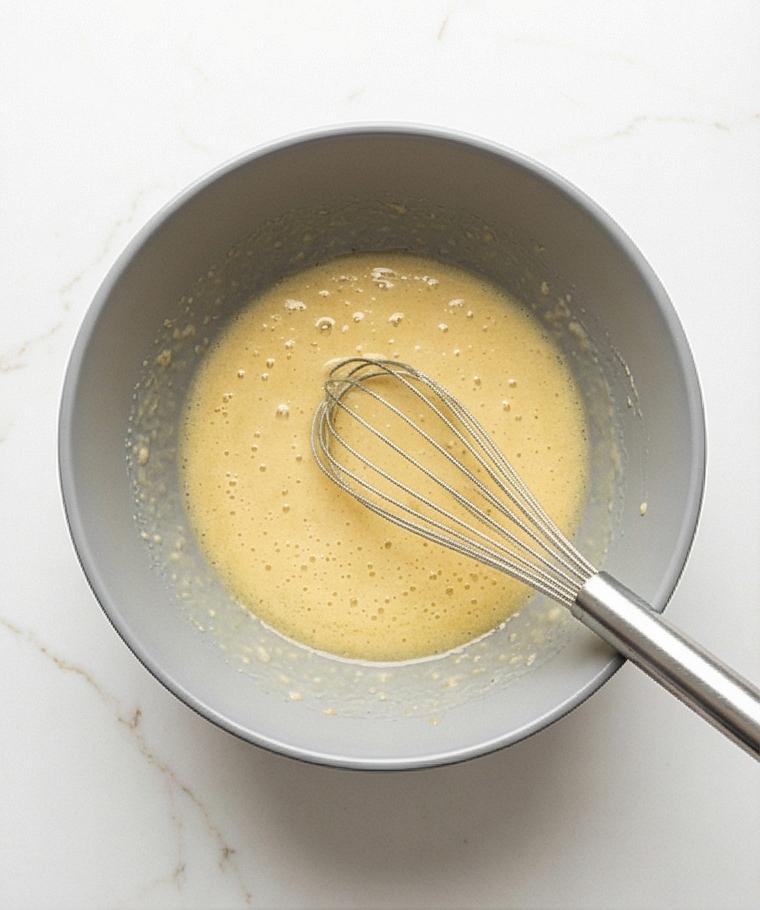
In a large mixing bowl whisk the whole egg, mayonnaise, Dijon mustard, Worcestershire sauce, freshly squeezed lemon juice, and hot sauce (if using) until a glossy, smooth emulsion forms. The mixture should be homogenous and slightly thickened, with a pale yellow sheen and tiny air bubbles from the whisk.
Step 3: Season the base
Add Old Bay seafood seasoning, fine sea salt, and freshly ground black pepper to the wet emulsion, whisking until the spices are evenly distributed. The seasoned base will smell bright and savory—salty, tangy, and briny—ready to carry the crab flavor.
Step 4: Add herbs and initial breadcrumbs
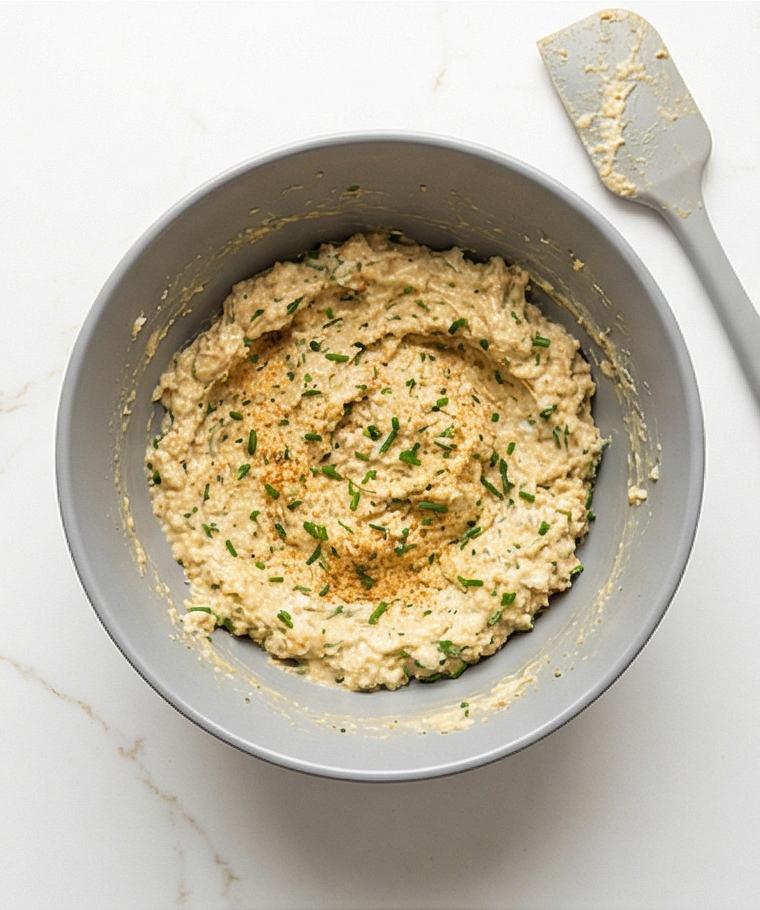
Fold in finely chopped flat-leaf parsley and thinly sliced chives or green onion tops so green flecks are evenly dispersed through the mixture. Add the first portion of panko breadcrumbs and fold gently with a spatula until the crumbs are fully moistened and the mixture becomes thick and spoonable, not runny.
Step 5: Fold in the crab gently
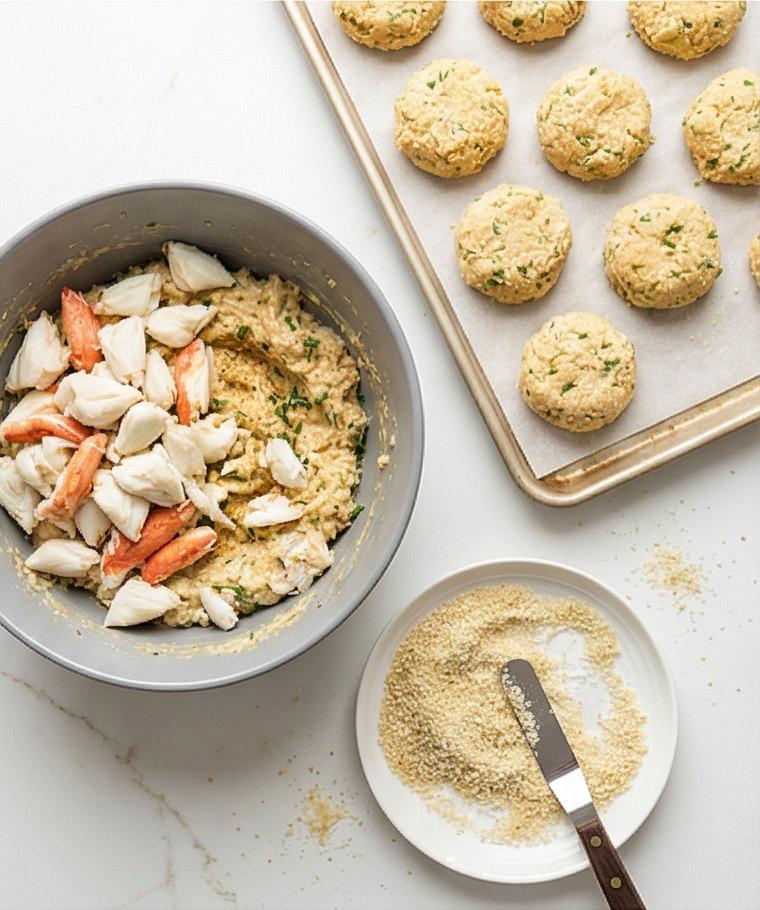
Add the drained, picked-over crab meat to the bowl and using a rubber spatula (or very gently with your hands) fold only until combined. Preserve the larger lumps of crab so the final cakes read as crab-forward. The mixture should hold together when pressed but still show visible pieces of shellfish.
Step 6: Adjust consistency if needed
If a small pressed patty doesn’t hold its shape, sprinkle in up to two more tablespoons of panko, one tablespoon at a time, folding gently after each addition. Stop as soon as the mixture forms a cohesive patty—avoid adding too many crumbs so the cakes stay light and not dry.
Step 7: Shape the crab cakes
Line a baking sheet with parchment paper. Lightly oil your hands and divide the mixture into 8–10 even portions. Gently form each portion into compact patties about 2½–3 inches wide and ¾–1 inch thick, setting them on the parchment as you go. Keep the edges clean and the tops slightly domed.
Step 8: Coat the crab cakes
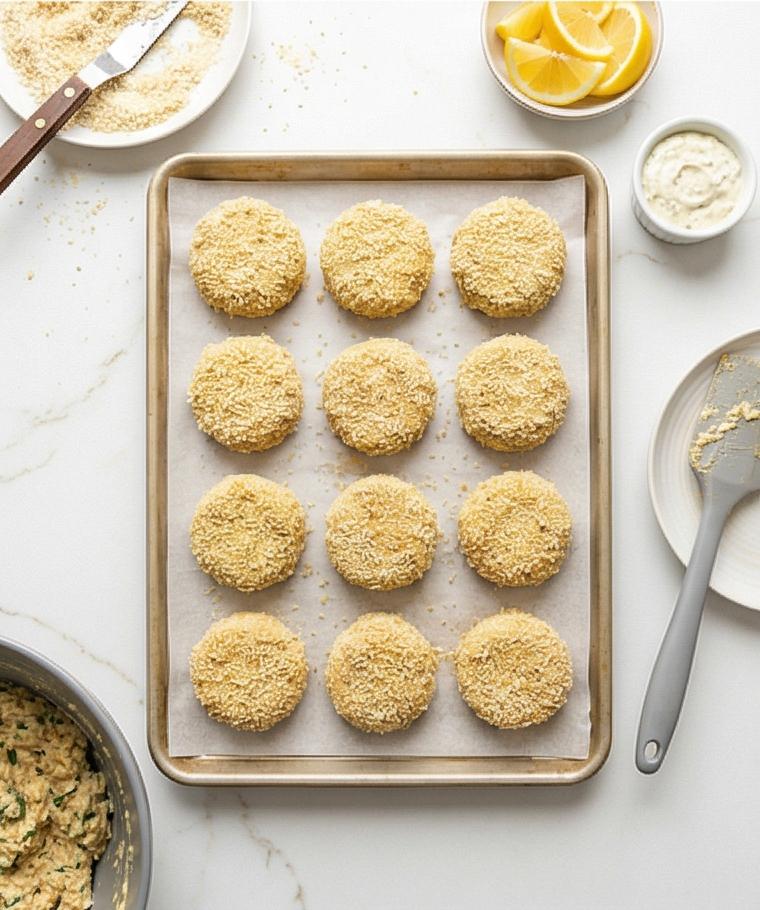
Spread the coating panko in a shallow dish and, one at a time, lightly press the top and bottom of each patty into the crumbs, shaking off excess. Return the lightly coated cakes to the parchment-lined sheet; the crumb layer should be thin and even to deliver a delicate, crisp crust.
Step 9: Chill to set
Cover the tray loosely with plastic wrap and refrigerate the coated cakes for at least 30 minutes and up to 4 hours. Chilling firms the mixture so the cakes hold together during cooking and ensures a tidy, consistent crust.
Step 10: Optional: Preheat a warming oven
If you will cook in batches, preheat a low oven to keep cooked cakes warm on a wire rack set over a baking sheet. This step is optional but helpful for timing when serving many cakes.
Step 11: Preheat the pan and fat
About five minutes before cooking, heat a heavy skillet over medium heat and add neutral oil and chilled pieces of butter, warming until the butter melts and the fat shimmers but doesn’t smoke. You should see a gentle sizzle and a glossy surface in the pan—the ideal frying environment for achieving a golden crust.
Step 12: Fry the first batch
Place several cakes in the hot fat without crowding. Cook the first side 3–4 minutes until the bottom is deep golden brown and the edges look set. Aim for a gradual browning so the crust becomes crisp without burning.
Step 13: Turn and finish cooking
Gently flip each cake with a thin spatula and cook the second side another 3–4 minutes until golden all over and the center is hot. The cakes should be deeply golden, crisp, and still moist inside.
Step 14: Keep warm while cooking remaining cakes
Transfer cooked cakes to the prepared wire-rack tray in the warm oven so they stay crisp while you finish the rest. If the pan darkens, wipe out burnt bits, add a splash more oil and a small piece of butter, and reheat to a gentle sizzle before the next batch.
Step 15: Fry remaining crab cakes
Repeat the frying process until all cakes are cooked through, keeping the oil temperature steady and replenishing fat as needed. Each batch should take roughly the same time to achieve that consistent golden crust.
Step 16: Rest briefly before serving
Let the cooked cakes rest for 3–5 minutes on a rack or paper-towel-lined plate to drain excess surface oil and to allow the crust to stay crisp while the interior settles.
Step 17: Serve and garnish
Arrange warm crab cakes on a serving platter, garnish with extra finely chopped parsley, and serve immediately with lemon wedges and tartar sauce or remoulade in a small ramekin. Enjoy them hot and crisp for the best texture.
Step 18: Serving suggestions and storage
Offer the crab cakes as an appetizer (one or two per person) or a main course with simple sides like a green salad or coleslaw. Refrigerate cooled leftovers, covered, for up to two days and re-crisp in a 350°F oven for 10–12 minutes before serving.
Notes
- Drain crab thoroughly to avoid soggy cakes
- Fold crab gently to preserve large flakes
- Chill shaped cakes to help them hold together while frying
- Re-crisp leftovers in a 350°F oven for 10–12 minutes
- Freeze uncooked patties on a tray, then bag for up to one month