Baguette Recipe
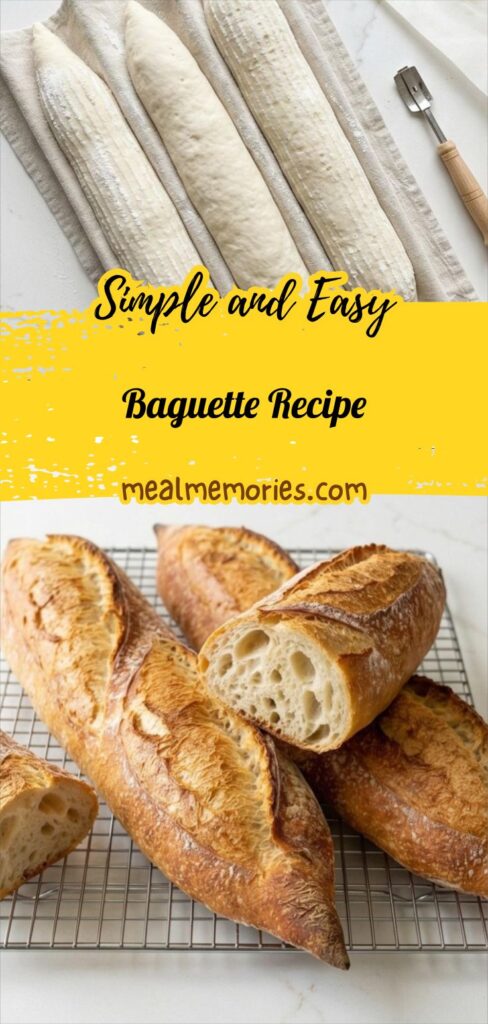
Bake a crisp, airy Baguette Recipe with simple ingredients; make warm baguettes for sandwiches, dipping, or entertaining.
Ingredients
- 3 1/3 cups (500 g) bread flour, plus extra for dusting
- 1 1/2 cups (360 g) cool water, about 68–72°F (20–22°C)
- 1 3/4 teaspoons (10 g) fine sea salt
- 1 1/4 teaspoons (4 g) instant yeast (also called rapid-rise or bread machine yeast)
- 1 teaspoon (4 g) diastatic malt powder (optional, for better browning and flavor)
- 1 tablespoon (15 ml) neutral oil, for lightly greasing the bowl (optional; can also use a light mist of nonstick spray)
- 2 tablespoons (15 g) rice flour, for dusting the couche or towel (optional but helps prevent sticking)
- 2 tablespoons (15 g) all-purpose flour, for dusting the couche or towel and tops of baguettes
- 1 cup (240 ml) hot tap water, for creating steam in the oven (do not add to the dough)
Instructions
Step 1: Combine dry ingredients and form a shaggy dough
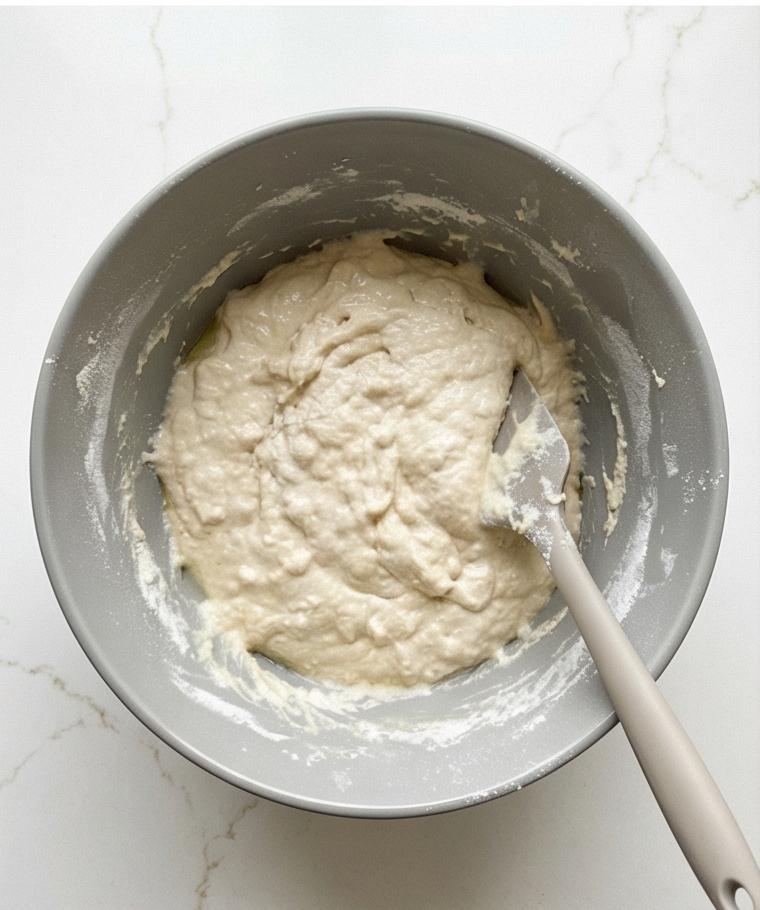
In a large mixing bowl whisk together the bread flour, instant yeast, and the optional diastatic malt until evenly blended. Pour the cool water into the dry mix and, using a sturdy spatula or your hand, fold and scrape until no dry flour remains and a rough, shaggy, slightly sticky mass has formed — patches of dry flour and wet streaks should still be visible and the surface will look irregular and glossy where hydrated. This is the raw, hydrated dough stage: messy, tacky, and full of promise.
Step 2: Rest for autolyse and begin gluten development
Cover the bowl tightly and let the dough rest at room temperature for about thirty minutes to hydrate the flour fully; during this time the dough will relax, the surface becoming less powdery and more cohesive, though still delicate and springy. This quiet resting period helps the flour swell and the gluten begin to align without any handling — the dough’s texture should shift from ragged clumps to a more joined, slightly smoother mass with faint strands visible when you stretch a piece.
Step 3: Incorporate salt and build structure with folds
Sprinkle the fine sea salt evenly over the dough, wet your hand, and perform pinch-and-folds: lift an edge, stretch it up, fold it toward the center, rotate the bowl and repeat until the salt is fully incorporated and the dough surface feels noticeably smoother and more cohesive. These simple folds develop strength without intensive kneading; you’ll see the dough tighten a bit, the surface losing some of its initial stickiness and gaining gentle sheen and elasticity as gluten forms.
Step 4: Bulk fermentation with gentle stretch-and-folds
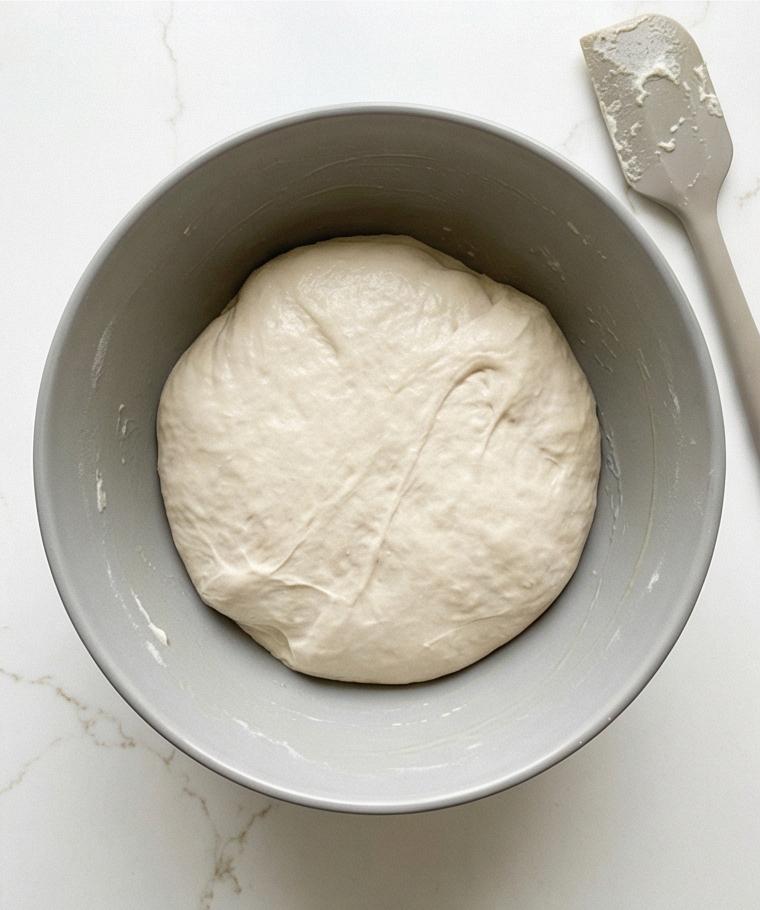
Lightly grease a clean medium bowl and transfer the dough seam-side down into it. Cover and leave to ferment at room temperature for 1½–2 hours, performing 2–3 sets of quick stretch-and-folds during the first hour (every 30 minutes, reach into the bowl, stretch one side up and fold it over). Between sets the dough will relax, then puff and become smoother and slightly jiggly — the overall volume should increase and the surface should look domed with tiny bubbles just under the skin, indicating active fermentation and internal gas development.
Step 5: Divide and preshape into loose logs
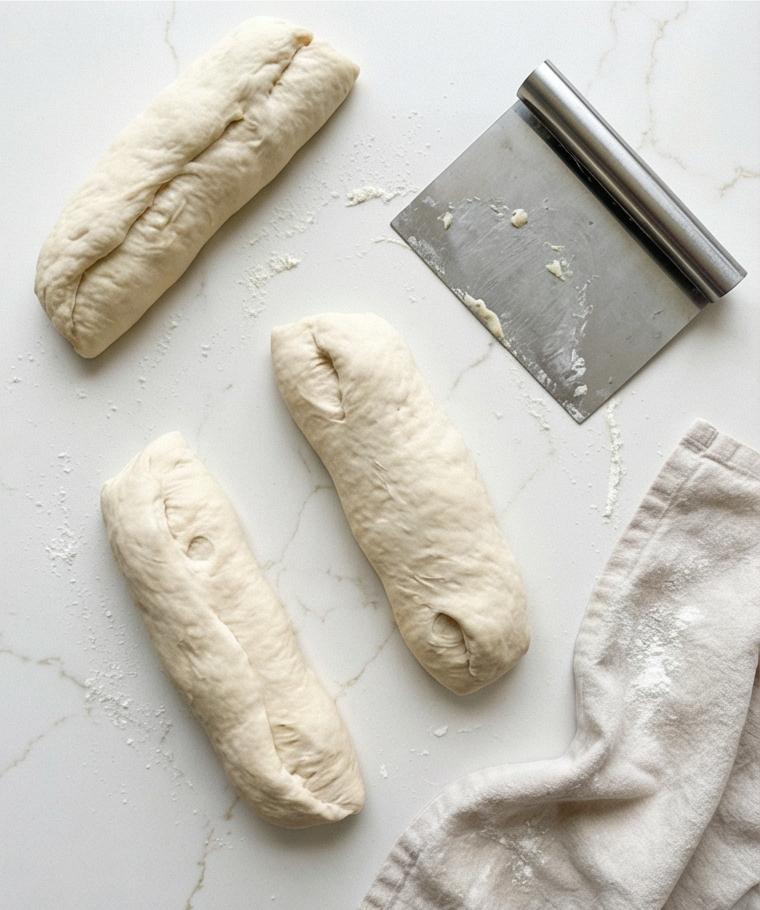
Turn the fermented dough gently onto a lightly floured work surface, taking care not to fully deflate it. Using a bench scraper, divide the mass into three equal portions. For each piece, pat into a loose rectangle, fold the top third down and the bottom third up, then turn seam-side down and cup your hands to form a soft log — the preshaped pieces should look delicate, slightly tacky, with soft seam lines and a pillowy feel that promises more tension during final shaping.
Step 6: Rest, prepare the couche, and shape into baguettes
Cover the preshaped logs with a lightly floured towel and let them rest 20–25 minutes until they relax. Meanwhile, arrange a linen couche or smooth kitchen towel on a large sheet and dust generously with a blend of rice flour and all-purpose flour, creating parallel ridges to support the loaves. Take each relaxed log, flip seam up, fold the long edges to the center, seal with the heel of your hand, then fold lengthwise and roll gently to 13–15 inches, tapering the ends to classic points. Place each shaped baguette seam-side up into the floured ridges, spacing them so their sides are supported and the exterior shows a lightly floured, taut skin.
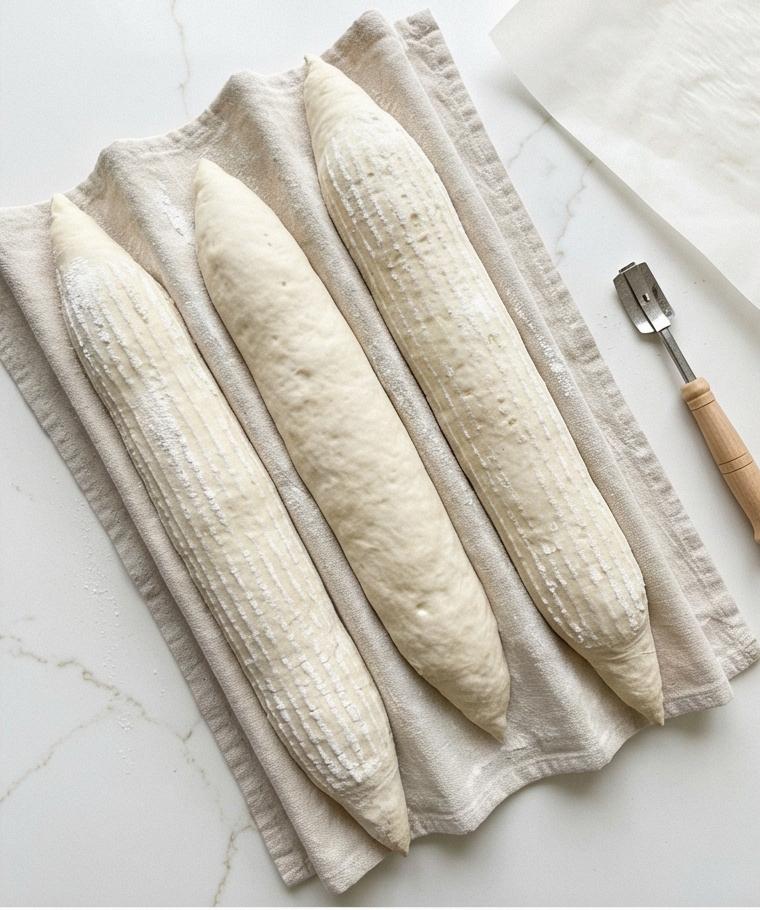
Step 7: Final proof, score, and ready for the oven
Cover the couche loosely and proof at room temperature until the loaves are noticeably puffy and spring back slowly when prodded; they should neither collapse nor double. When almost ready, transfer each baguette seam-side down onto parchment, dust lightly with a little all-purpose flour for rustic contrast, and use a very sharp lame or serrated blade to score 3–5 diagonal slashes at a 30–45° angle to create the classic ears — the scored surface should show clean, slightly floured edges and a taut skin ready to burst and bloom in heat.
Step 8: Bake, cool, and serve
Bake with steam until a deep golden-brown crust develops and the loaves sound hollow when tapped; if needed, adjust final minutes for color and crispness. Remove the baguettes and transfer them to a wire cooling rack placed on the same work surface, allowing them to rest at least 45–60 minutes so the crumb sets. When cooled, slice on a slight diagonal to reveal an open, fragrant crumb and serve simply — butter, olive oil and sea salt, or use for sandwiches.
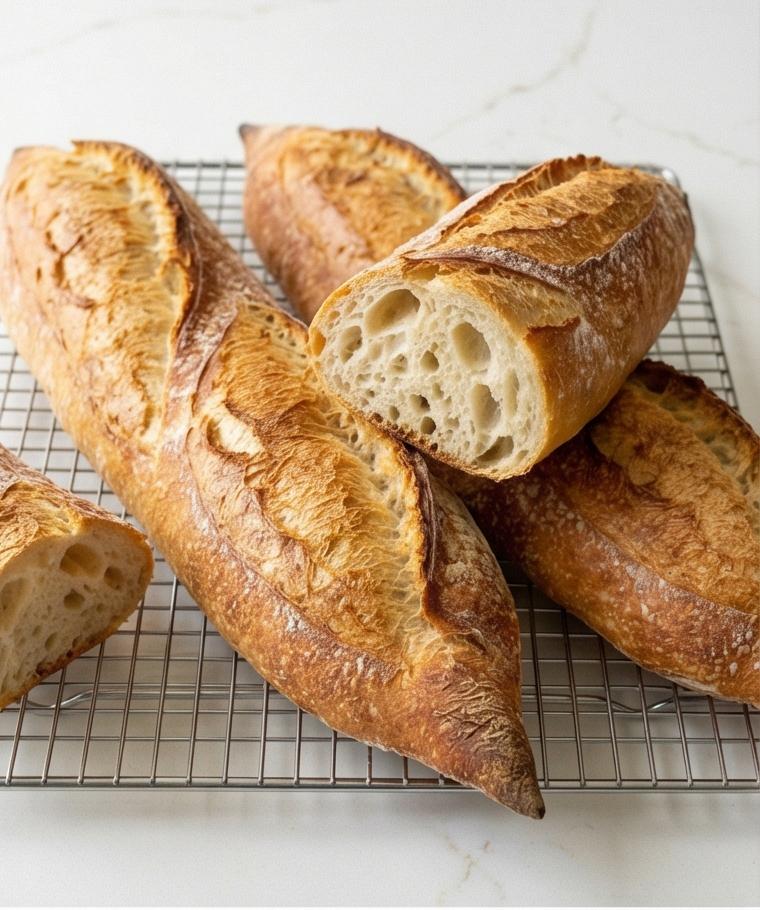
Notes
- Use a kitchen scale for best results when measuring flour and water
- Dust the couche liberally with rice flour to prevent sticking
- Allow the baguettes to cool 45-60 minutes before slicing to set the crumb
- For extra crust, bake with steam by adding a pan of hot water to the oven
- Refrigerate the shaped dough overnight for deeper flavor and flexible timing