Macarons Recipe
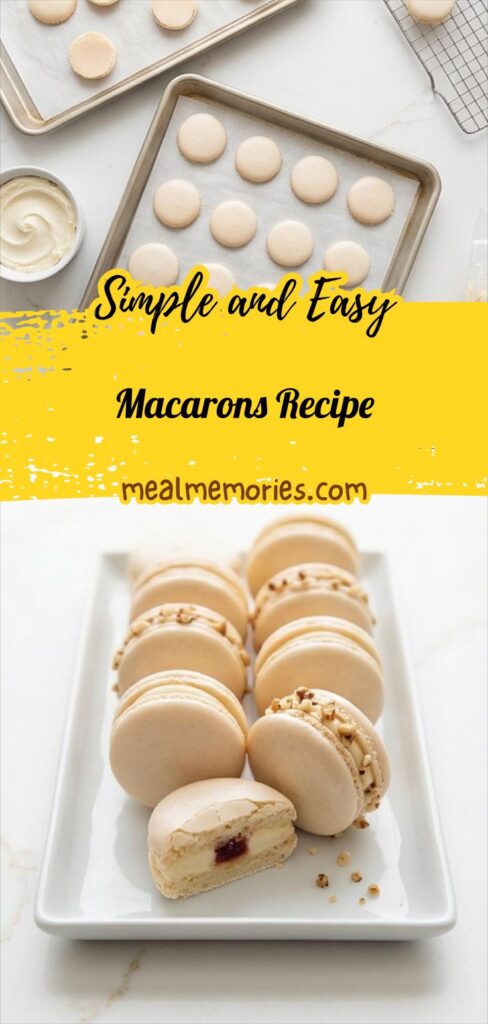
Make elegant Macarons Recipe with crisp shells and vanilla buttercream. Try this macaron method for reliable results.
Ingredients
- 110 g blanched fine almond flour (about 1 cup), at room temperature
- 200 g powdered (confectioners') sugar (about 1 2/3 cups), sifted
- 100 g egg whites (from about 3 large eggs), aged and at room temperature
- 1/4 teaspoon cream of tartar (optional but recommended for stability)
- 1/8 teaspoon fine sea salt
- 90 g granulated sugar (about 1/2 cup minus 1 tablespoon)
- 1 teaspoon pure vanilla extract
- Gel food coloring, as desired (avoid liquid food coloring)
- 115 g unsalted butter (1/2 cup or 1 stick), softened to cool room temperature
- 210 g powdered (confectioners') sugar (about 1 3/4 cups), sifted
- 1/8 teaspoon fine sea salt
- 1 1/2 teaspoons pure vanilla extract
- 2–3 teaspoons heavy cream or whole milk, at room temperature
- Fruit jam or curd (raspberry, lemon, passion fruit), as desired, for a thin center layer
- Finely chopped toasted nuts or freeze-dried fruit powder, for rolling the filled edges (optional)
Instructions
Step 1: Age and ready the egg whites
Separate the eggs at least 24 hours ahead, placing the egg whites in a clean covered glass jar in the refrigerator so they relax and lose some moisture; on baking day leave the jar on the counter for 30–45 minutes so the 100 g of whites come to a cool room temperature. Treat this like gentle mise en place — the aged whites should look slightly glossy in their jar, not cloudy, and feel fluid when poured into the whisking bowl.
Step 2: Set up the workstation and tools
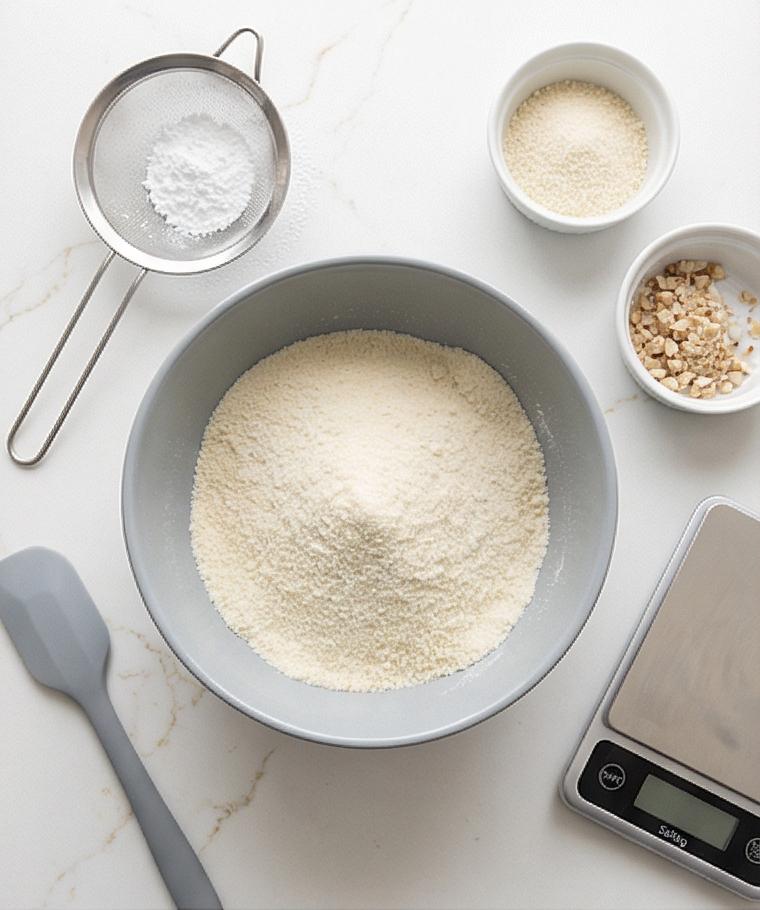
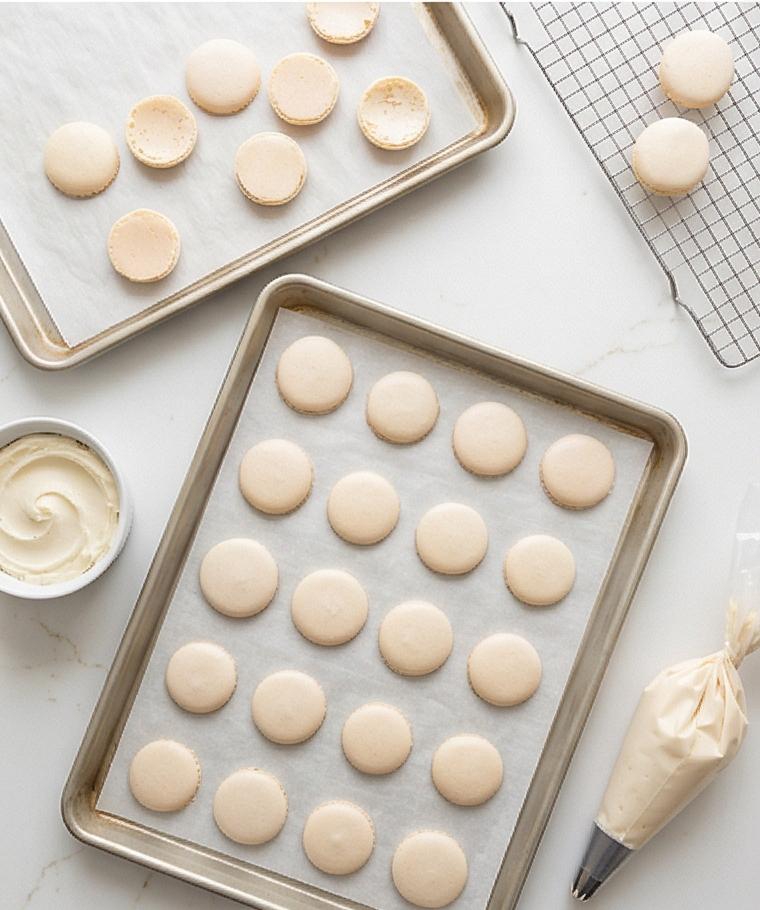
Line two large baking sheets with unwrinkled parchment or silicone macaron mats and, if you like, slip a template under the parchment (1½-inch circles spaced ~1 inch apart). Fit a large piping bag with a ½-inch round tip and nest it in a tall clear glass for filling later. Keep a fine-mesh sieve, a flexible grey-handled silicone spatula, a stainless whisk, and a reliable digital scale nearby so everything stays tidy and consistent.
Step 3: Combine the dry ingredients into a unified powder
Measure 110 g blanched fine almond flour and 200 g sifted powdered sugar into a medium bowl or onto a sieve set over a matte grey ceramic mixing bowl; sift or whisk until completely homogenized and lump-free. The finished dry mix should read as a silky, pale off-white dust with only the finest granules visible — if any coarse almond bits remain, remove them rather than forcing them through the sieve to avoid future lumps.
Step 4: Whip glossy, stable meringue
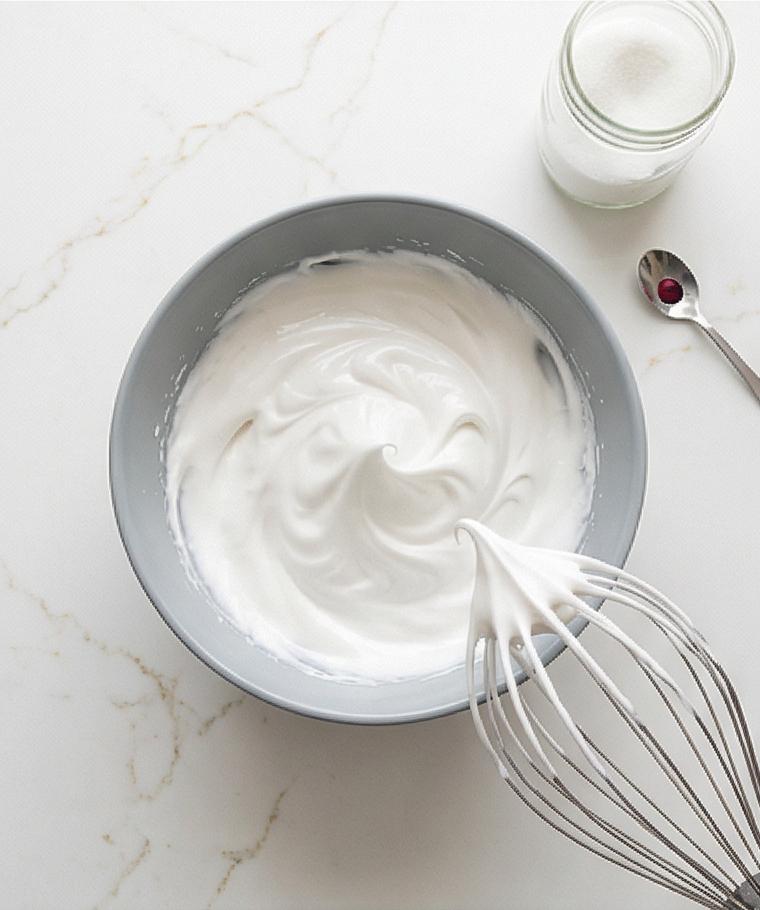
In a very clean large metal or glass bowl add the room-temperature egg whites, cream of tartar and a tiny pinch of sea salt. Whisk on medium to foamy, then stream in 90 g granulated sugar slowly while increasing to medium-high speed until a glossy meringue forms that holds medium–stiff peaks (peaks stand but curl slightly at the tip). Fold in 1 teaspoon vanilla and a dab of gel food coloring on low speed just until evenly tinted — the meringue should feel satiny and heavy enough to coat the whisk.
Step 5: Macaronage — fold to a flowing ribbon
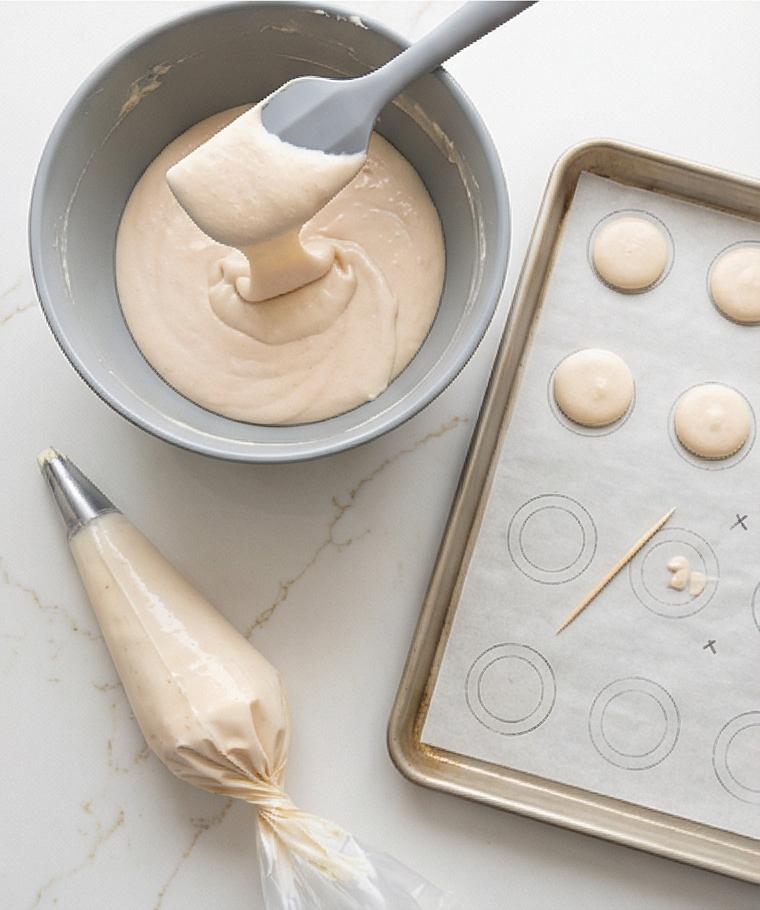
Add the entire almond–sugar mix to the meringue and fold with the silicone spatula: scrape the sides, cut through the center and turn the bowl rhythmically. You’re aiming for a smooth, satin batter that flows off the spatula in a thick ribbon and slowly reabsorbs in about 10–15 seconds — glossy but relaxed, not stiff peaks and not runny. This batter stage dictates surface smoothness and the iconic rise.
Step 6: Pipe, tap, and rest until skins form
Transfer the batter to the prepared piping bag, twist the top closed and push batter down to remove large air pockets. Hold the bag perpendicular about ¼ inch above the parchment and pipe neat 1½-inch rounds, easing pressure before lifting. Firmly tap each sheet 5–7 times to release trapped air and pop visible bubbles with a toothpick, smoothing slightly. Allow the piped shells to rest uncovered at room temperature until a dry, matte skin forms to the touch — usually 25–60 minutes depending on humidity.
Step 7: Bake and cool to reveal feet and set tops
Preheat the oven to 300°F (150°C) and slide one sheet into the center rack when shells have formed skins. Bake until the tops are set, feet have formed, and bottoms are just barely colored. Remove the sheet and cool completely on a wire rack for 20–30 minutes before attempting to lift shells from the parchment; repeat the process with the second tray. The cooled shells should have smooth domes, delicate ruffled feet, and a slightly chewy interior when checked.
Step 8: Whip the vanilla buttercream filling
Beat 115 g softened unsalted butter in a medium bowl until creamy, then gradually add 210 g sifted powdered sugar on low to avoid a sugar cloud. Add 1/8 teaspoon salt and 1½ teaspoons vanilla, then 2–3 teaspoons heavy cream, beating until the buttercream is light, glossy and pipeable — thick enough to hold shape but soft enough to yield. Transfer the buttercream to a clean piping bag fitted with a small round or star tip; if using jam or curd, portion that into a separate tiny bag.
Step 9: Assemble, mature, and serve
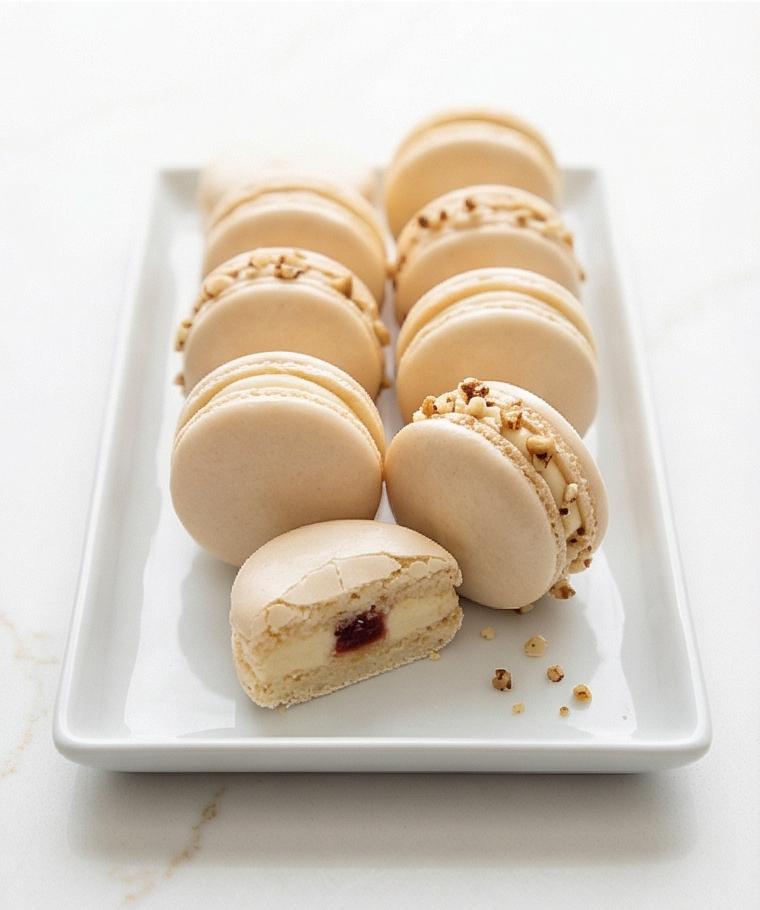
Pair similar-sized shells upside down, pipe a buttercream ring on one shell, add a small dot of jam or curd if desired, then sandwich with the matching shell and twist gently until the filling reaches the edges without oozing. Optionally roll edges in finely chopped toasted nuts or freeze-dried fruit powder. Arrange in a single layer in an airtight container and mature in the refrigerator for at least 24 hours to develop the classic contrast of crisp exterior and tender interior. Bring to cool room temperature for 20–30 minutes before serving.
Notes
- Use a digital scale for consistent results.
- Sift almond flour and powdered sugar to avoid lumps.
- Allow filled macarons to mature 24 hours for best texture.