Hash Browns Recipe
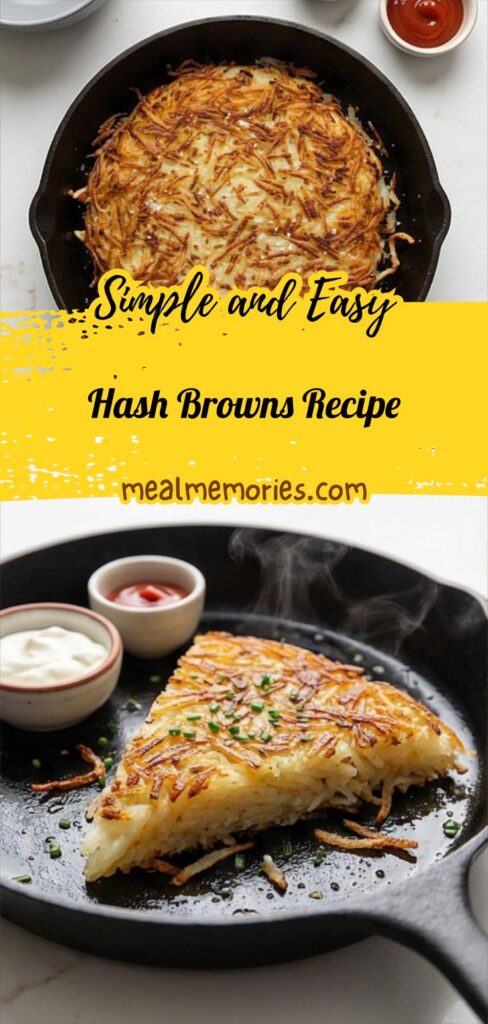
Make Hash Browns Recipe now: crisp, golden shredded russet hash browns with a buttery crust.
Ingredients
- 1 pound 8 ounces (680 g) russet potatoes, peeled and coarsely shredded on the large holes of a box grater
- 3 cups (720 ml) ice-cold water, for rinsing the shredded potatoes
- 1 teaspoon kosher salt, plus more to taste
- 1/4 teaspoon freshly ground black pepper
- 1/4 teaspoon garlic powder (optional), for subtle savory flavor
- 3 tablespoons (45 ml) neutral high-heat oil (such as canola, vegetable, or sunflower oil)
- 2 tablespoons (28 g) unsalted butter, cold and cut into small cubes
- 1 tablespoon (4 g) finely chopped fresh chives (optional garnish)
- 2 tablespoons (30 g) sour cream (optional, for serving)
- 2 tablespoons (30 g) ketchup or hot sauce (optional, for serving)
Instructions
Step 1: Prepare the potatoes: Peel and shred the russets
Peel the russet potatoes immediately and work briskly at the large holes of a box grater to produce long, coarse shreds. Keep the shreds loose in a bowl so they don’t clump — speed matters here to limit oxidation and keep the color bright.
Step 2: Rinse to remove excess starch
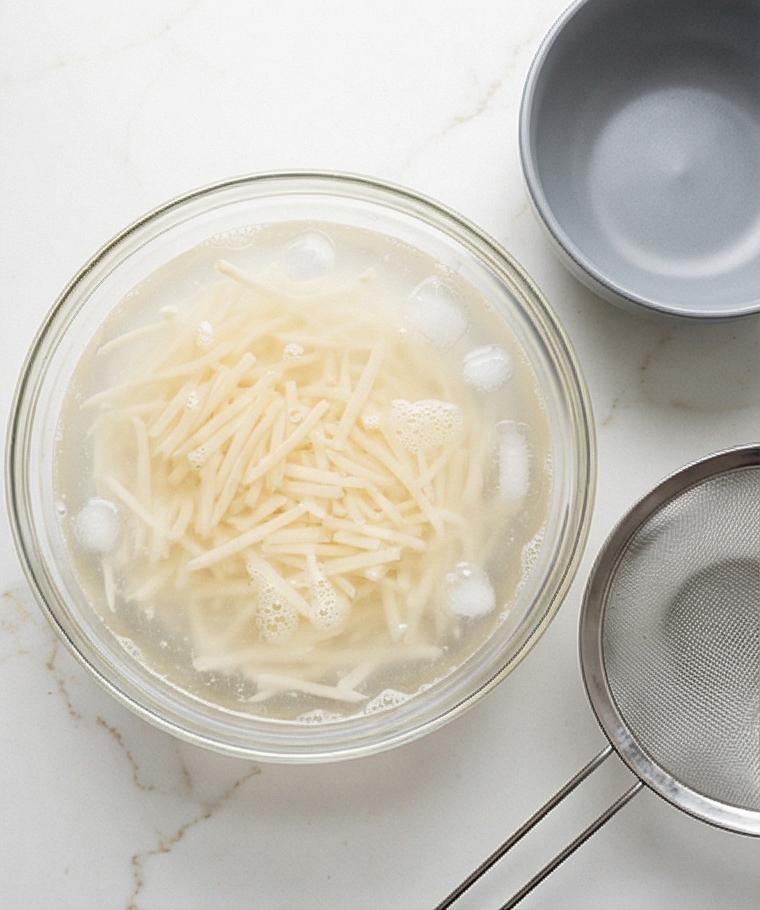
Place the coarse shreds into a large mixing bowl and pour in plenty of ice‑cold water. Swish the potatoes for 30–60 seconds until the water clouds; that cloudy water is the surface starch leaving the shreds. Drain and repeat briefly if the rinse water stays very cloudy.
Step 3: Drain the potatoes
Pour the shredded potatoes into a fine‑mesh strainer or colander and shake well to remove most of the rinse water. If any clumps remain, gently tease them apart so the strands are separated and able to crisp independently.
Step 4: Squeeze out moisture
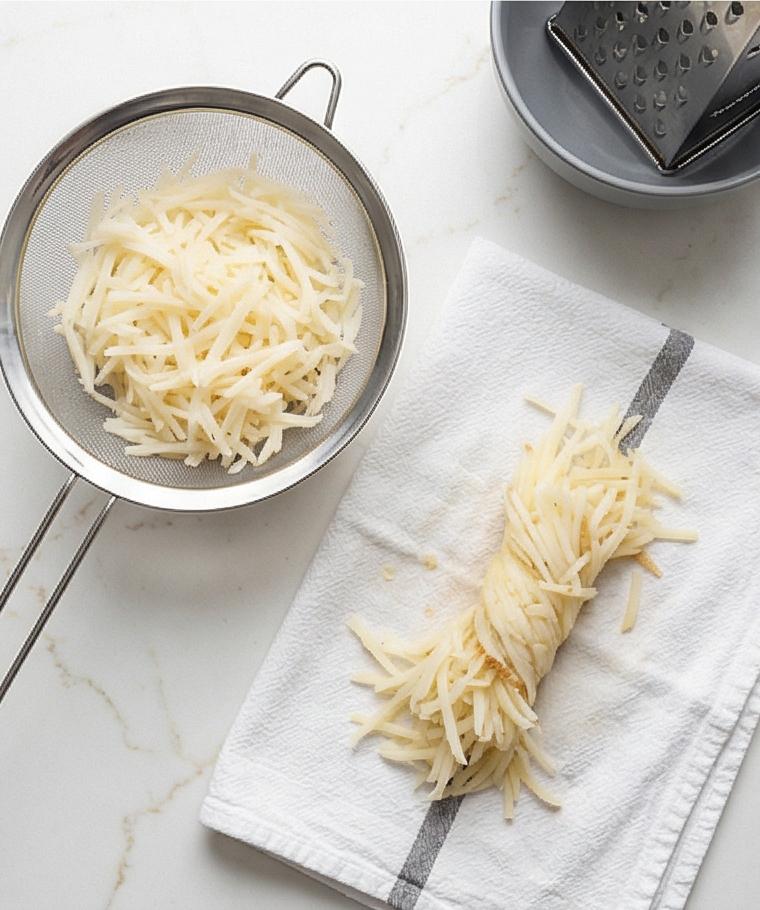
Transfer the drained shreds to a clean kitchen towel or several layers of paper towels, gather the cloth around the potatoes and twist firmly — squeeze out as much liquid as you can. The shreds should feel significantly drier and slightly tacky rather than dripping.
Step 5: Season the potatoes
Return the dried shreds to a dry bowl and sprinkle with the kosher salt, freshly ground black pepper, and the optional garlic powder. Toss gently with a fork or your fingers until the seasoning is evenly distributed and the strands look lightly speckled with seasoning.
Step 6: Preheat the pan and fat
Place a heavy 10–12 inch skillet (cast iron preferred) on the work surface and add the neutral oil and the cold cubed butter; heat the fat until the butter melts and the fat appears hot and shimmering but not smoking — it should glisten and spread easily in the pan.
Step 7: Test for heat
Test the skillet by letting a tiny pinch of shredded potato drop into the fat; if it sizzles briskly the pan is ready. If the pinch barely reacts, warm the fat a little longer and test again.
Step 8: Form the hash browns
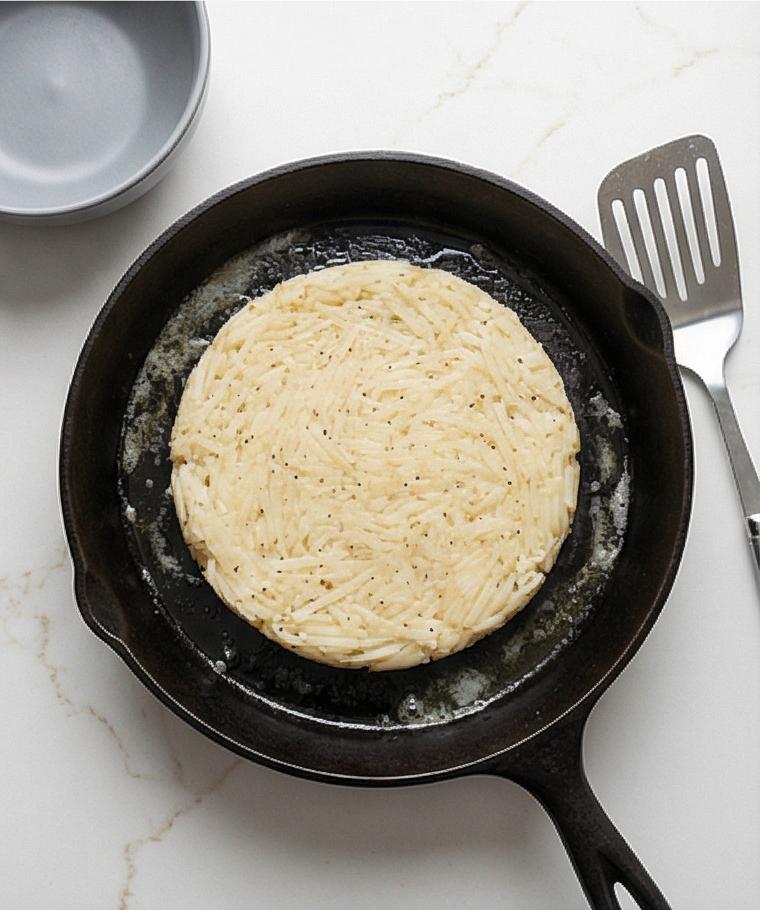
Quickly add the seasoned shredded potato to the hot skillet and spread into an even layer. Press down gently with a spatula to compact into a flat cake about 1/2 inch thick so it browns evenly; the surface should look uniform and the strands well compressed.
Step 9: Compress and cook the first side undisturbed
Lower the heat slightly to medium or medium‑low and let the potato cake cook without moving it. Over the next 7–10 minutes the bottom will develop a rich golden crust and the edges will crisp. Keep the surface still so a solid crust can form.
Step 10: Check readiness to flip
Slide a thin spatula under an edge to peek at the underside — when it’s a deep golden brown and releases cleanly, it’s ready. If the cake still clings, give it another minute or two to finish forming that crust.
Step 11: Flip the hash browns
For a single large cake, slide it onto a plate, invert the empty skillet over the plate and flip the whole assembly to return the cake to the pan, browned side up; for smaller portions flip each section with a wide spatula. The cooked side should now be the exposed top.
Step 12: Cook the second side
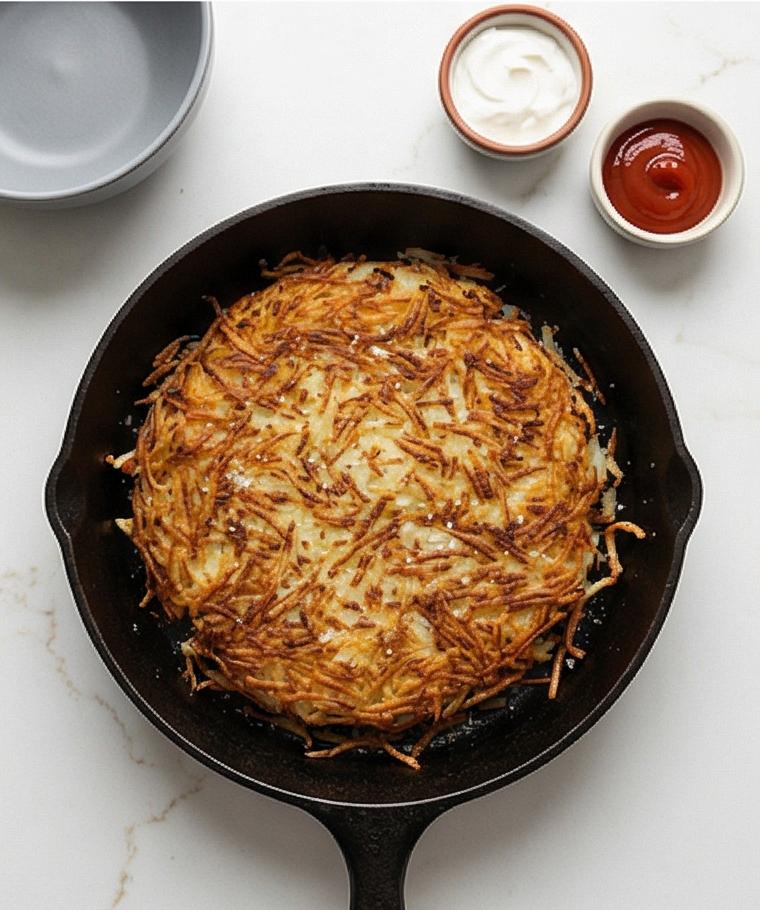
Continue cooking the second side over medium to medium‑low heat until it turns golden brown and the interior is tender, another 6–9 minutes depending on thickness. The finished cake should be uniformly crisp outside and soft inside.
Step 13: Adjust seasoning
Taste a few crisp strands from the edge and sprinkle a small pinch of salt and pepper over the top if needed; let the seasoning sit for 30–60 seconds to adhere to the crust.
Step 14: Rest briefly and garnish
Remove the skillet from the heat and let the hash browns rest for 1–2 minutes so the crust sets slightly. Slide the cake onto a cutting board or serving surface and scatter the finely chopped fresh chives over the top for a fresh green contrast.
Step 15: Serve
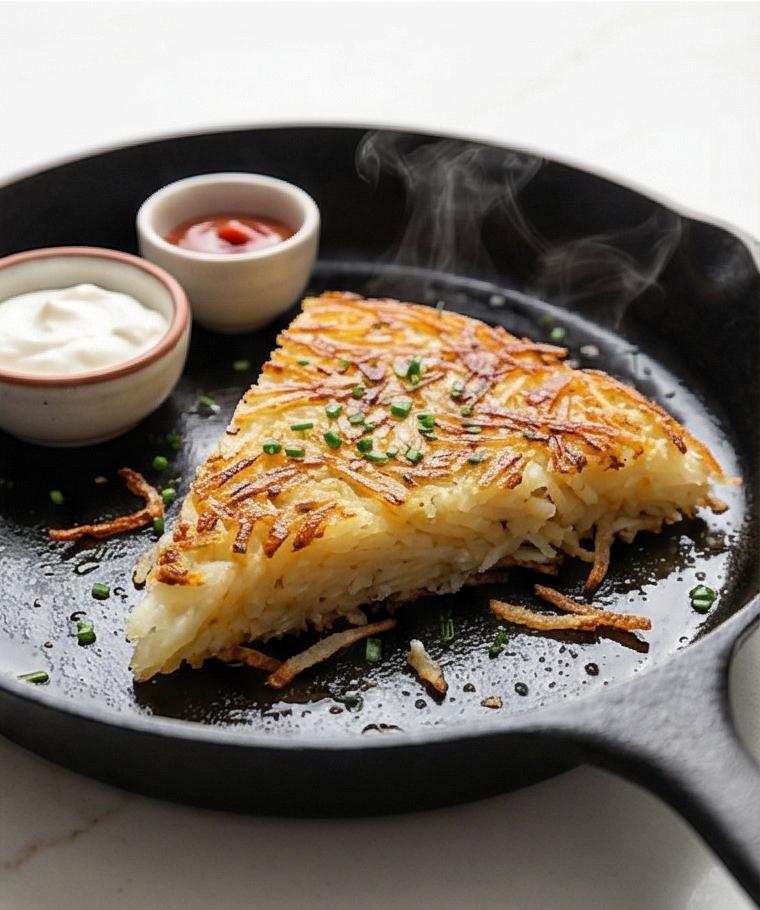
Cut the hash browns into wedges or squares and serve immediately while hot and crisp. Offer the sour cream and ketchup or hot sauce in small bowls on the side for dipping; the finished plate should be steaming, crunchy, and lustrous with tiny golden threads of crisped potato.
Step 16: Make‑ahead tip (optional)
If preparing ahead, shred and rinse the potatoes up to 8 hours in advance and store them submerged in cold water in the refrigerator. When ready, drain, dry thoroughly, and proceed with the squeeze, seasoning, and cooking steps as written.
Notes
- Use a box grater or food processor with a shredding disk for even shreds.
- Squeeze out as much moisture as possible to ensure crispness.
- Keep the skillet hot and resist flipping too early to allow a good crust to form.
- Store leftovers in an airtight container and re-crisp in a skillet or oven.
- For extra flavor, add a small amount of grated cheese to the shreds before cooking.