Challah Recipe
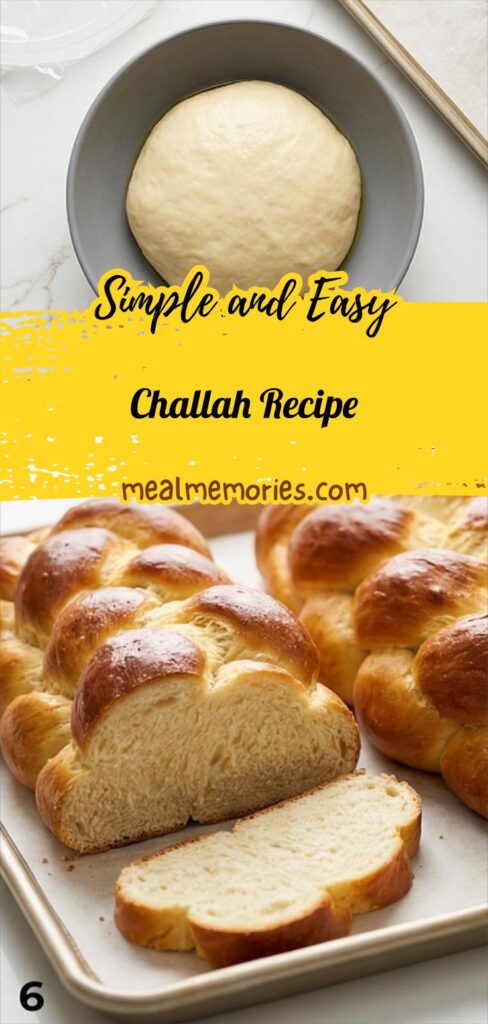
Make a glossy, tender Challah Recipe: braid, proof, and bake two golden loaves for warm, homemade bread.
Ingredients
- 1 1/2 cups (360 ml) warm water, 105–110°F (40–43°C)
- 1/3 cup (65 g) granulated sugar, divided
- 2 1/2 teaspoons (8 g) active dry yeast
- 4 large eggs, at room temperature
- 1 large egg yolk, at room temperature
- 1/4 cup (60 ml) neutral oil (such as canola or sunflower), at room temperature
- 2 tablespoons (42 g) honey, at room temperature
- 2 1/2 teaspoons (15 g) fine sea salt or kosher salt (not coarse)
- 7 1/2 cups (about 1,000 g) bread flour, at room temperature, plus extra for dusting
- Up to 1/2 cup (65 g) additional bread flour for kneading and adjusting dough, as needed
- 1 large egg, at room temperature, for egg wash
- 1 tablespoon (15 ml) cool water, for egg wash
- 2 tablespoons (18 g) sesame seeds, for topping (optional)
- 2 tablespoons (18 g) poppy seeds, for topping (optional)
- 1–2 generous pinches flaky sea salt, for topping (optional)
Instructions
Step 1: Bloom the Yeast
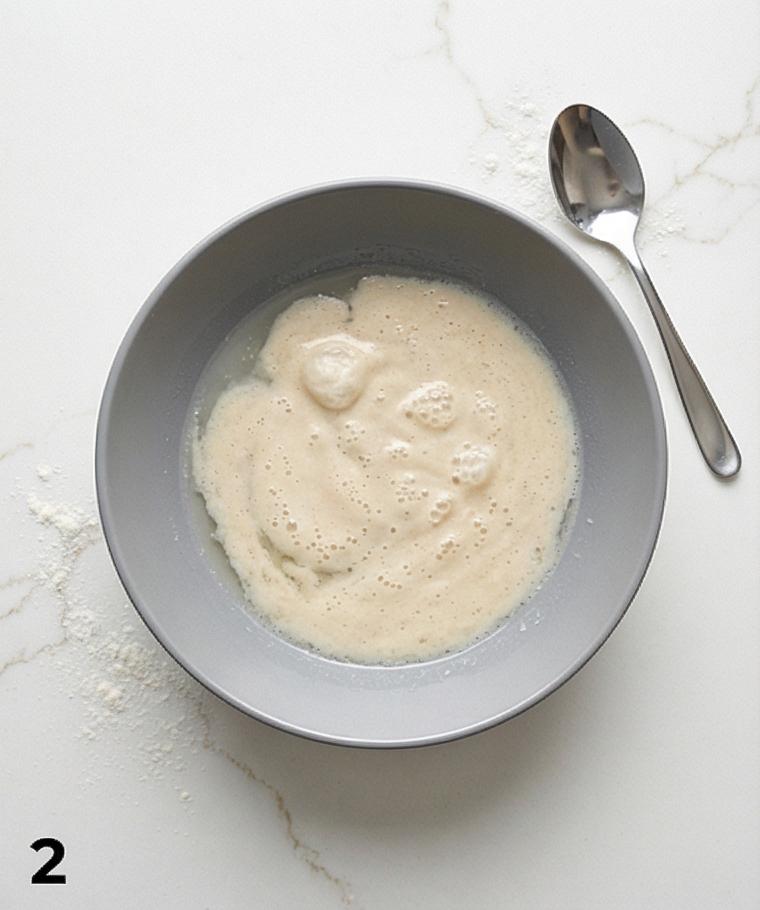
Combine the warm water (105–110°F) with one tablespoon of the granulated sugar in a large mixing bowl and sprinkle the active dry yeast over the surface. Stir gently just to dissolve the sugar and yeast, then leave the bowl undisturbed on the bright marble surface until the top becomes foamy and creamy — about 5–10 minutes. This foamy, bubbly surface is your visual cue that the yeast is alive and ready; if it stays flat, discard and restart with fresh yeast.
Step 2: Whisk the Eggs and Build the Wet Mix
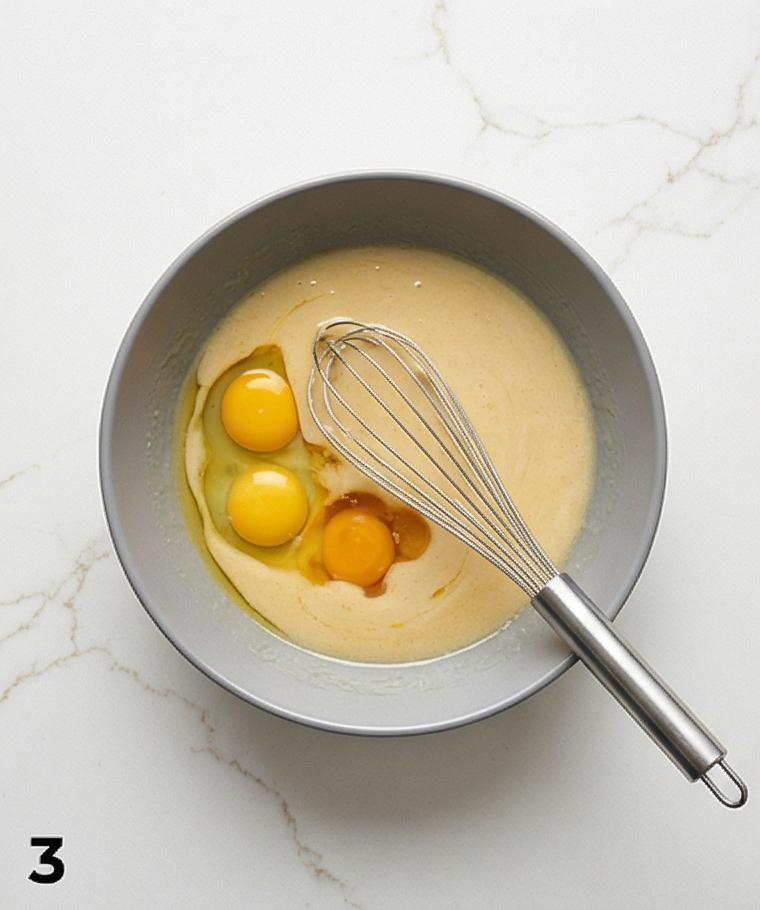
In a separate bowl whisk the four large eggs and the extra egg yolk until smooth and lightly frothy. Pour the whisked eggs into the bowl with the foamy yeast, then add the remaining granulated sugar, neutral oil, and honey, followed by the fine sea salt. Whisk or stir thoroughly until the liquids are homogeneous and the salt begins to dissolve — the mixture should look glossy, slightly viscous, and uniformly pale gold. Keep the same mixing bowl visible as you work to maintain continuity.
Step 3: Form the Shaggy Dough
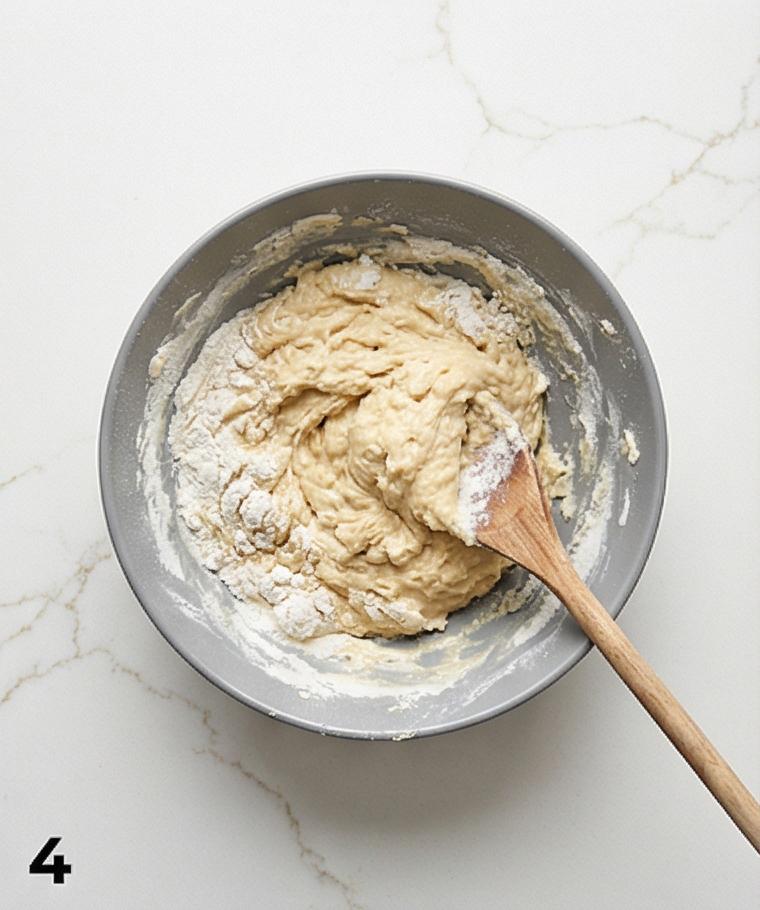
Add four cups of the bread flour to the wet mixture and stir with a sturdy spoon (or on low with a paddle) until a thick, shaggy batter with no dry pockets forms. Then add the remaining 3½ cups of flour and switch to a dough hook or begin folding by hand until the flour is mostly incorporated and a rough, soft dough comes together. The bowl will show flour streaks and a rough, textured mass that still pulls together when scooped. Dust the rim lightly with flour but keep the same matte mixing bowl as the frame anchor.
Step 4: Knead to a Smooth, Elastic Ball
Turn the dough onto a lightly floured surface or continue kneading in the mixer. Work the dough until it transforms from sticky and shaggy into a smooth, elastic, slightly tacky ball that stretches without tearing — roughly 6–10 minutes depending on method. Shape the finished dough into a neat smooth ball, lightly oil a clean large bowl, place the dough inside and turn to coat. Cover loosely and set aside to rise. The top-down frame should emphasize the transformation from rough texture to glossy, taut skin on the dough.
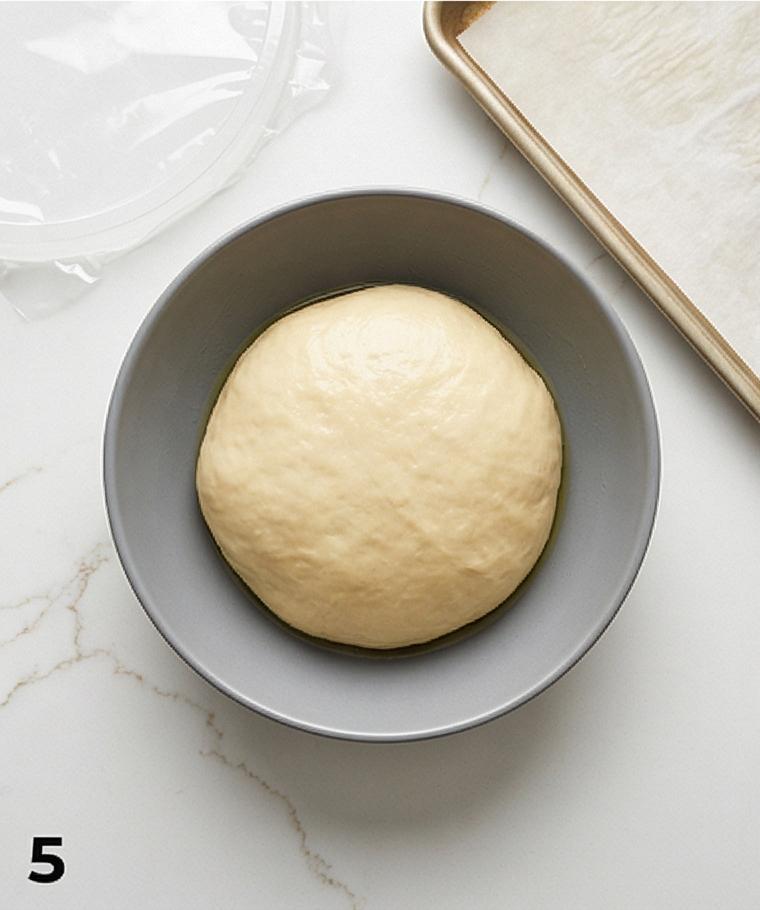
Step 5: First Rise, Deflate, and Portion
After the dough has doubled (about 60–90 minutes) gently punch it down to deflate, then turn it out and divide it into two equal portions for two medium loaves. Shape each portion into a rough log and let them rest briefly; this resting relaxes the gluten and stops excessive spring-back when you roll. Keep everything on the same clean marble; the scene is calm and simple, focused on weight, portion, and the soft, slightly dimpled surface of the rested logs.
Step 6: Roll, Braid, and Proof for Oven-Ready Loaves
Working with one log at a time, divide into three or four equal pieces and roll each into 14–16 inch ropes with tapered ends. Braid the ropes into neat 3- or 4-strand challot, pinch and tuck the ends under for a tidy finish, and transfer each braid to a parchment-lined rectangular baking sheet. Brush with a thin even egg wash, then let the loaves rise again until puffy (about 45–75 minutes). Right before baking give a second glossy egg wash and sprinkle with sesame or poppy seeds and a few pinches of flaky salt. The top-down images up to this point should preserve the same mixing bowl as a subtle repeated element in the background.
Step 7: Bake, Cool, and Serve
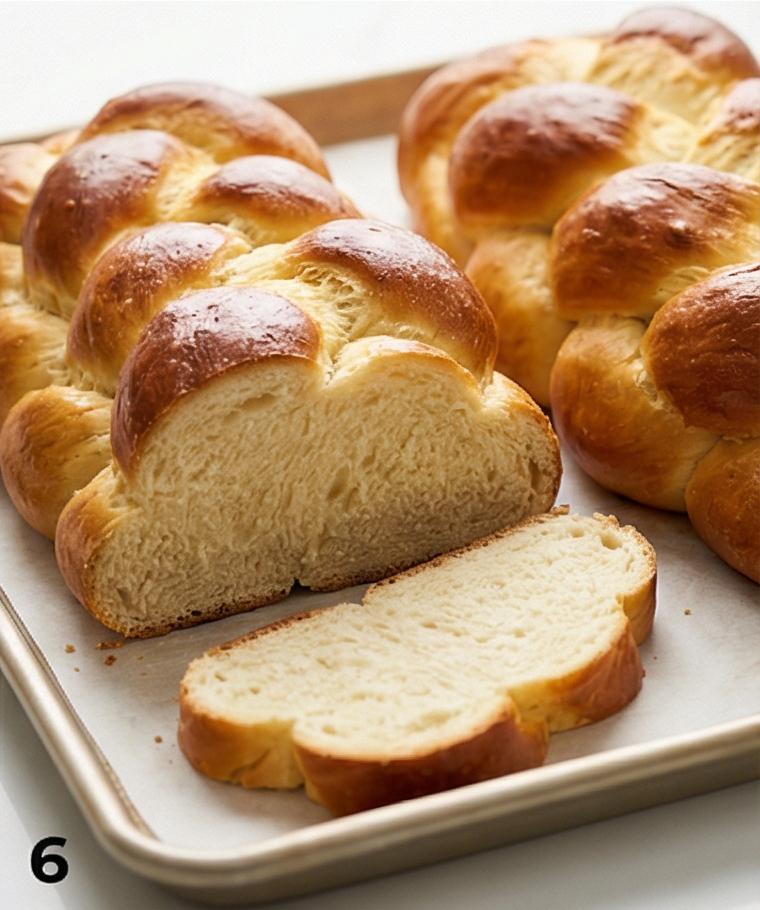
Bake the braided loaves on the parchment-lined sheet until a deep golden-brown crust develops, rotating if needed and tenting with foil if they darken too quickly. Remove the sheet and transfer the loaves to a wire rack to cool for at least 45–60 minutes so the crumb sets. Present the final loaves whole and halved to reveal an airy, tender interior with glossy, crackled crust studded with seeds; serve on the same parchment-lined rectangular sheet to keep the baking geometry consistent.
Notes
- Use a digital thermometer to keep water at 105-110°F for a reliable yeast bloom.
- If the dough seems too sticky, add small amounts of flour while kneading until it reaches a smooth, elastic texture.
- Freeze sliced challah in a single layer, then transfer to a sealed bag to prevent freezer burn.
- For extra gloss, apply a second thin egg wash just before sliding the loaves into the oven.
- Write down any ingredient swaps so you can repeat the versions you love.