Naan Recipe
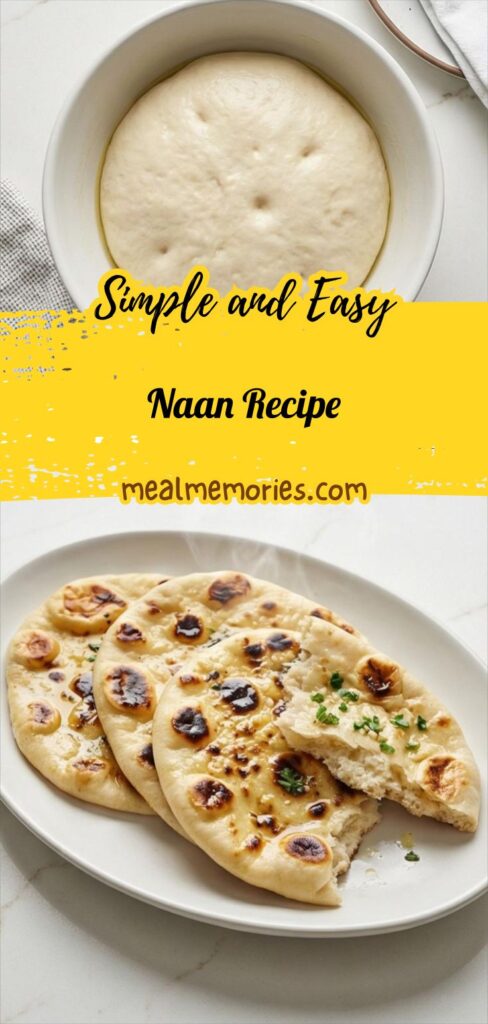
Make this Naan Recipe: pillowy, blistered flatbreads ready to serve warm and buttery.
Ingredients
- 1 cup (240 ml) warm whole milk, heated to 105–115°F (40–46°C)
- 2 teaspoons (8 g) granulated sugar
- 2 1/4 teaspoons (7 g) active dry yeast (1 standard packet)
- 3 cups (360 g) all-purpose flour, plus 1/4 cup (30 g) extra for dusting
- 1 1/2 teaspoons (9 g) fine sea salt
- 2 tablespoons (30 g) plain full-fat yogurt, at room temperature
- 2 tablespoons (24 g) neutral oil (such as canola, sunflower, or vegetable), plus more for oiling the bowl
- 3 tablespoons (42 g) ghee or unsalted butter, melted and kept warm, for brushing the cooked naan
- 2 cloves garlic, very finely minced (optional, for garlic naan)
- 2 tablespoons (4 g) fresh cilantro leaves, finely chopped (optional garnish)
- 1 tablespoon (15 g) melted ghee or unsalted butter, for lightly greasing the skillet if needed (optional)
Instructions
Step 1: Bloom the Yeast and Warm the Milk
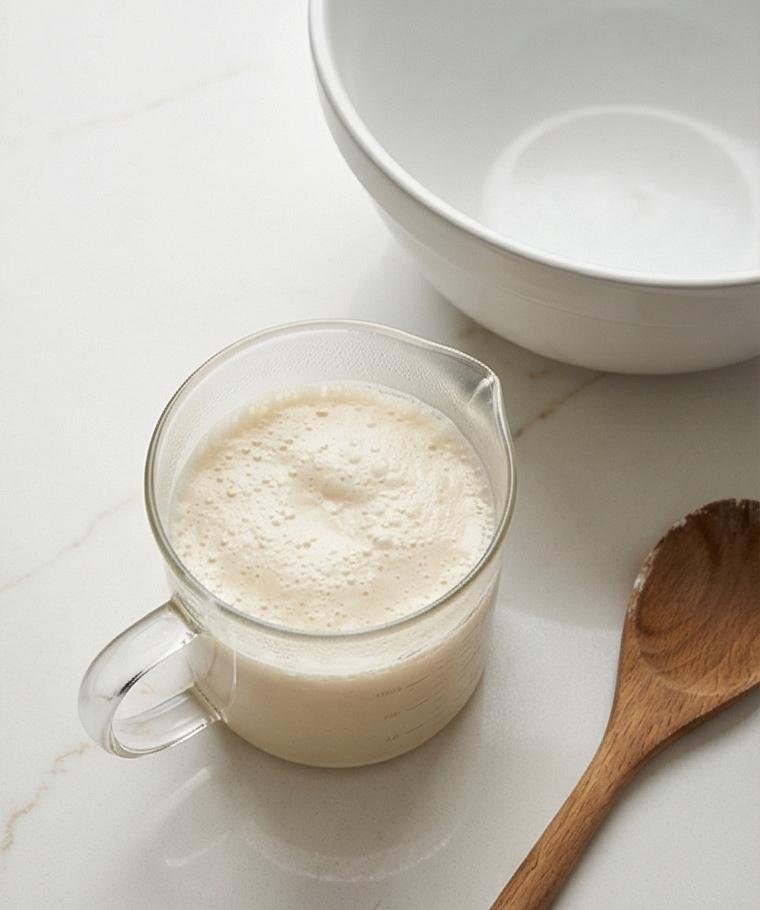
Warm the whole milk to lukewarm (about 105–115°F / 40–46°C), then whisk in the granulated sugar and sprinkle the active dry yeast on top. Stir gently until dissolved and let the mixture rest 5–10 minutes until the surface becomes foamy and creamy — a light, airy foam with tiny bubbles signals healthy yeast. If the surface remains flat, the yeast should be discarded and restarted.
Step 2: Combine the Dry Ingredients
In a large mixing bowl, whisk together the all-purpose flour and fine sea salt until evenly distributed and aerated. The flour should look pale, slightly billowed, with the salt speckling the surface; this dry base will provide structure and contrast to the wet additions. Keep this same large bowl in play for the next steps to maintain utensil and vessel continuity.
Step 3: Add Yogurt, Oil, and the Yeast Mixture to Form a Shaggy Dough
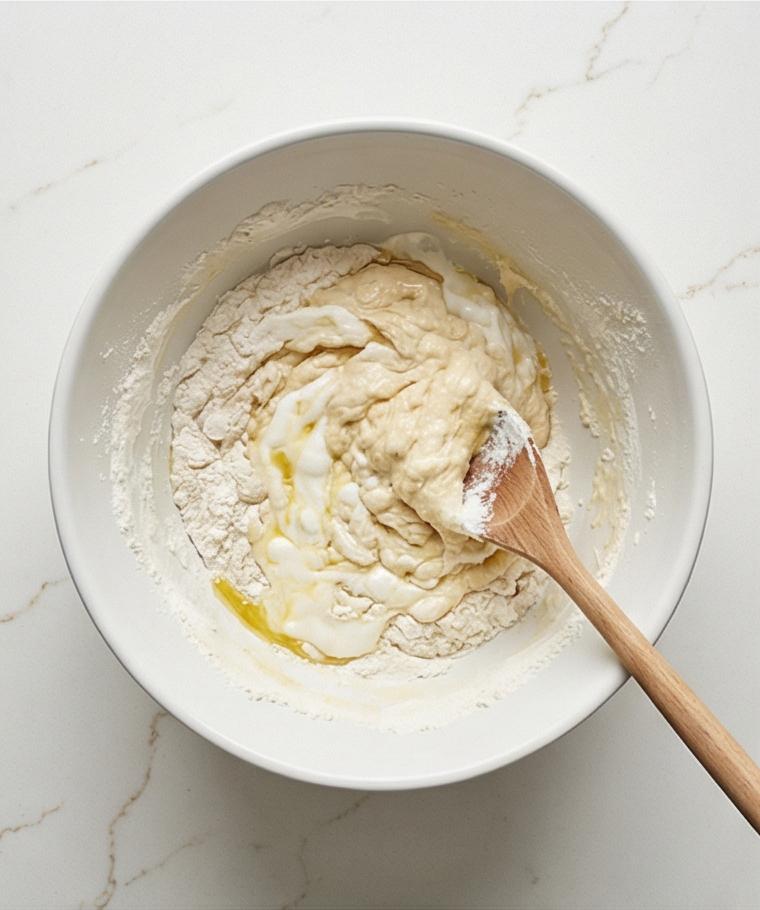
Make a shallow well in the center of the flour, add the room-temperature plain yogurt and neutral oil, then pour in the foamy yeast-milk. Mix from the center outward with a wooden spoon or your hand until a shaggy, loosely combined dough forms and most of the flour is incorporated. The result should be textured and slightly sticky, with visible streaks of dry flour that will be worked in next.
Step 4: Knead to a Smooth, Elastic Dough
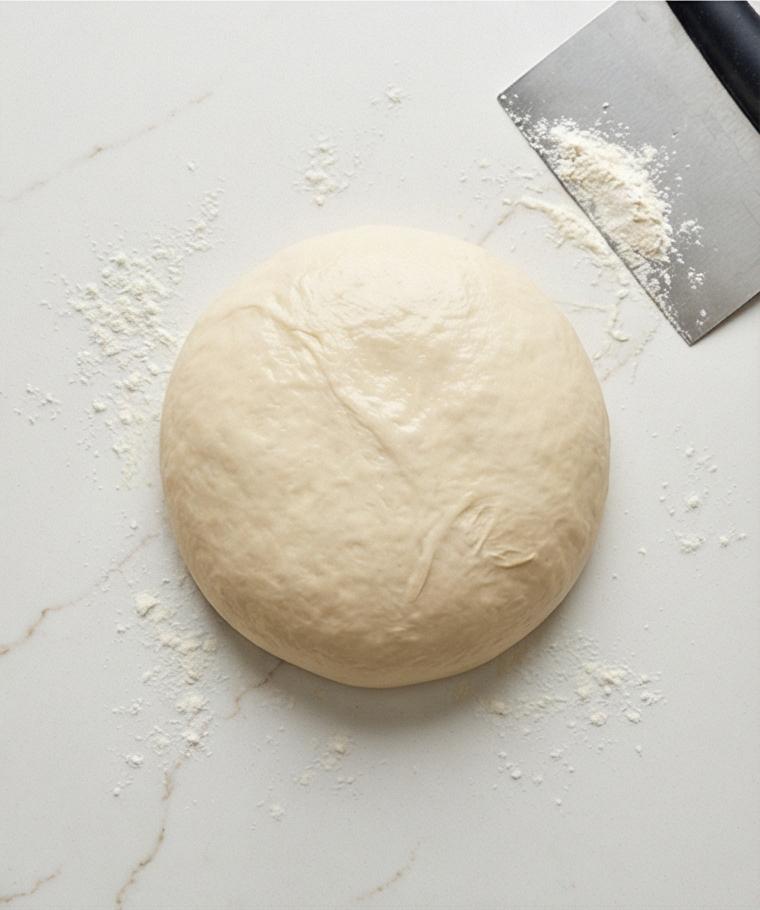
Turn the shaggy dough onto a lightly floured work surface and knead by hand for 8–10 minutes (or use a stand mixer with a dough hook for 5–6 minutes) until it becomes smooth, elastic, and just slightly tacky — supple and springy to the touch with a faint sheen from the oil. If the dough resists or cracks, add tiny teaspoons of warm milk to coax elasticity. A bench scraper and a small dusting of extra flour are the only tools visible here.
Step 5: Oil, Cover, and First Rise Until Doubled
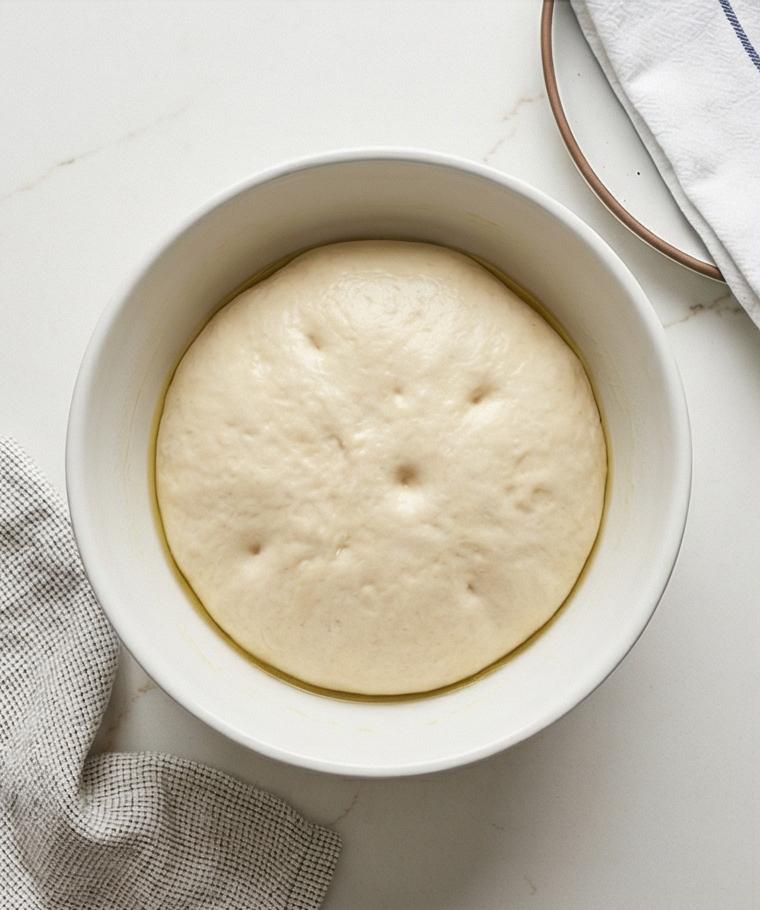
Lightly oil a clean mixing bowl with a neutral oil, shape the dough into a tight ball, place it seam-side down, and turn once to coat. Cover tightly with plastic wrap or a damp towel and let the dough rise in a warm, draft-free place until it has doubled — typically 60–75 minutes — showing a smooth domed surface and faint gas pockets beneath the skin. This is the gentle, puffy stage that indicates readiness for dividing.
Step 6: Divide, Round, and Rest the Dough Pieces
Gently deflate the risen dough, turn it out, and shape into a rough log. Using a bench scraper, divide into eight equal pieces; shape each into a tight ball by tucking the edges underneath until the tops are smooth. Cover the balls lightly and let them rest 15–20 minutes so the gluten relaxes and they become easier to roll thin.
Step 7: Roll, Dust, and Cook into Puffy Flatbreads
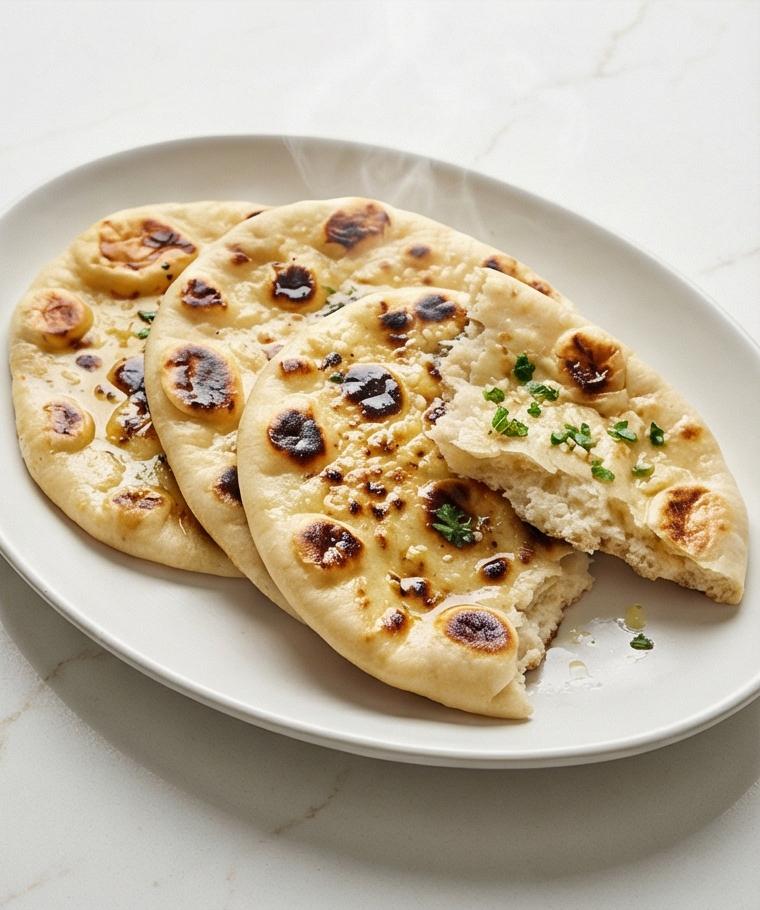
Working one ball at a time on a lightly floured surface, flatten with your fingertips and roll into an oval or teardrop about 8–9 inches long and 1/8–1/4 inch thick, brushing off excess flour so it won’t burn. Transfer the rolled dough to a very hot, preheated heavy skillet (not shown) and cook until large surface bubbles form and deep golden-brown spots appear; flip and finish until scattered charred blisters and soft interior pockets develop. Transfer each cooked naan to the lined plate, keeping them covered to retain softness.
Step 8: Brush with Warm Ghee (Optional Garlic & Cilantro) and Serve
Immediately brush the hot naan generously with warm melted ghee or butter blended with very finely minced garlic and chopped cilantro if desired, creating a glossy, fragrant finish. Stack or fan the finished naans on a simple serving plate so the brushed tops glisten, steam gently rising. Serve hot alongside curries, grilled vegetables, or use as a wrap; to retain the visual warmth and texture, present the final image eye-level and very close-up to capture the blistered surface and pillowy crumb.
Notes
- Test milk temperature with a thermometer to ensure yeast blooms.
- Keep cooked naans covered to retain softness until serving.
- Use minimal flour when rolling to avoid dry, tough naan.
- Preheat the skillet thoroughly for proper blistering.
- For garlic naan, brush with garlic-ghee immediately after cooking.