Baked Brie Recipe
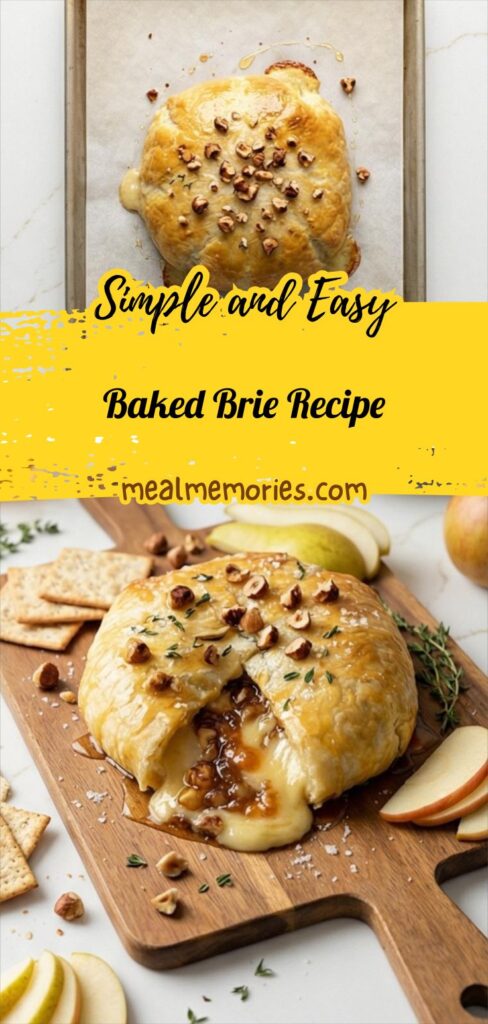
Baked Brie Recipe: Wrap brie in puff pastry with jam and nuts, then bake until golden for a gooey crowd-pleaser.
Ingredients
- 1 sheet frozen puff pastry (about 8 to 10 ounces / 225 to 280 grams), thawed in the refrigerator according to package directions
- 1 wheel brie cheese, 8 ounces (225 grams), rind on and well chilled
- 3 tablespoons fruit jam or preserves (such as apricot, fig, raspberry, or cranberry)
- 1/4 cup (30 grams) chopped nuts (such as pecans, walnuts, or sliced almonds), lightly toasted and cooled
- 1 large egg, at room temperature
- 1 tablespoon water, at room temperature
- 1 teaspoon unsalted butter, softened, for greasing the baking sheet (or use parchment paper instead)
- 1 teaspoon fresh thyme leaves, stripped from stems (optional, for a savory-herbal note)
- 1/4 teaspoon finely grated orange or lemon zest (optional, for brightness)
- 1 teaspoon honey or maple syrup (optional, for drizzling after baking)
- Pinch of flaky sea salt (optional, for finishing)
- Assorted crackers, baguette slices, or apple and pear slices, for serving
Instructions
Step 1: Preheat and prepare the baking sheet
Warm up your kitchen by preheating the oven to 400°F (200°C) — mentally, while you prepare the working surface. Line a rimmed baking sheet with a sheet of parchment or lightly smear 1 teaspoon softened unsalted butter across the center so the wrapped brie has a lightly greased landing. Keep everything cold and organized; this small, intentional prep step keeps the pastry from sticking and gives the finished bake a clean base to rest on.
Step 2: Roll and center the brie on the puff pastry
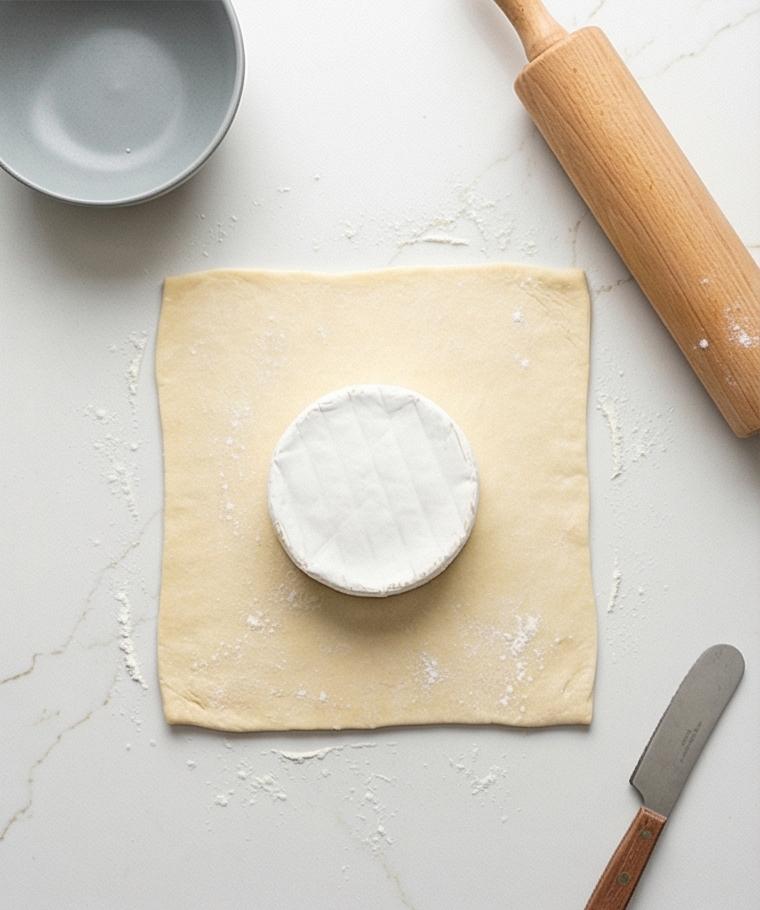
On a lightly floured surface, unfold the thawed puff pastry and gently roll it into an approximately 11 x 11-inch (28 x 28 cm) square, smoothing seams and keeping the dough cool and taut. Place the well-chilled 8-ounce wheel of brie directly in the center of the dough; if there’s an unusually thick bottom rind, trim a whisper of it so the cheese sits flush but leave most of the rind intact to retain shape while melting. The stage should look neat: an even pastry square with a cold, intact brie wheel poised at its center.
Step 3: Make the jam-and-nut filling
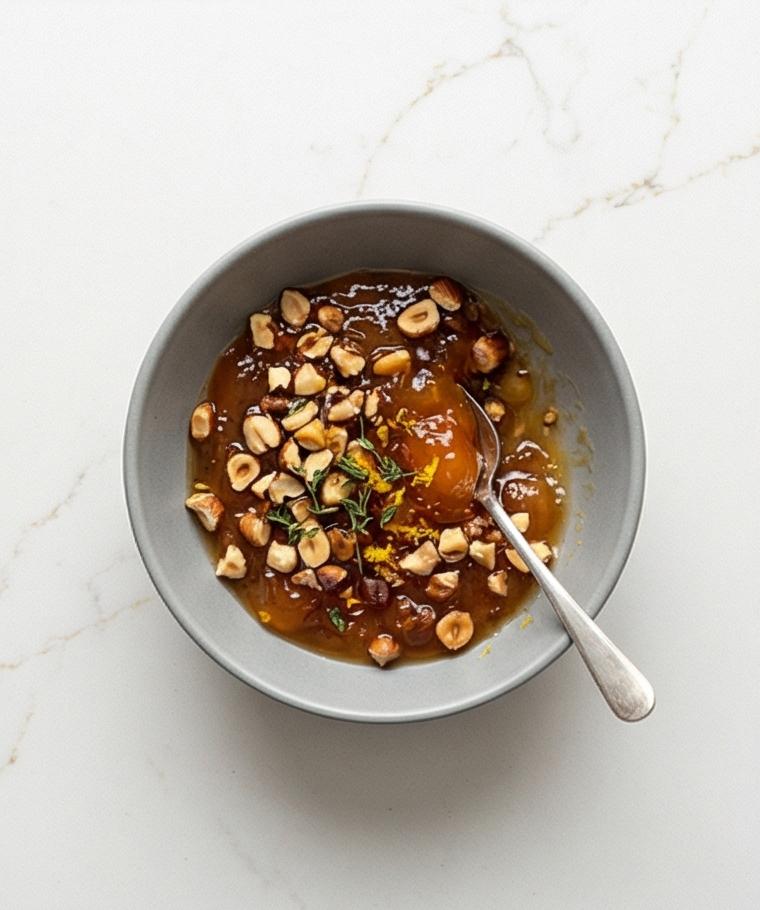
In a single matte grey ceramic bowl, stir together 3 tablespoons fruit jam or preserves with the 1/4 cup lightly toasted chopped nuts until the nuts are evenly coated and the mixture is thick but spreadable; fold in a teaspoon of fresh thyme and 1/4 teaspoon citrus zest if you want a herbal-bright edge. The finished mixture should be glossy, textured with chopped nuts, and viscous enough to sit atop the cheese without running. Keep the same bowl nearby for continuity.
Step 4: Spoon, wrap, and decorate the pastry bundle
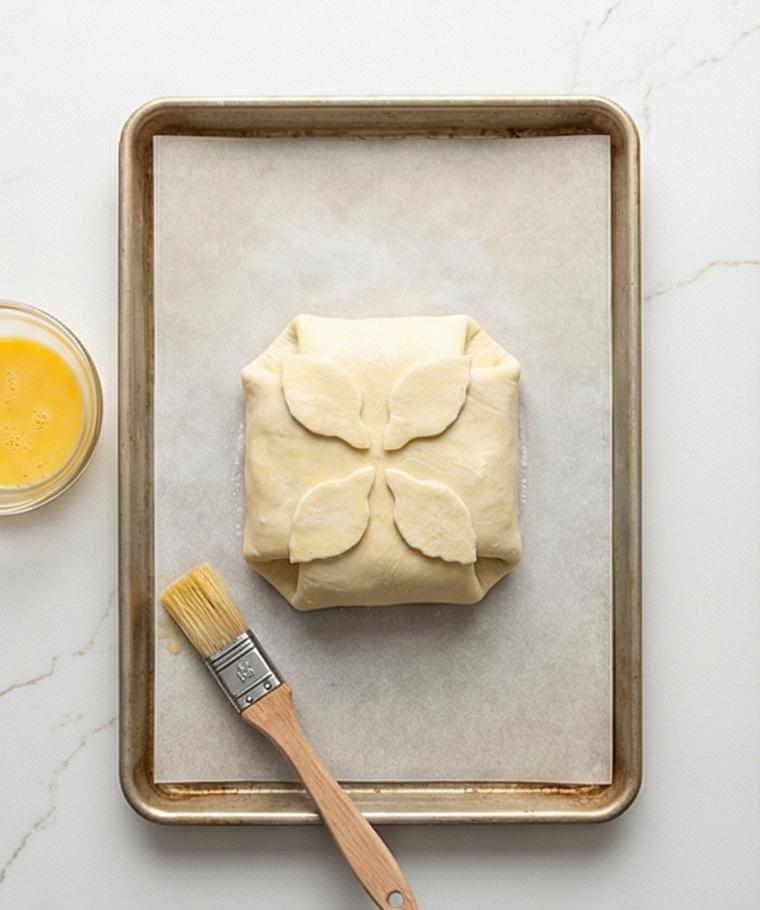
Spoon the jam-and-nut mixture onto the top center of the brie, leaving a 1/4-inch pastry border so the filling won’t leak excessively. Bring one pastry corner over the top, then the opposite, then the other two, overlapping to form a snug bundle; gently press and pinch the seams to seal. Trim any excess pastry and use the scraps to cut small decorative shapes, placing them on the smooth top surface. Flip the wrapped brie so the seam is underneath and the top is smooth, then place it in the center of the prepared baking sheet, parchment intact. The wrapped bundle should read as tidy, symmetrical, and ready to be glazed.
Step 5: Egg wash and chill the wrapped brie
Beat the egg with a tablespoon of water to make a glossy egg wash; using a soft pastry brush, lightly and evenly coat the top and sides of the pastry so it will turn deep golden and shiny. Rest the brushed bundle in the refrigerator for 10–15 minutes to firm up the pastry and reduce the risk of leakage — the chilled dough should look taut, slightly glossy from the wash, and cool to the touch. Keep the pastry brush and the same small bowl nearby; no rush, this chill gives a superior puff.
Step 6: Bake until deeply golden, then rest
Transfer the chilled, wrapped brie onto the parchment-lined rimmed baking sheet and bake at 400°F (200°C) until the pastry is deeply golden, crisp, and well-puffed — roughly 22–28 minutes, rotating once for even color. Remove the baking sheet (no oven visible) when you see the pastry fully browned and the cheese starting to ooze just at the base. Let the baked brie rest on the baking sheet for 8–10 minutes so the molten interior thickens slightly; the visual should be a puffed, bronzed parcel with a faint glossy crack at the seam where molten cheese hints at the ooze.
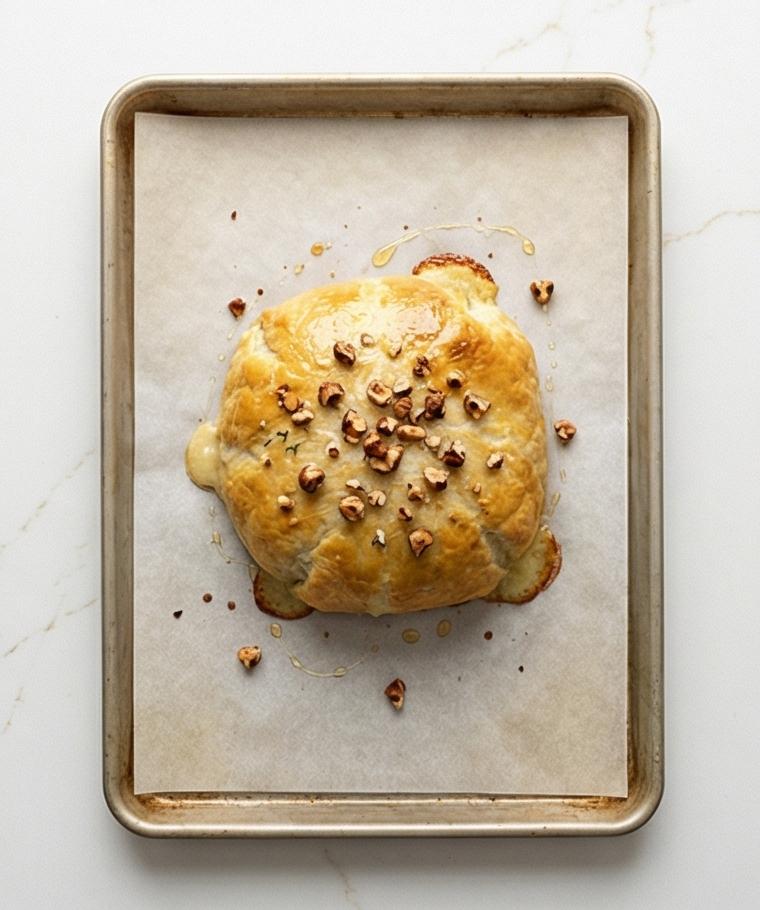
Step 7: Finish, transfer to a rectangular board, and serve warm
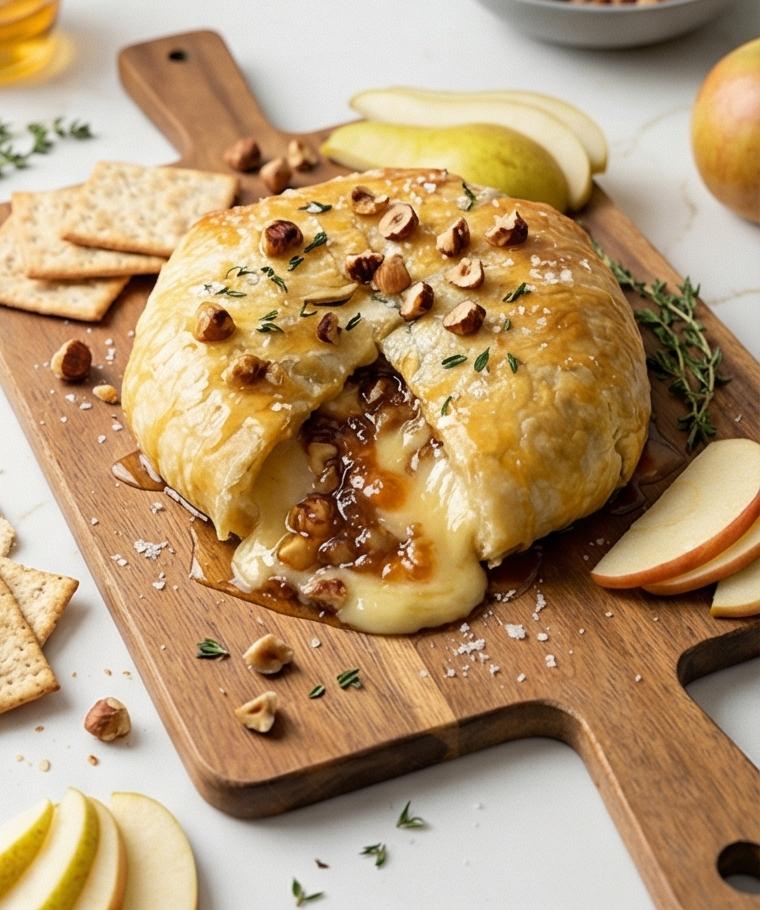
If desired, drizzle a teaspoon of honey or maple syrup and finish with a small pinch of flaky sea salt and a few fresh thyme leaves for a savory lift. Carefully slide the baked brie onto a warm rectangular wooden serving board (retain the rectangular geometry echoing the baking sheet), surround it with crackers, toasted baguette slices, and thin apple or pear slices, and present it warm and gooey for serving; when cut, the melted cheese and jam-nut filling should flow luxuriously into dippers.
Notes
- Keep the puff pastry cold until you are ready to roll to prevent sticking and tearing.
- Use thick preserves and toasted nuts to reduce filling leakage.
- Chill the wrapped brie for 10 to 15 minutes after egg wash to help the pastry puff and seal.
- Reheat in a 350°F oven for 8 to 12 minutes to restore crispness without sogginess.
- Freeze assembled, unbaked parcels for up to 1 month; thaw in the fridge before baking.