Rice Pilaf Recipe
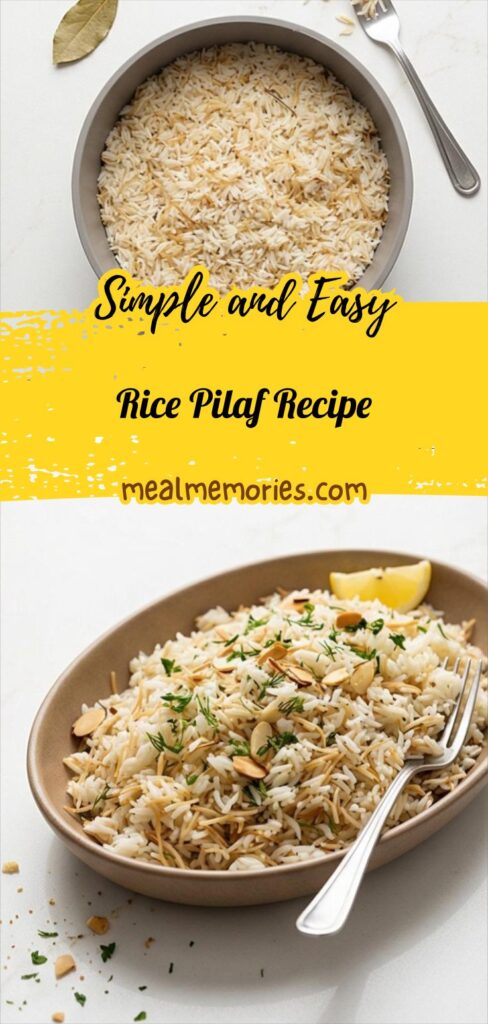
Make Rice Pilaf Recipe now: fragrant basmati with toasted vermicelli, herbs, and toasted nuts for a fluffy, showstopping side.
Ingredients
- 1 1/2 cups (285 g) long-grain basmati rice, rinsed under cold water until the water runs mostly clear, then drained well
- 2 1/2 cups (600 ml) low-sodium chicken broth, warmed to a gentle simmer (about 180°F / 82°C), or vegetable broth for a vegetarian version
- 2 tablespoons (28 g) unsalted butter, at room temperature
- 1 tablespoon (15 ml) extra-virgin olive oil
- 1/2 cup (35 g) thin vermicelli pasta, broken into 1-inch (2.5 cm) pieces (optional but traditional)
- 1 small yellow onion (about 110 g), finely diced
- 2 cloves garlic, minced (about 2 teaspoons / 6 g)
- 1/2 teaspoon fine sea salt, or to taste (adjust depending on saltiness of broth)
- 1/4 teaspoon freshly ground black pepper
- 1/4 teaspoon ground cumin
- 1 small dried bay leaf
- 1 tablespoon finely chopped fresh flat-leaf parsley, plus more to taste for serving
- 1 tablespoon finely chopped fresh dill or cilantro (optional, for garnish)
- 2 tablespoons toasted sliced almonds or pine nuts (optional, for garnish)
- 1 teaspoon freshly squeezed lemon juice (optional, for serving)
Instructions
Step 1: Rinse the rice and warm the broth
Begin by rinsing the basmati in a fine-mesh strainer under cold running water, gently rubbing the grains with your fingers until the water runs mostly clear; let it drain for at least ten minutes so excess surface water doesn’t make the pilaf gummy. While the rice drains, warm the chicken (or vegetable) broth in a small saucepan until it’s just at a gentle simmer (about 180°F / 82°C), then lower the heat to keep it warm but not boiling. This parallel prep keeps the hot liquid ready to receive the rice so the cooking is even and immediate. Friendly tip: aim for a clear, nutty-smelling rice surface before moving on — that little translucence at the grain edges is what you want.
Step 2: Toast the vermicelli and soften the onion
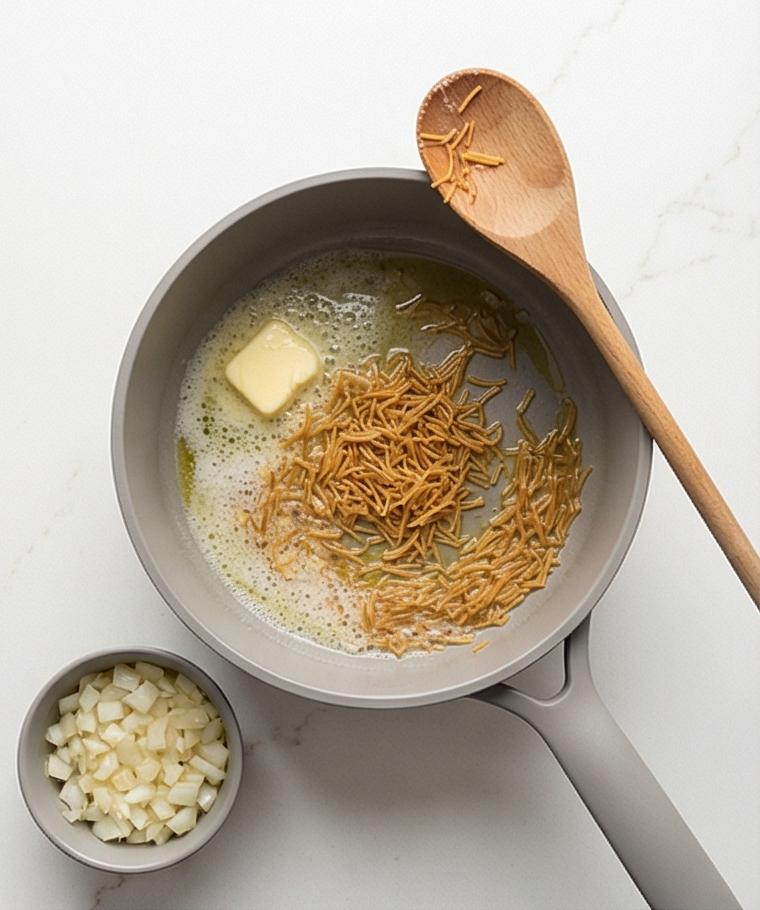
Choose a medium, heavy-bottomed saucepan with a tight-fitting lid. Melt butter with the olive oil until foamy, then add the broken vermicelli (if using). Toast the short pasta pieces in the fat, stirring constantly, until they are an even, toasty golden brown — not dark, just warm amber — then add the finely diced yellow onion and continue to cook over medium heat until the onion is softened and translucent with the tiniest pearl of golden edge. The scene should smell warm and toasty: toasted wheat, butter, and the gentle sweetness of soft onion. This stage is all about building a gently caramelized, glossy base that will coat the rice.
Step 3: Briefly cook the garlic, add the rice, and bloom the spices
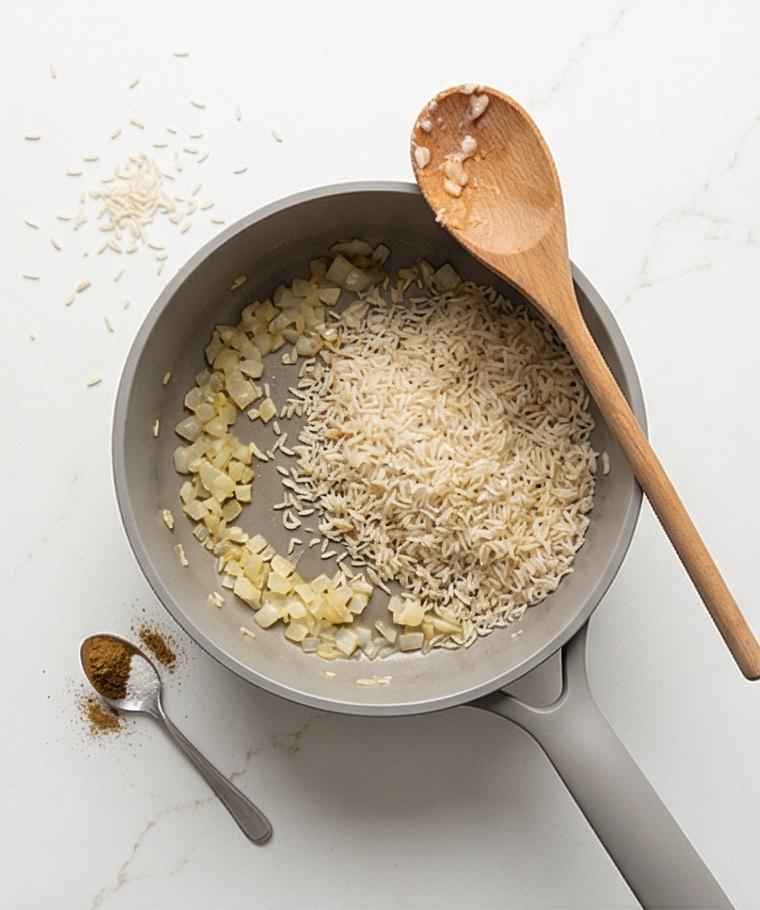
Toss in the minced garlic and stir just until fragrant — about 30–45 seconds — taking care not to let it color. Add the well-drained basmati and stir to coat every grain in the buttery, aromatic fat; you should see each grain pick up a faint sheen and the edges grow slightly opaque as they toast for 2–3 minutes. Sprinkle in the salt, black pepper, and ground cumin and stir briefly so the spices bloom in the warm fat, aromatizing the rice without making it wet. The rice at this point is dry-to-touch, lightly nutty, each grain separate and glossy, ready to accept the simmering broth.
Step 4: Add hot broth and simmer gently covered
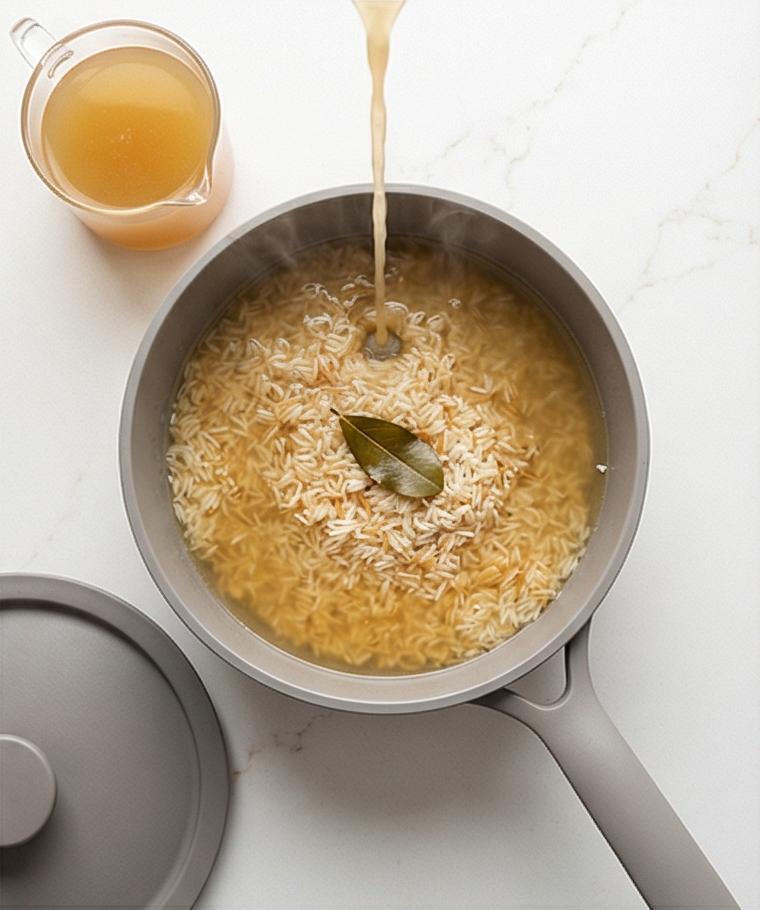
Carefully pour the warmed broth over the rice mixture, add the small dried bay leaf, stir once or twice to distribute, then stop stirring. Bring the pot to a steady boil, then reduce to low, cover tightly, and cook undisturbed for 15–18 minutes until the liquid is fully absorbed and the rice is tender — you’ll notice tiny steam holes and no visible pooled liquid when you tilt the pot. The visual state here is a smooth, slightly domed rice surface with gentle steam vents, the grains holding their shape. Let the pot rest off the heat for 10 minutes, still covered, so the moisture redistributes and the grains finish becoming tender and separated.
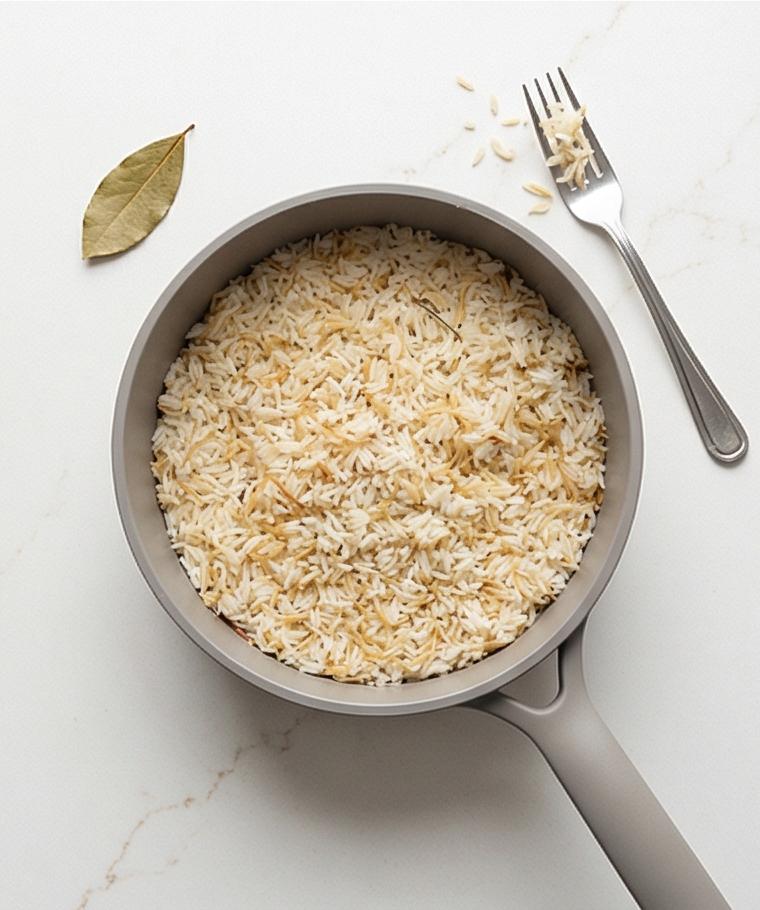
Step 5: Fluff, finish with herbs, nuts, and serve
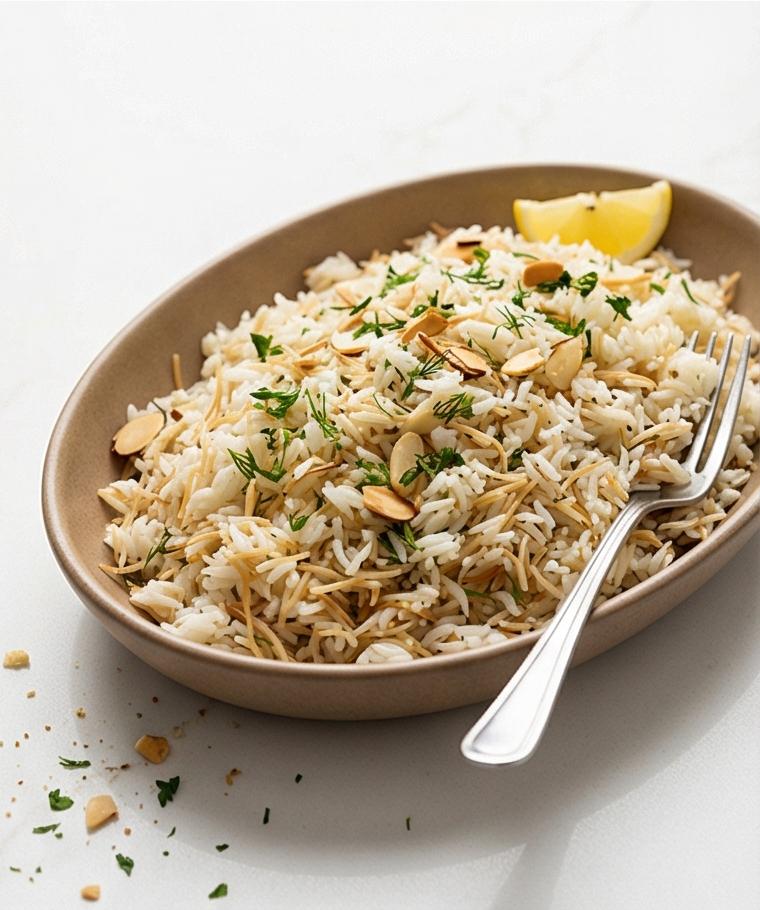
Uncover and remove the bay leaf, then gently fluff the pilaf with a fork by lifting and turning the grains rather than mashing. Fold in the finely chopped parsley (and dill or cilantro if using), taste and adjust salt and pepper, and, if you like, brighten it with a teaspoon of freshly squeezed lemon juice. Transfer the warm, fluffy pilaf to a shallow serving bowl and finish with toasted sliced almonds or pine nuts and a final pinch of chopped parsley for contrast. The finished dish should read as loose, pearl-like grains with scattered pale gold vermicelli threads, bright green herb flecks, and the soft sheen of butter — ready to serve hot.
Notes
- Rinse basmati until water runs mostly clear to avoid gummy rice.
- Keep the broth warm before adding to rice for even cooking.
- Toast vermicelli until warm amber, not dark, to avoid bitterness.
- Rest the rice covered for 10 minutes after cooking to let moisture redistribute.
- Reheat gently with a splash of broth to refresh leftover pilaf.