Irish Soda Bread Recipe
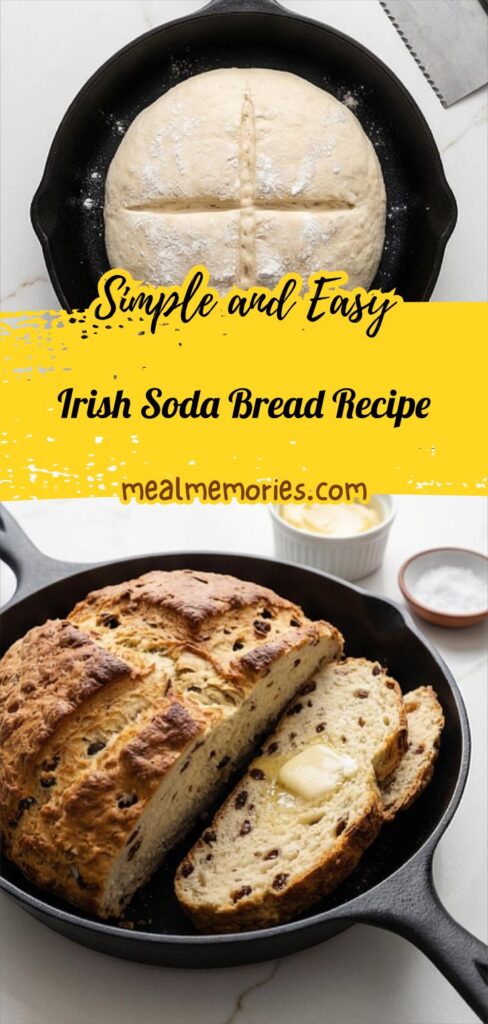
Make Irish Soda Bread Recipe now: quick, crusty loaf ready to slice and share.
Ingredients
- 4 cups (500 g) all-purpose flour
- 1 tablespoon (12 g) granulated sugar (optional, for a lightly sweet crust)
- 1 1/2 teaspoons (9 g) baking soda
- 1 teaspoon (6 g) fine sea salt
- 2 tablespoons (30 g) unsalted butter, cold and cut into small cubes
- 1 3/4 cups (420 ml) buttermilk, cold and well shaken
- 1/2 cup (75 g) raisins or currants (optional, for a sweeter variation)
- 1 teaspoon (2 g) caraway seeds (optional, traditional flavoring)
- 2 63 tablespoons (16 624 g) all-purpose flour, for dusting the work surface and hands
- 1 teaspoon (5 ml) neutral oil or softened butter, for lightly greasing the baking sheet or pan
- 2 tablespoons (28 g) unsalted butter, at room temperature, for serving
- Fine sea salt, to taste, for serving (optional)
Instructions
Step 1: Preheat and prepare the pan
Preheat the oven to 425°F (220°C) and position a rack in the center — then lightly grease a heavy baking sheet or a 9–10-inch cast‑iron skillet with a teaspoon of neutral oil or softened butter so it's ready when the dough is shaped. Greasing is a simple, tactile step that ensures a clean release and a gently bronzed bottom; set the greased vessel nearby on the Calacatta-like surface so it’s in frame for later photos.
Step 2: Whisk the dry ingredients until even
In a large mixing bowl whisk together the all‑purpose flour, granulated sugar (if using), baking soda and fine sea salt until uniformly distributed and no pockets of soda remain — the texture should be a fine, even flour cloud with the soda fully incorporated. This is the visual baseline for the dough’s lift and texture, a powdery, matte field of pale flour ready to receive cold butter and buttermilk.
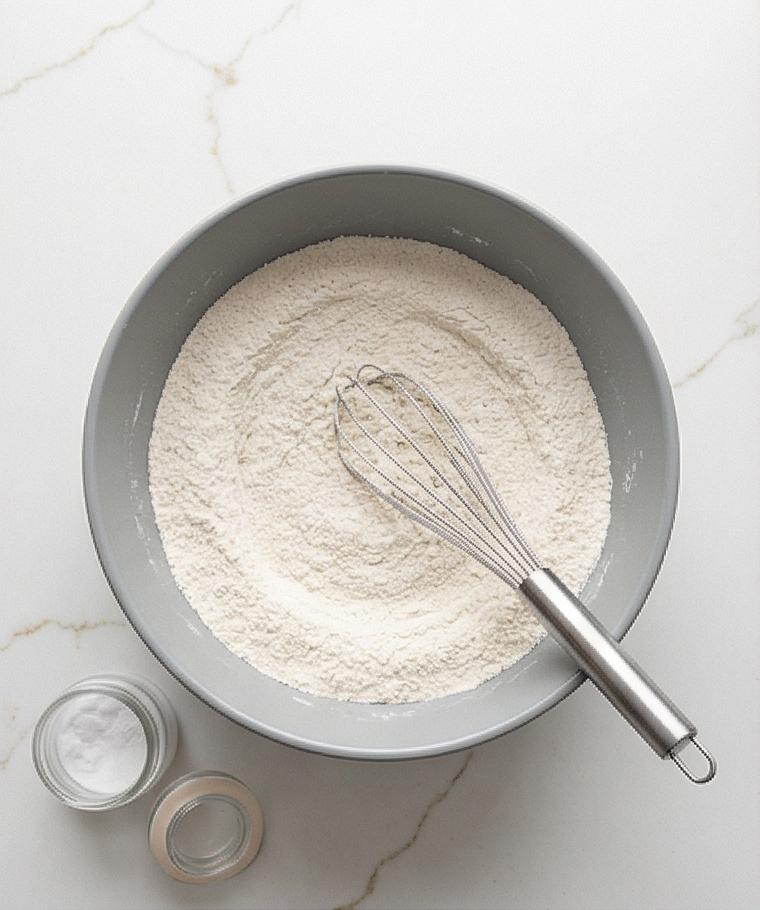
Step 3: Cut the cold butter into coarse crumbs
Add the cold, cubed unsalted butter to the dry mix and work quickly so the butter stays cold; using a pastry cutter or fingertips, rub the butter into the flour until the mixture resembles coarse crumbs with scattered pea‑sized butter pieces. The result is intentionally uneven — a mix of fine sand and small butter pearls that will produce steam pockets during baking. Keep the same bowl and show the grainy, bumpy crumb texture as evidence of correct technique.
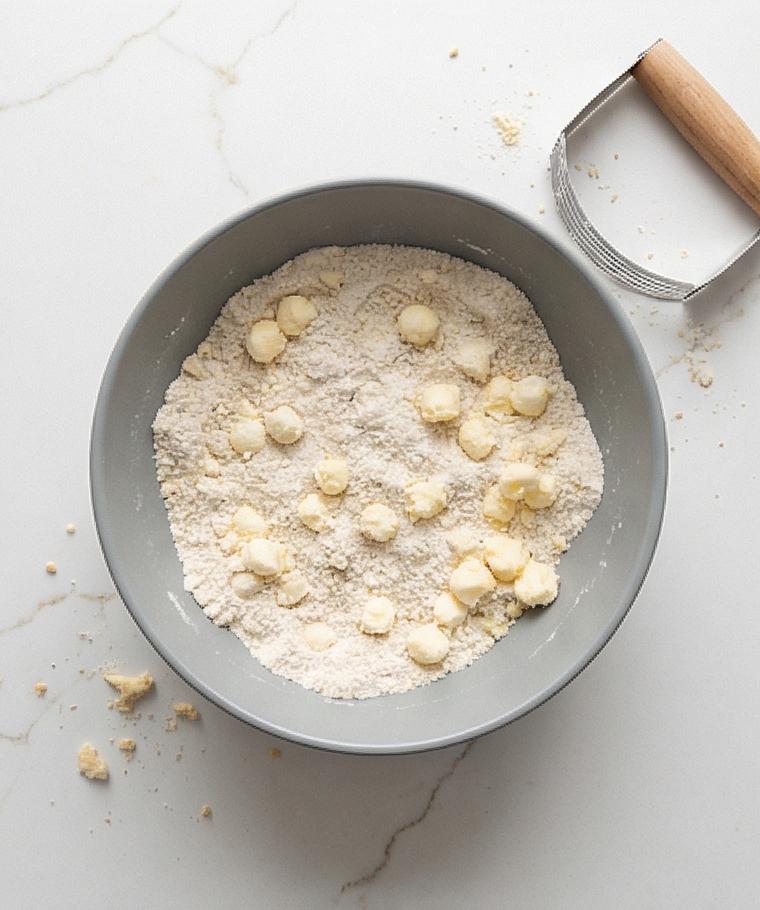
Step 4: Toss in raisins or currants and seeds (optional)
If using raisins or currants and caraway seeds, toss them into the crumbly mixture so they are lightly coated with flour and evenly distributed. This little step is purely visual but crucial — the speckled dark fruit and tiny seeds punctuate the pale crumb and indicate flavor points throughout the loaf. Gently fold so inclusions are visible but not crushed.
Step 5: Add cold buttermilk and form a shaggy dough
Make a deep well in the center of the dry ingredients, pour in cold, well‑shaken buttermilk, and stir from the center outward with a wooden spoon until a shaggy, slightly sticky dough forms — about 20–30 seconds of gentle pulling and folding. The bowl should show a moist, clumping mass with loose flour at the edges; the dough is soft and slightly tacky, not smooth. Turn the shaggy mass out onto a lightly floured surface for minimal kneading, just enough to bring it together into a cohesive round.
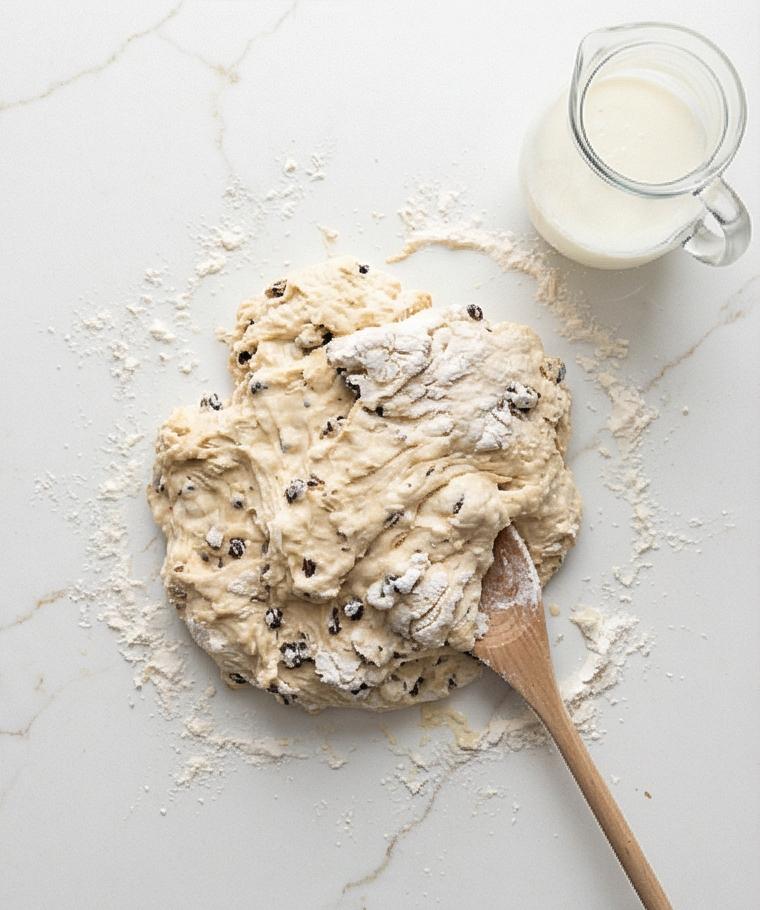
Step 6: Light, careful shaping into a round loaf
On a lightly dusted work surface, bring the dough together with floured hands and knead no more than 6–8 gentle turns to produce a smooth-ish round about 7–8 inches wide and 2 inches high. The surface should be taut and slightly domed, with gentle seams tucked underneath; avoid adding excess flour. Transfer the shaped loaf seam‑side down to the prepared greased vessel so the geometry of the pan frames the loaf.
Step 7: Score the loaf for even expansion
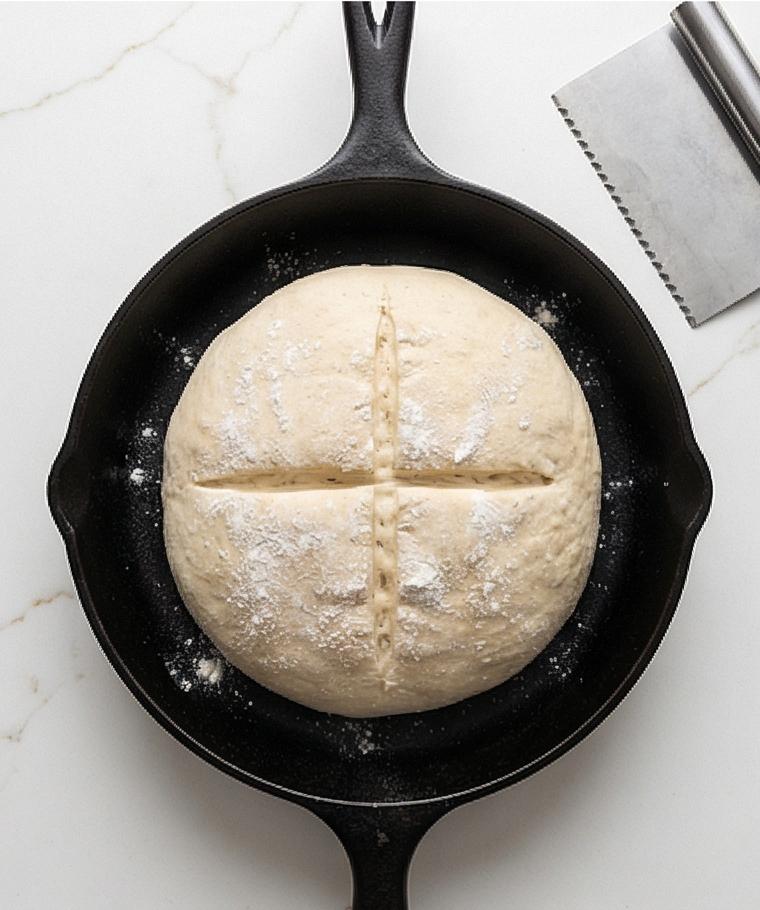
Using a sharp knife or a bench scraper dipped in flour, cut a deep cross about 1/2 to 3/4 inch deep across the top of the loaf; tidy the edges if it spreads slightly after scoring. The scored cross is a bold, visual cue — a clean white furrow through pale dough that will open into a rustic crack as it bakes. Place the scored loaf on the greased cast‑iron skillet or baking sheet and prepare to bake.
Step 8: Bake and check for doneness
Bake the loaf at 425°F (220°C) for 15 minutes to set the crust and get lift, then reduce the oven to 400°F (200°C) and continue baking 20–25 minutes until deeply golden and hollow sounding when tapped; for accuracy, an instant‑read thermometer should register 200–205°F (93–96°C) at the center. Once baked, transfer the warm loaf to a wire rack to cool slightly — the crust will finish setting as the crumb steadies.
Step 9: Slice and serve warm with butter
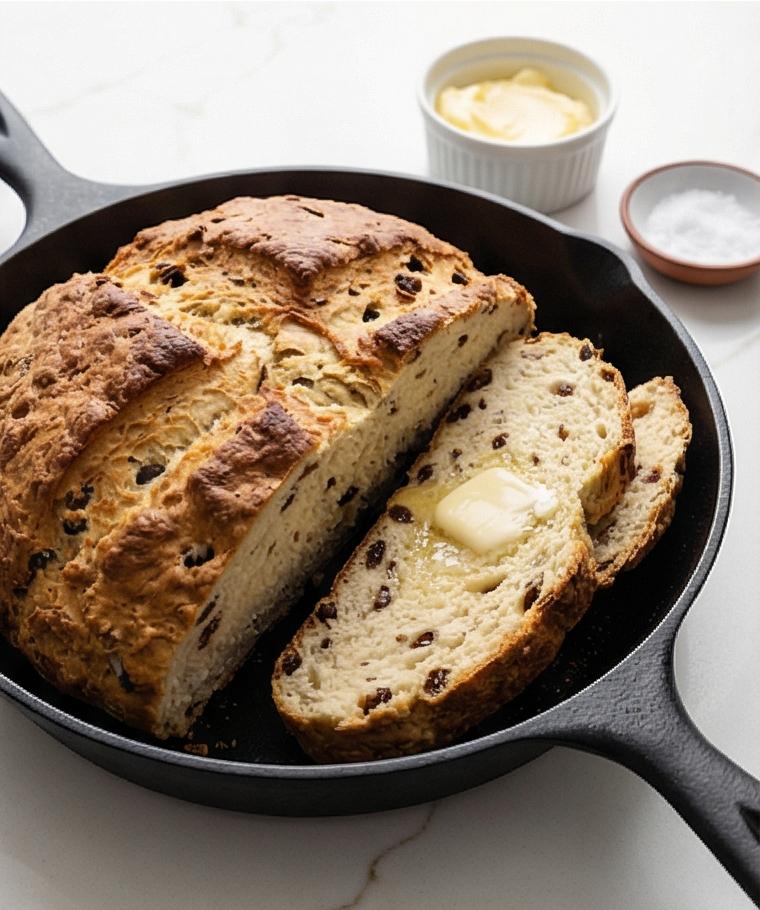
Let the soda bread cool 20–30 minutes, then slice into thick wedges with a serrated knife. Present warm or at room temperature with softened unsalted butter and a pinch of fine sea salt if desired; the interior should be tender with a slightly open crumb and the crust crisp and deeply bronzed.
Notes
- Use fresh baking soda for reliable rise.
- Keep butter cold for a flakier crumb.
- Do not overwork the dough; knead only 6-8 turns.
- Warm slices briefly in a 350°F oven for best texture.
- Freeze wrapped for up to 3 months.