Garlic Bread Recipe

Make the Garlic Bread Recipe now: buttery garlic‑herb spread on a crusty baguette for quick, crowd‑pleasing slices.
Ingredients
- 1/2 cup (113 g) unsalted butter, very soft, at room temperature
- 2 tablespoons (30 ml) extra-virgin olive oil
- 5 large garlic cloves (about 20 g), finely minced or pressed
- 3 tablespoons (about 8 g) finely chopped fresh flat-leaf parsley, divided (2 tablespoons for the garlic butter, 1 tablespoon for garnish)
- 1/2 teaspoon fine sea salt, plus more to taste
- 1/4 teaspoon freshly ground black pepper
- 1/4 teaspoon red pepper flakes (optional, for a slight heat)
- 1/3 cup (30 g) finely grated Parmesan cheese, divided (1/4 cup for the garlic butter, 2 tablespoons for topping)
- 1 large French baguette or Italian bread loaf (about 14–16 inches / 350–400 g)
- 1 cup (100 g) shredded low-moisture mozzarella cheese (optional, for cheesy garlic bread)
- 1/2 teaspoon flaky sea salt or kosher salt, for finishing (optional)
Instructions
Step 1: Make the garlic‑herb butter
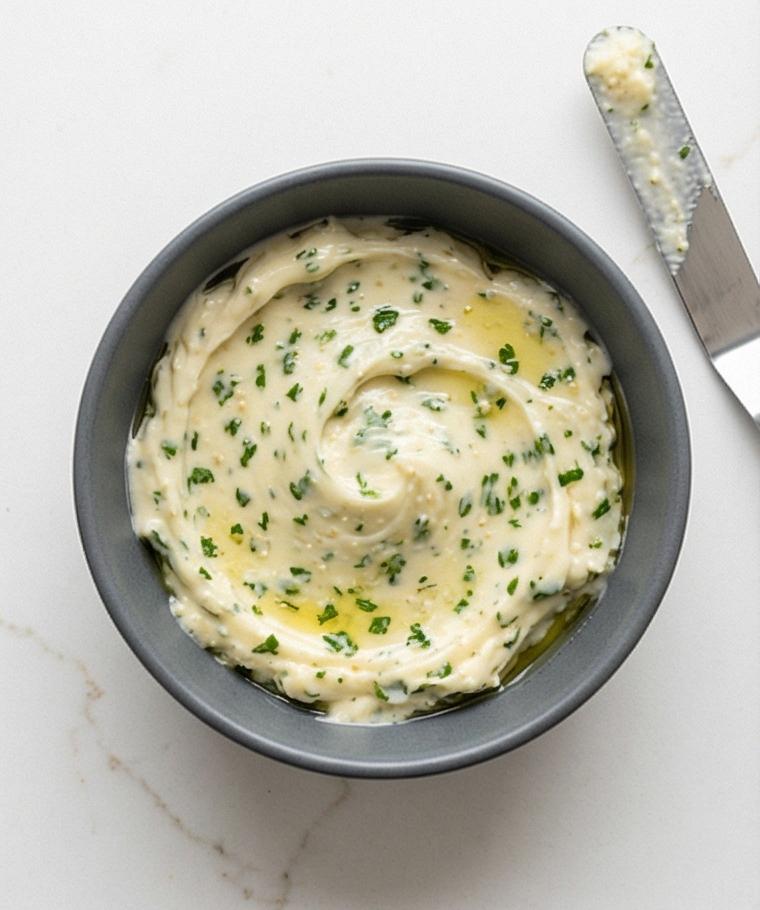
In a medium matte charcoal-grey ceramic bowl, mash the very soft unsalted butter together with the extra‑virgin olive oil until completely smooth and homogenous, then fold in the finely minced garlic, 2 tablespoons of chopped flat‑leaf parsley, 1/4 cup grated Parmesan, fine sea salt, freshly ground black pepper, and the red pepper flakes if using. Stir until the mixture is silky and spreadable, tasting a tiny smear and adjusting salt as needed — the texture should be glossy, creamy, and flecked with tiny green parsley pieces and grated cheese. This is the concentrated savory layer that will melt into the bread and brown at the edges.
Step 2: Halve and score the loaf
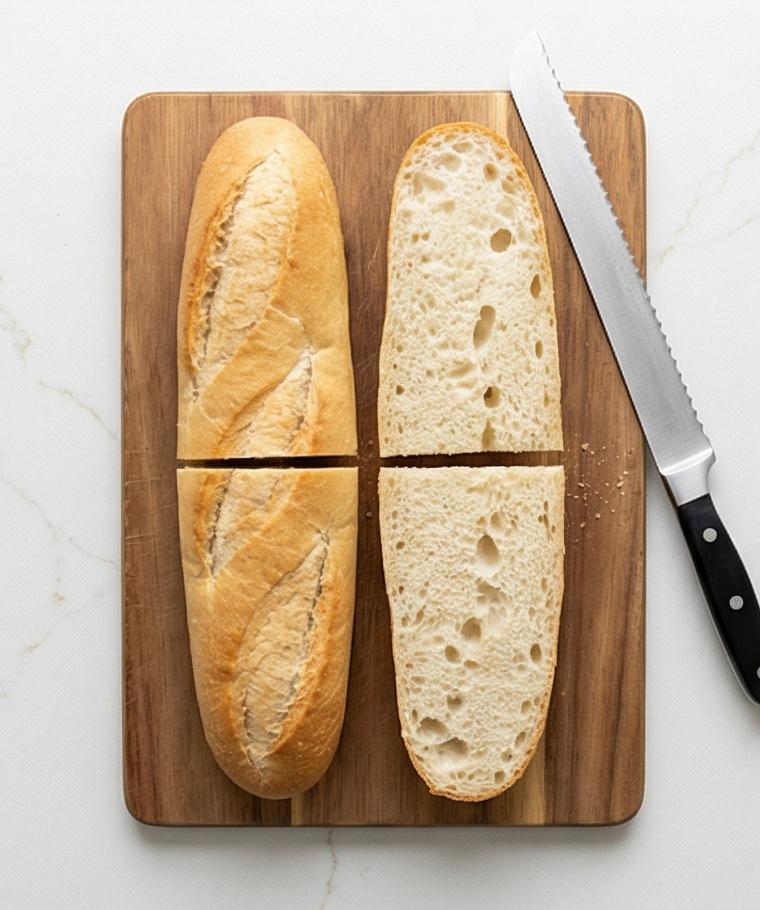
Place the whole baguette on a wooden cutting board and slice it in half lengthwise with a serrated knife so you have two long cut‑sides exposed; optionally score the cut surface into 1–2‑inch serving divisions without cutting through the crust. The visual moment here is the taut, airy crumb contrasted with the crisp golden crust — the interior should look slightly open and pillowy, ready to absorb the butter. Keep the loaf halves resting cut side up, arranged for the next step with no extra clutter.
Step 3: Spread, sprinkle, and top
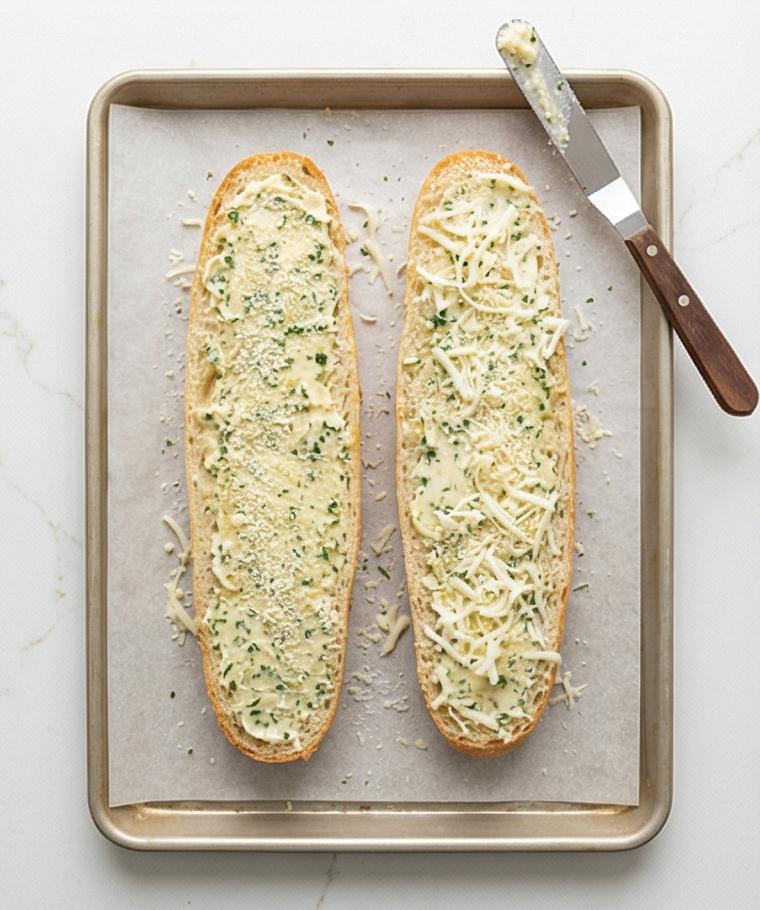
Using an offset spatula (the same one used in the garlic butter bowl), evenly spread a 1/8–1/4‑inch layer of the garlic‑herb butter all the way to the edges of both cut halves so every nook of crumb is coated. Immediately sprinkle the remaining 2 tablespoons of grated Parmesan across the buttered surface; if making cheesy garlic bread, scatter a thin, even layer of shredded low‑moisture mozzarella so it will melt and brown without pooling. The resulting image should show smooth, glossy butter saturated into the crumb, speckles of herb and cheese, and the spatula resting nearby with a smear of butter on its blade.
Step 4: Bake until glossy and bubbling
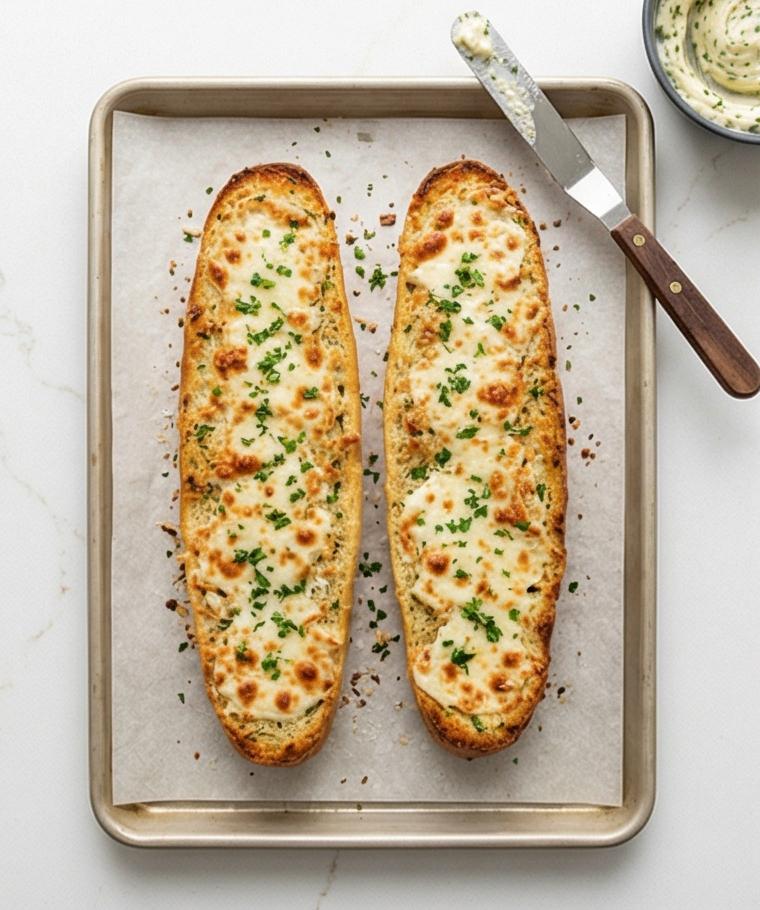
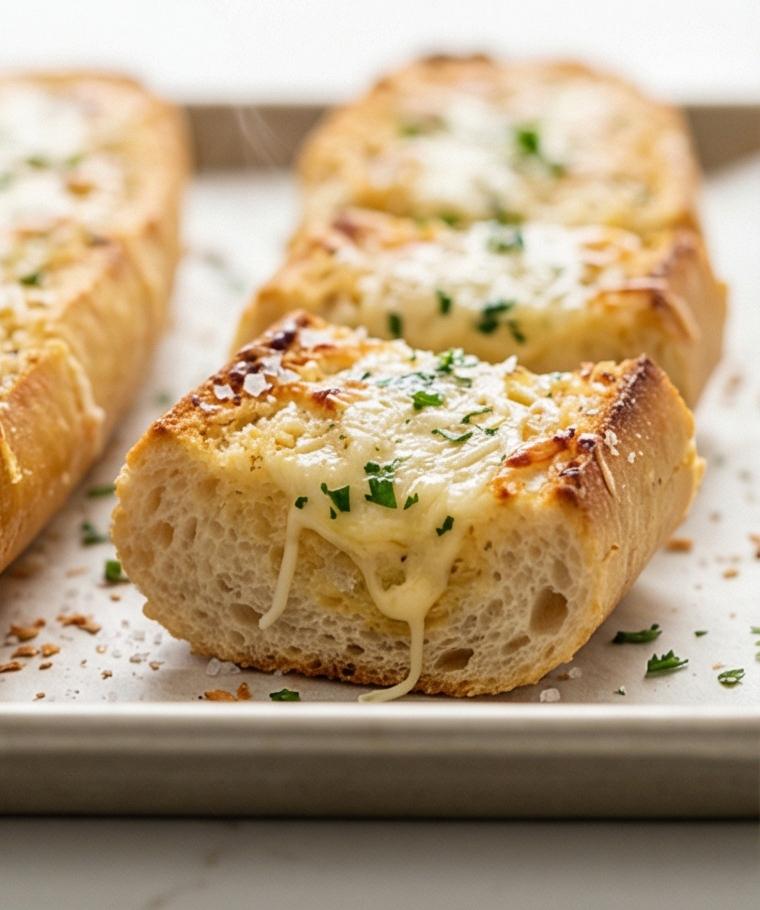
Transfer the prepared halves onto a rectangular parchment‑lined baking sheet and show the post‑bake result: the crust edges crisp and lightly bronzed, the exposed bread golden, the butter completely melted into the crumb, and any mozzarella melted into a thin, bubbling, lightly caramelized sheet with small brown spots. Capture the texture contrasts — crisp rim, tender saturated crumb, glossy melted cheese, and toasted parmesan granules — the baking vessel remains a rectangular sheet so the geometry is preserved for the final presentation.
Step 5: Garnish, rest, and slice to serve
Right after removing from the heat (do not show an oven), sprinkle the remaining tablespoon of chopped parsley and a light dusting of flaky finishing salt across the hot surface; let the bread rest 2–3 minutes so the butter settles and the crust firms, then transfer the whole rectangular oven sheet or a long rectangular serving tray to the surface and slice into 1–2‑inch pieces. The final plated shot will be an eye‑level, very close‑up portrait showing the rectangular geometry retained: bubbling browned cheese, glossy buttered crumb, crisp golden edges, bright parsley flecks, and a scattering of flaky salt — vivid textures and warmth, ready to be served.
Notes
- Bring butter to room temperature for easy mixing.
- Taste and adjust salt before spreading—the bread will mellow flavors.
- Use low-moisture mozzarella for cheesier, less soggy results.
- Freeze extra slices flat on a tray then bag for 1-month storage.