Cheese Board Recipe
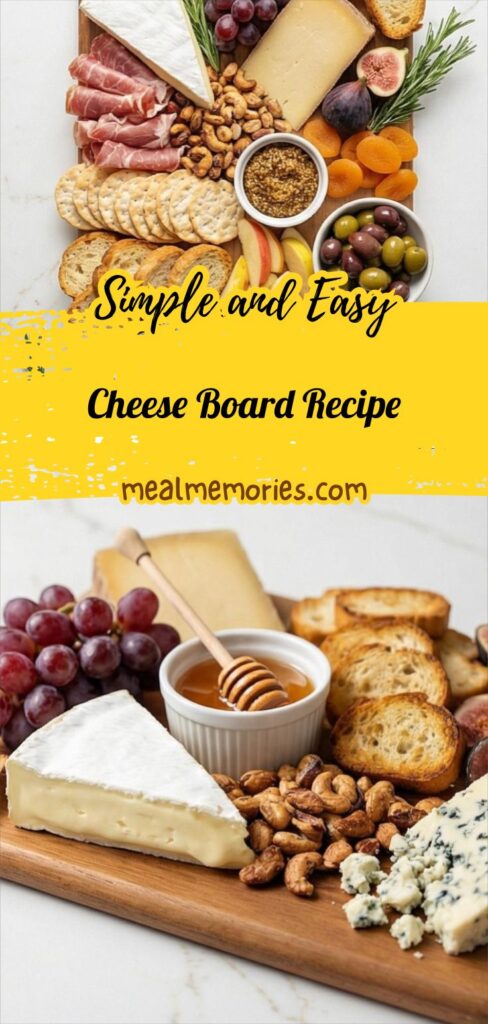
Make the Cheese Board Recipe: assemble cheeses, toasted baguette, fruits, nuts, and condiments for an elegant, easy appetizer.
Ingredients
- 6 ounces (170 grams) soft-ripened cheese such as Brie or Camembert, chilled but to be brought to room temperature
- 6 ounces (170 grams) semi-soft cheese such as Havarti or Fontina, chilled but to be brought to room temperature
- 6 ounces (170 grams) firm aged cheese such as Manchego, Cheddar, or Gouda, chilled but to be brought to room temperature
- 4 ounces (115 grams) blue cheese such as Gorgonzola or Roquefort, chilled but to be brought to room temperature
- 1 small baguette (about 8 ounces / 225 grams), sliced into 1/2-inch (1.25 cm) thick rounds
- 3 tablespoons extra-virgin olive oil, divided
- 1 cup (about 4.5 ounces / 125 grams) raw mixed nuts (such as almonds, walnuts, pecans, and cashews)
- 1 teaspoon fresh rosemary leaves, finely chopped
- 1/4 teaspoon kosher salt, plus more to taste
- 1/8 teaspoon freshly ground black pepper
- 3 ounces (85 grams) thinly sliced prosciutto or similar cured ham
- 3 ounces (85 grams) thinly sliced salami or similar cured sausage
- 4 ounces (115 grams) assorted plain crackers
- 1 cup (about 5 ounces / 150 grams) seedless red or green grapes, left in small clusters and washed, well dried
- 1 medium crisp apple (about 6 ounces / 170 grams), cored and thinly sliced
- 1 teaspoon freshly squeezed lemon juice
- 4 fresh figs (about 5 ounces / 140 grams), halved lengthwise, or 6 dried figs, halved
- 1/3 cup (about 1.75 ounces / 50 grams) dried apricots
- 3 tablespoons runny honey
- 2 tablespoons whole-grain mustard
- 3 tablespoons fig jam or other fruit chutney
- 1/2 cup (about 2.5 ounces / 75 grams) cornichons or small pickles, drained
- 1/2 cup (about 2.8 ounces / 80 grams) mixed olives, drained
- 1 small bunch fresh herbs (such as rosemary and thyme sprigs) for garnish
Instructions
Step 1: Bring cheeses to temperature and unwrap
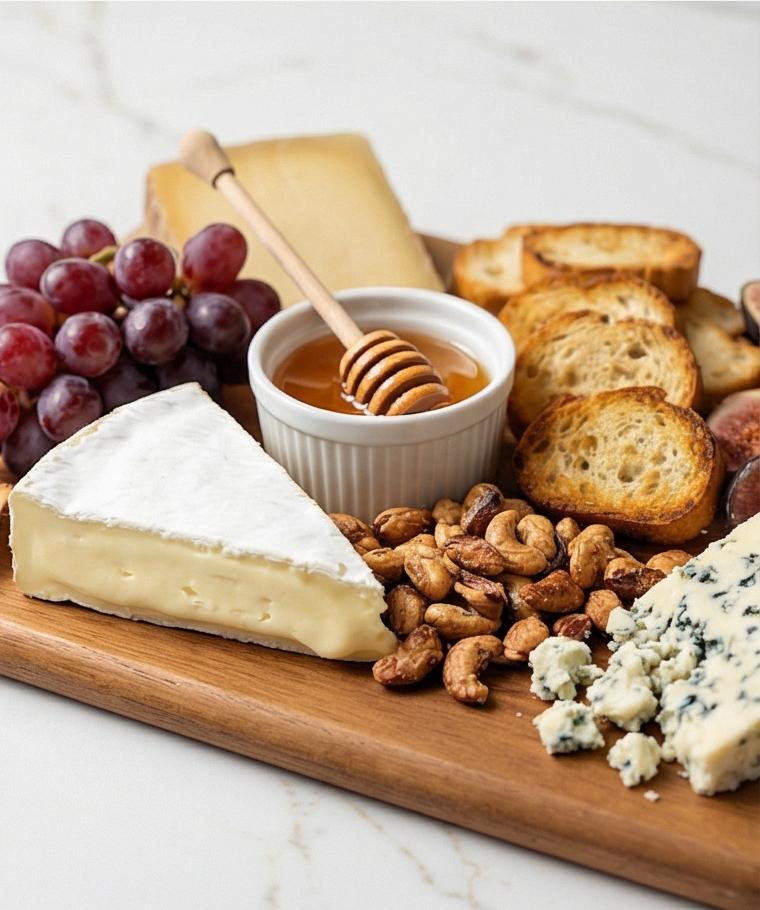
Gently unpackage each cheese and set them out on the quartz surface to come to room temperature — soft-ripened Brie or Camembert, a semi-soft wheel (Havarti/Fontina), a firm aged cheese (Manchego/Cheddar/Gouda), and a small wedge of blue cheese. Leave each cheese on its own small plate or directly on the board area you plan to assemble, giving each piece breathing room. This is about texture: notice the soft cheese’s velvety white rind, the semi-soft’s smooth paste, the firm cheese’s dry, slightly crystalline slices, and the blue’s marbled crumbly texture as they warm and relax.
Step 2: Prep and toast bread; roast the seasoned nuts
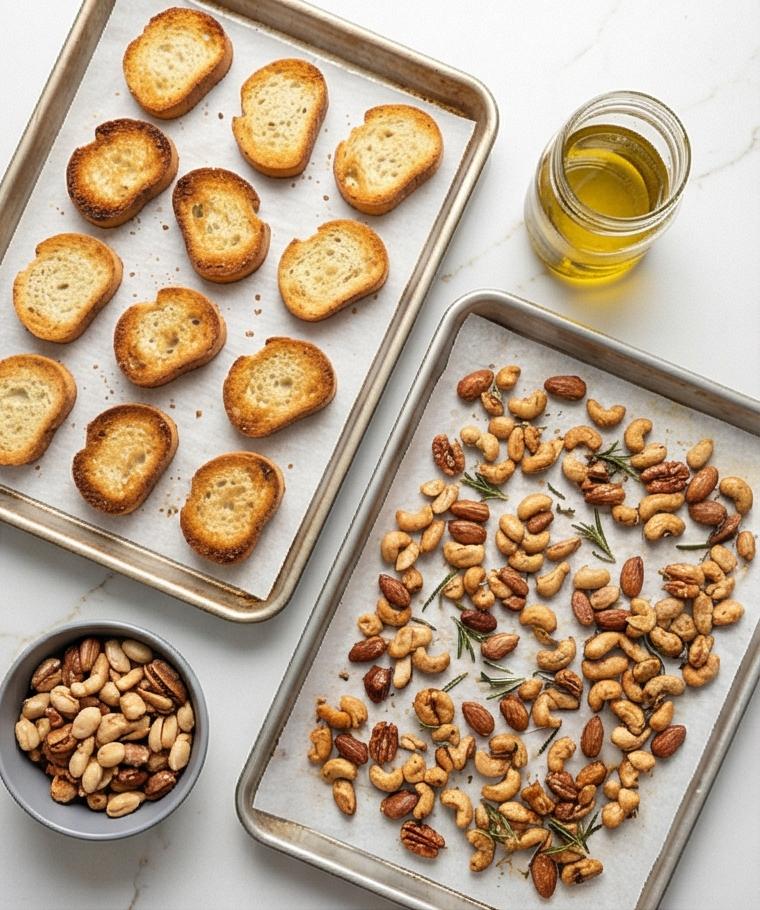
Preheat mentally, then brush the baguette rounds evenly with most of the olive oil and toss the nuts with the remaining oil, chopped rosemary, kosher salt, and cracked black pepper. Spread the oiled slices and the seasoned nuts separately in single layers on baking pans and roast until the bread edges are light golden and the nuts are fragrant and toasted; remove and let cool until crisp. The key visual change is crunch: bread edges become bronzed and porous, nuts gain a slightly glossy sheen with tiny rosemary flecks clinging to their skins.
Step 3: Prepare fruits and small accompaniments
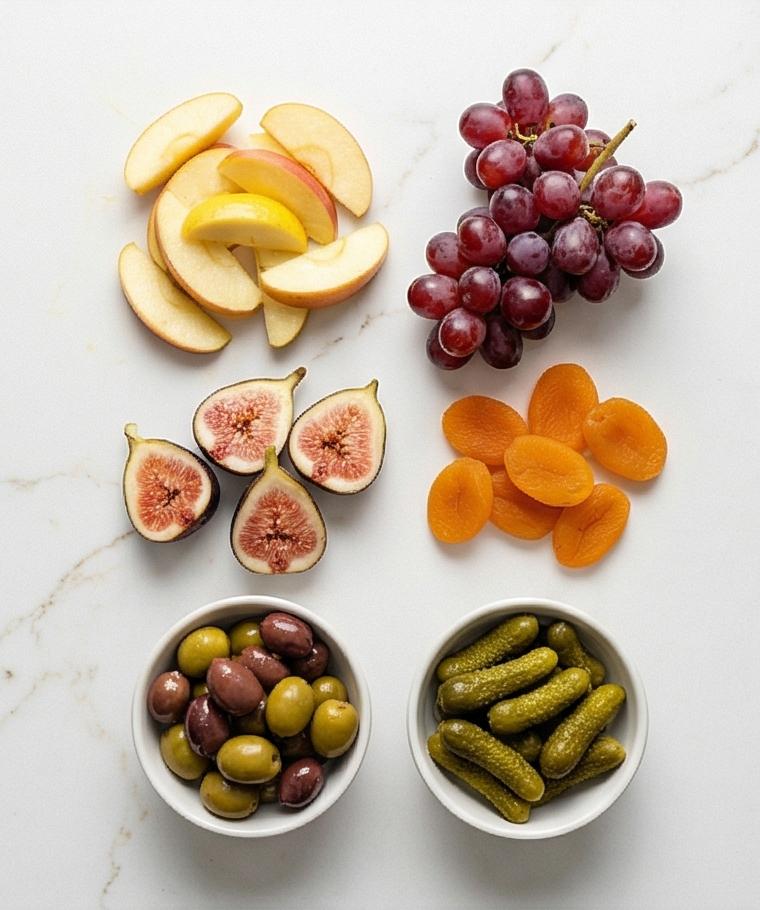
Core and thinly slice the apple and toss the slices with lemon so they stay bright; leave grapes in small, easy-to-grab clusters and pat them perfectly dry; halve fresh figs (or dried figs) and set aside dried apricots. Drain olives and cornichons into a small bowl. Arrange these prepped fruits and small bites into tidy little piles or shallow bowls so their colors and textures read clearly: the apple’s crisp pale flesh, the figs’ jewel-toned interior, the grapes’ glossy skins, and the apricots’ leathery chew.
Step 4: Place cheeses on the board and signal service
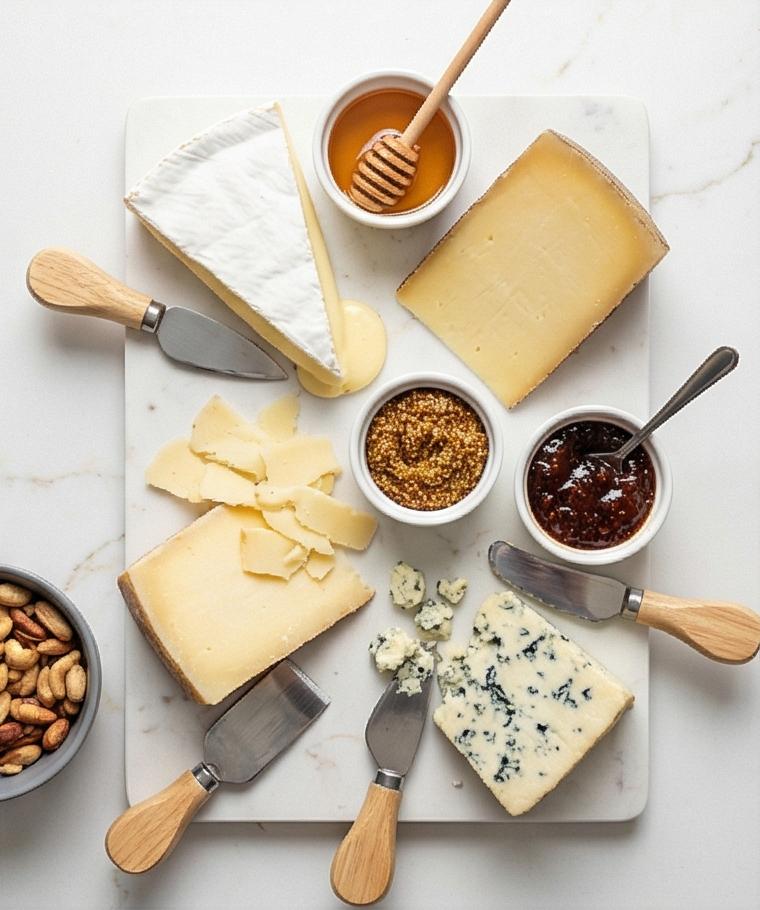
Position each cheese on the board in separate zones so flavors won’t cross — soft-ripened in one corner, semi-soft and firm cheeses in their own areas, blue cheese isolated. Partially slice the firm cheese into thin slivers, cut a few neat wedges from the soft and semi-soft wheels, and crumble a small portion of the blue to show serving cues. Set out the SAME small white porcelain ramekins (for honey, mustard, fig jam), the same matte grey bowl for nuts, and a slender cheese spreader or knife beside each cheese to keep tool continuity and avoid flavor transfer.
Step 5: Add cured meats, crackers, breads, condiments and finishing piles
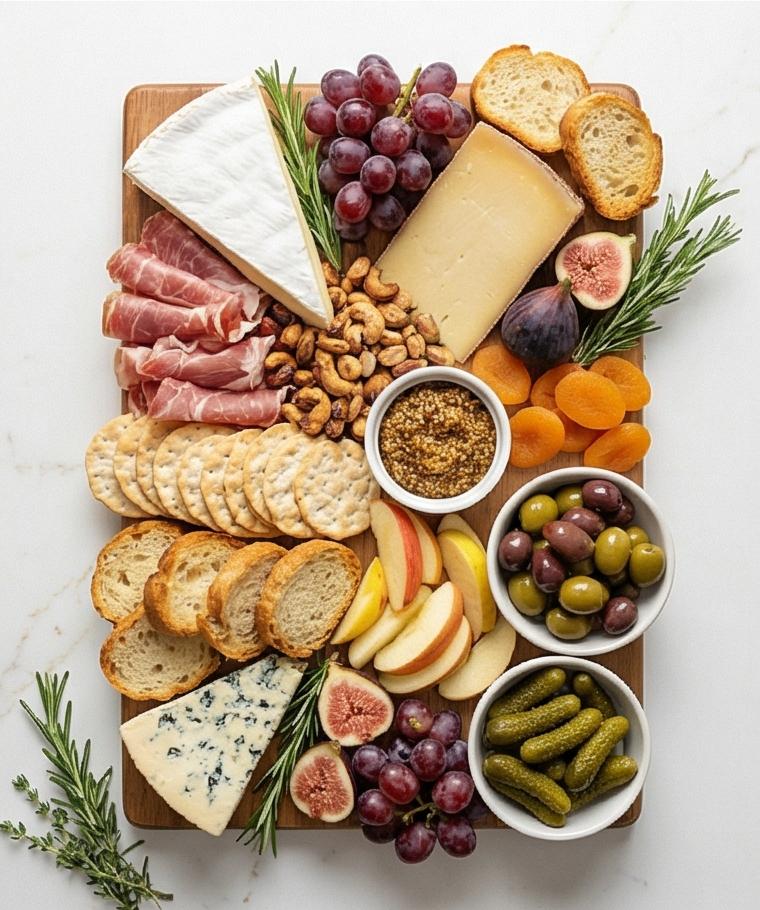
Loosely fold prosciutto and roll slices of salami into gentle ribbons and tuck them into open gaps; place crackers in short vertical stacks or fanned rows; nestle toasted baguette slices in a shallow wicker basket or around the board’s edges. Spoon honey, whole-grain mustard, and fig jam into the prepared ramekins; pile roasted nuts into the matte grey bowl; and place olives and cornichons in a small ceramic dish. Fill remaining tiny gaps with grape clusters, apple fans, halved figs, and dried apricots, keeping the composition airy but abundant.
Step 6: Garnish, taste, and present at room temperature
Tuck sprigs of rosemary and thyme into small gaps for aroma and color, take a taste of one cheese with a cracker and a slice of meat to confirm balance, and — if desired — sprinkle a light pinch of kosher salt over the roasted nuts or toast. Serve the completed cheese board at room temperature within an hour or two of assembling; after serving, refrigerate leftovers promptly. The board should read as a curated landscape: creamy whites, golden toasted textures, glossy fruits, and folded meats with the small bowls of condiments inviting interaction.
Notes
- Bring cheeses to room temperature before serving for best flavor.
- Keep crackers separate until service to maintain crispness.
- Store cheeses wrapped in parchment and airtight containers for up to 3-5 days.
- Toast nuts and bread just before assembling to preserve crunch.
- Label cheeses for guests and provide separate spreaders to avoid flavor transfer.