Grilled Steak Recipe
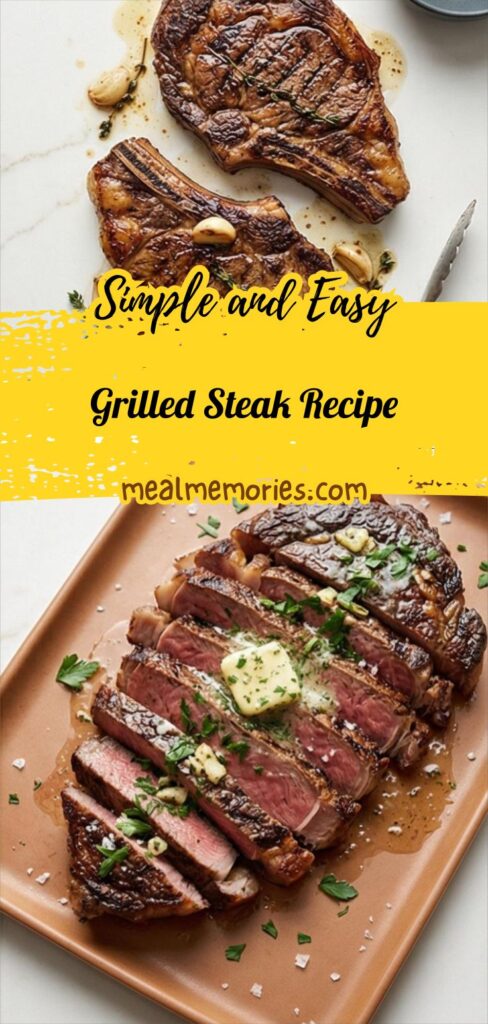
Make the Grilled Steak Recipe now: salt, sear, and baste ribeyes for juicy, restaurant-style results.
Ingredients
- 2 bone-in ribeye steaks (each 1–1.25 inches / 2.5–3 cm thick, about 12 oz / 340 g each), patted dry with paper towels
- 2 teaspoons kosher salt (Diamond Crystal preferred; use 1 teaspoon per steak), divided
- 1 teaspoon freshly ground black pepper
- 1 teaspoon garlic powder
- 1 teaspoon onion powder
- 1 teaspoon smoked paprika
- 1 tablespoon neutral high-heat oil (such as canola, grapeseed, or avocado oil)
- 2 tablespoons unsalted butter, at room temperature
- 2 cloves garlic, peeled and lightly crushed
- 2 sprigs fresh thyme or 1 sprig fresh rosemary
- 1 teaspoon freshly squeezed lemon juice (optional, for finishing)
- 1 tablespoon finely chopped fresh flat-leaf parsley (optional, for garnish)
- 1 teaspoon flaky sea salt (such as Maldon; optional, for serving)
Instructions
Step 1: Dry, trim and salt the steaks
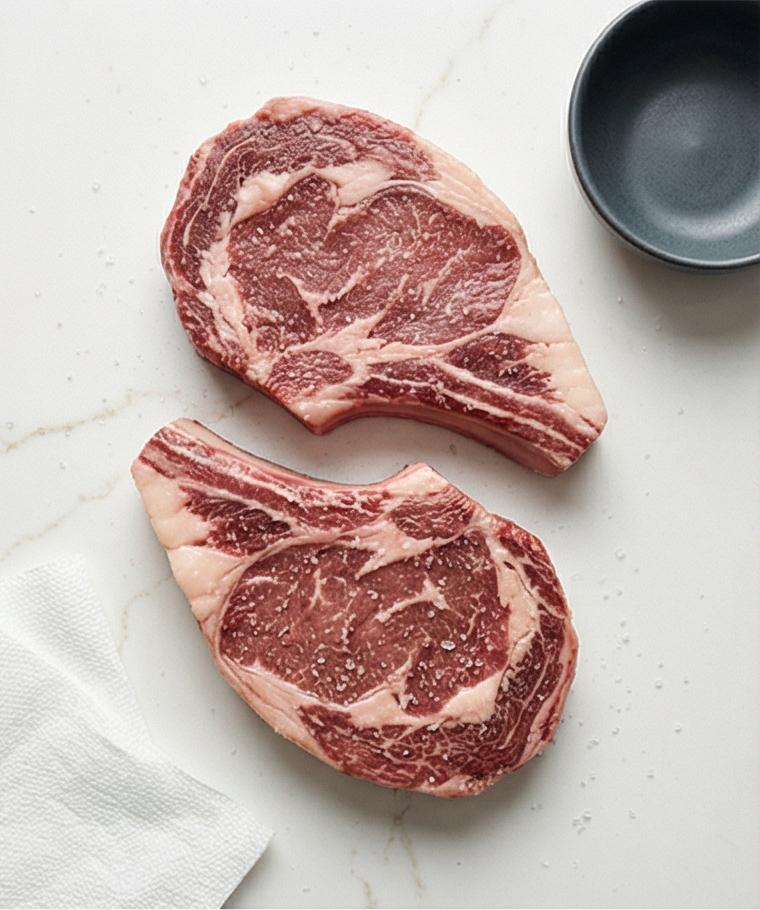
Work with cold, paper‑towel–dried bone‑in ribeyes: press away any loose fat, blot the surfaces until completely dry so the meat can form a deep crust. Gently season every surface and the exposed bone with kosher salt (about 1 teaspoon per steak), pressing the crystals into the flesh so they adhere. Let the salted steaks rest at room temperature for 30–40 minutes so the salt can begin to draw moisture and season the meat. This resting state should look slightly matte where moisture has been drawn out and the salt crystals sit visibly on the surface.
Step 2: Combine the dry rub and gather finishing aromatics
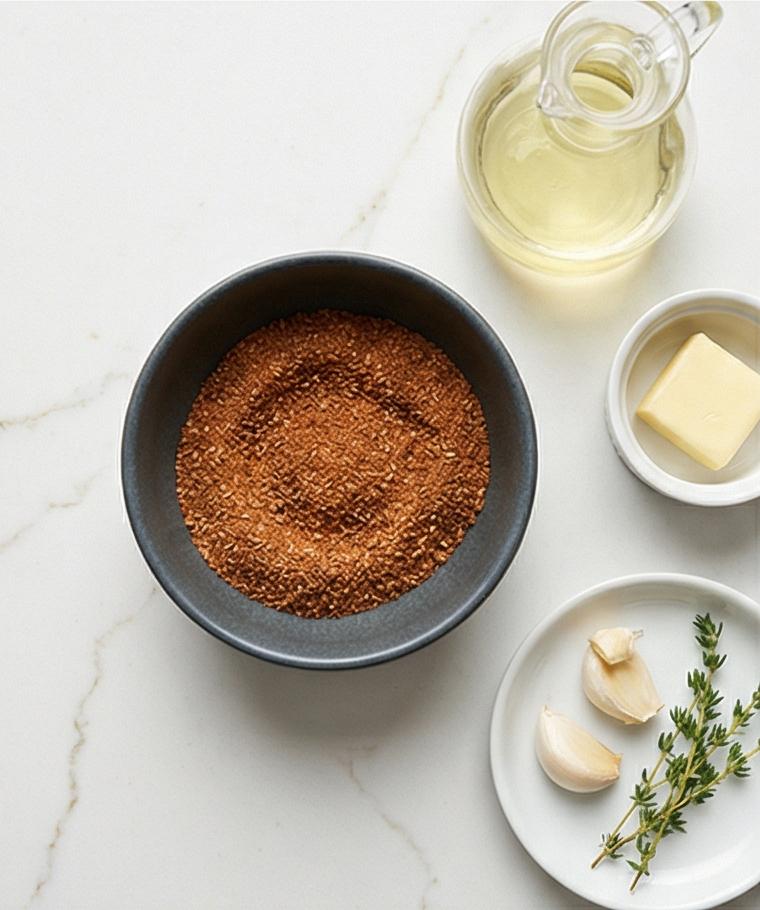
In a small matte charcoal ceramic bowl combine freshly ground black pepper, garlic powder, onion powder and smoked paprika, stirring until the powder is an even, russet‑brown blend with a fine, slightly gritty texture. Nearby, keep a clear glass oil cruet with neutral high‑heat oil, two room‑temperature butter knobs on a tiny ceramic saucer, two peeled crushed garlic cloves and two thyme sprigs lined up on the surface; these elements stay in small vessels or on ramekins — nothing loose on the table. The spice bowl should look dry, powdery, and ready to be pressed into the meat.
Step 3: Re‑dry, oil and oil‑coat the steaks before seasoning
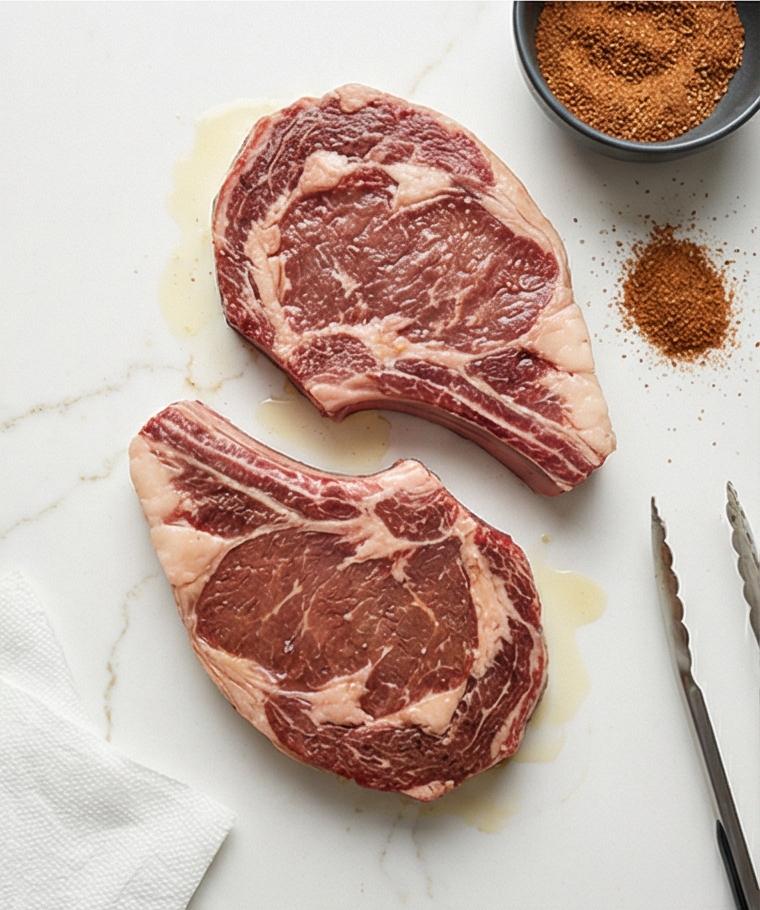
Just before seasoning, pat the steaks once more so any condensation is removed; the surface should show a satin, almost dry sheen. Lightly brush each steak with a thin, even film of neutral oil (about 1/2 tablespoon per steak) so the spice can adhere — the meat surface will go from chalky‑dry to a translucent satin coat, tiny oil beads catching the light. Keep the same matte charcoal bowl of rub and a folded paper towel visible nearby as persistent props.
Step 4: Apply the rub and develop a deep sear and crosshatch crust (result)
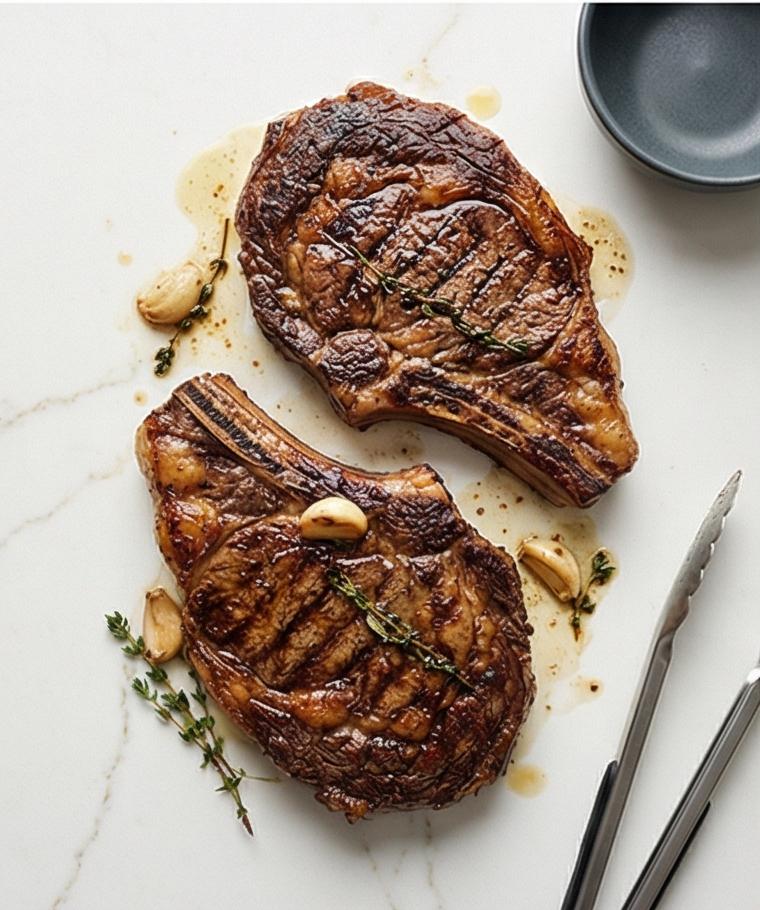
Generously sprinkle the spice blend from the charcoal bowl over both faces and the edges, pressing the mix gently—do not smear it off; the surface should show a uniform, rust‑brown crust forming where the spices bond to the oiled meat. The visual milestone is the seared face: a dark, well‑browned crust with precise crosshatch marks and a concentrated, slightly glossy caramelized surface where the Maillard reaction has taken hold. Show the steaks resting on the surface with that defined crust and faint rendered fat beads pooled at the edge — this is the result of the searing and turning, photographed flat from above.
Step 5: Finish, baste, and rest the steaks
During finishing the steaks are topped with a knob of butter, a crushed garlic clove and a sprig of thyme so the butter melts and creates a glossy, herb‑speckled finish. After removing from the heat, the steaks are transferred to a warm cutting area and loosely tented; the surface loses a bit of intense gloss and looks slightly settled as juices redistribute, with a small glaze of amber butter and aromatics pooled along the bone. Let them rest until the juices stop running, the crust appears slightly more settled and the interior is still plump.
Step 6: Slice and plate the finished ribeyes — serve immediately
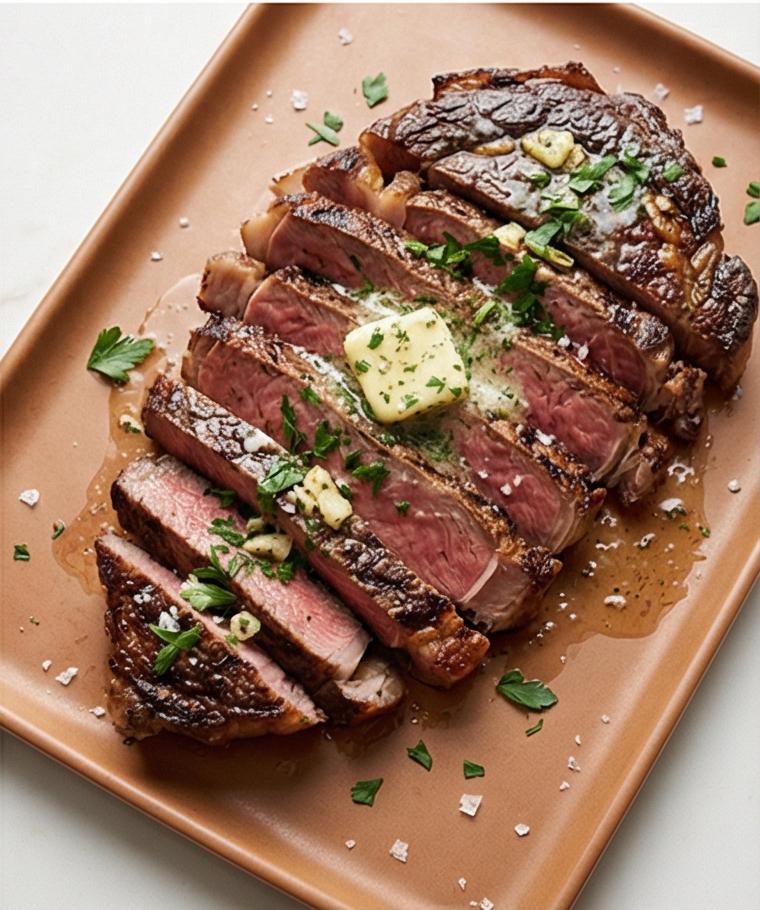
Transfer the rested steaks to the chosen presentation vessel and either present whole or slice off the bone and cut across the grain into thick 1/2‑inch slices. The final plating should show juicy, pink to warm‑rose interiors with a concentrated seared edge, glossy butter shards, a scatter of chopped parsley, and a final pinch of flaky sea salt for texture. Finish with an optional light squeeze of lemon and spoon the accumulated butter juices over the slices.
Notes
- Let steaks rest at room temperature after salting for 30-40 minutes so the salt can season the meat.
- Use an instant-read thermometer to avoid overcooking; remove steaks a few degrees below target and rest.
- Pat steaks very dry before oiling so you get a deep crust.
- If using a grill, preheat to high and clean the grates for best sear marks.
- Slice across the grain into 1/2-inch slices and finish with a pinch of flaky sea salt.