Breakfast Casserole Recipe
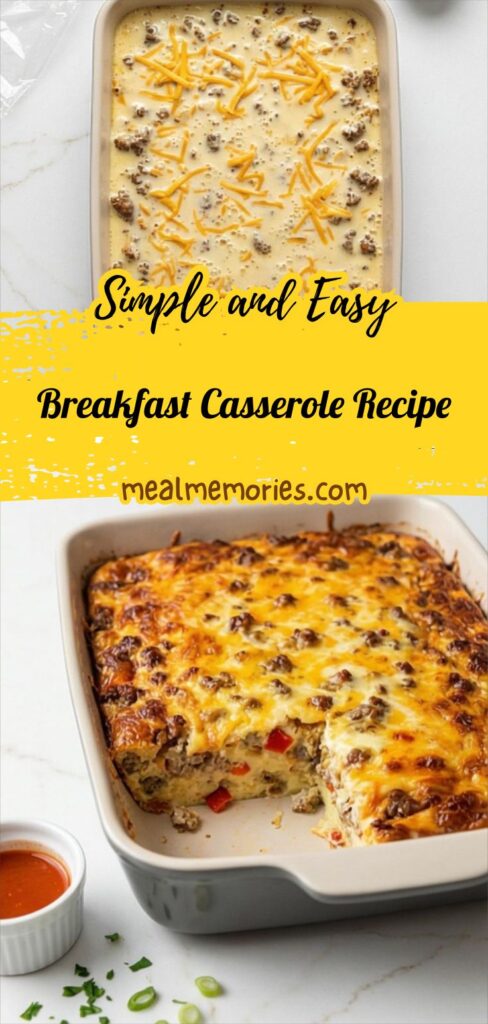
Make Breakfast Casserole Recipe for a cheesy, crowd-pleasing brunch. Bake and serve warm.
Ingredients
- 1 tablespoon unsalted butter, at room temperature, for greasing the baking dish (or use nonstick cooking spray)
- 1 pound (450 g) bulk breakfast sausage (pork or turkey), casings removed if linked
- 1 medium yellow onion (about 5 oz / 140 g), finely diced
- 1 small red bell pepper (about 4 oz / 115 g), finely diced
- 2 cloves garlic, finely minced
- 1/2 teaspoon kosher salt, plus more to taste
- 1/2 teaspoon freshly ground black pepper, plus more to taste
- 1/2 teaspoon smoked paprika (or sweet paprika)
- 1/2 teaspoon garlic powder
- 1/2 teaspoon dried thyme (or Italian seasoning)
- 20 ounces (565 g) frozen shredded hash browns, thawed and patted dry
- 2 cups (200 g) shredded sharp cheddar cheese, divided
- 1 cup (100 g) shredded Monterey Jack or mozzarella cheese
- 8 large eggs, at room temperature
- 2 cups (480 ml) whole milk, at room temperature
- 1/2 cup (120 ml) heavy cream, at room temperature (or substitute additional whole milk)
- 1 teaspoon Dijon mustard
- 1/2 teaspoon hot sauce (optional, for gentle heat)
- 2 tablespoons finely chopped fresh parsley, plus more for garnish
- 2 tablespoons thinly sliced green onions, for garnish (optional)
- Hot sauce, for serving (optional)
Instructions
Step 1: Preheat oven and prepare the baking dish
Preheat the oven to 350°F (175°C). Generously grease a 9x13-inch rectangular baking dish with room-temperature unsalted butter or coat it thoroughly with nonstick cooking spray so the casserole releases cleanly after baking.
Step 2: Brown the breakfast sausage
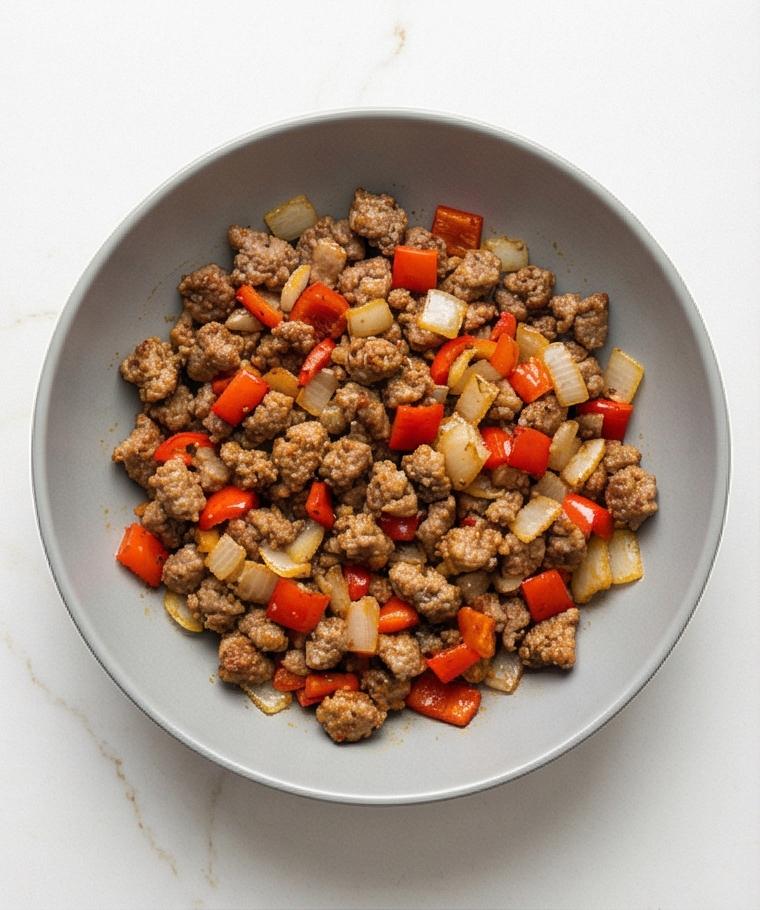
Place the bulk breakfast sausage into a wide, shallow matte-grey ceramic bowl to represent the cooked result (we are documenting the finished browned crumbles, not the stove). Break the sausage into small, irregular crumbles; the surface should be richly browned with tiny caramelized bits and no pink remaining, a dense, slightly glossy sheen from rendered fat.
Step 3: Soften the aromatics with the sausage
Combine the finely diced yellow onion and red bell pepper with the browned sausage in the same shallow matte-grey ceramic bowl. The vegetables should appear softened and translucent-edged, with peppers retaining bright red flecks and onions showing faint golden edges that cling to the sausage crumbles.
Step 4: Finish with garlic and spices
Stir the minced garlic, kosher salt, black pepper, smoked paprika, garlic powder, and dried thyme into the warm sausage–vegetable mixture in the same bowl until the spices coat the meat and vegetables. The mixture should read as fragrant and evenly seasoned with tiny flecks of paprika and thyme throughout.
Step 5: Layer the shredded hash browns in the dish
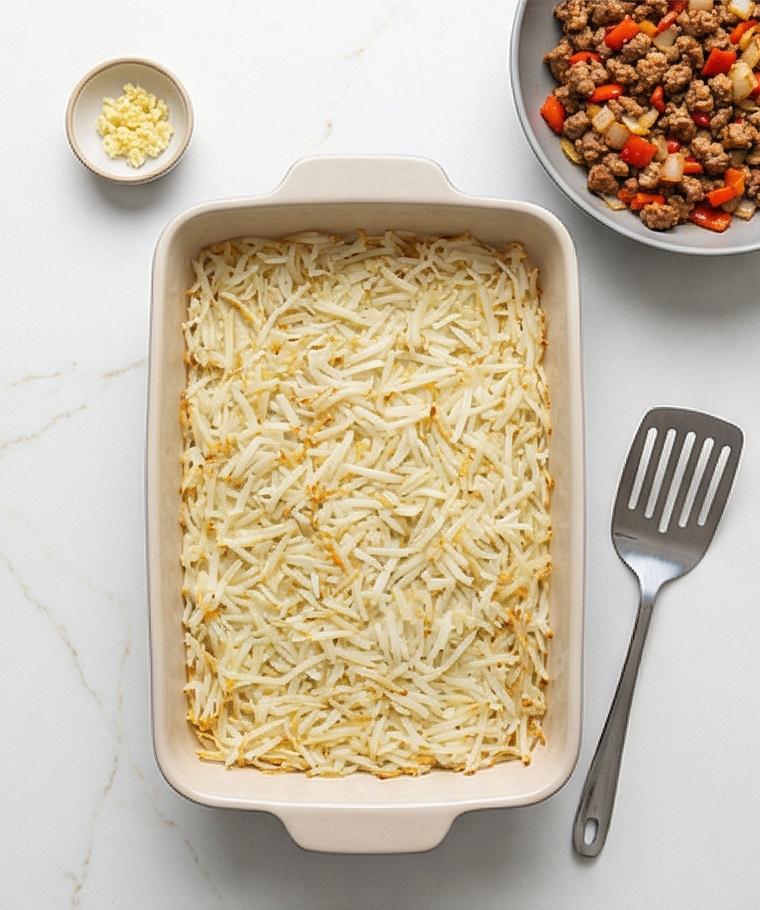
Spread the thawed, well-dried shredded hash browns evenly across the bottom of the prepared 9x13-inch rectangular baking dish. Press them lightly with a spatula so they form a uniform, slightly compacted pale textured bed with striated potato shreds visible across the surface.
Step 6: Distribute the sausage–vegetable mixture over the hash brown base
Spoon the hot sausage and softened vegetable mixture evenly over the pressed hash brown layer so that browned crumbles and flecks of red pepper are distributed in a uniform mosaic across the pale potato base.
Step 7: Add the cheese layers
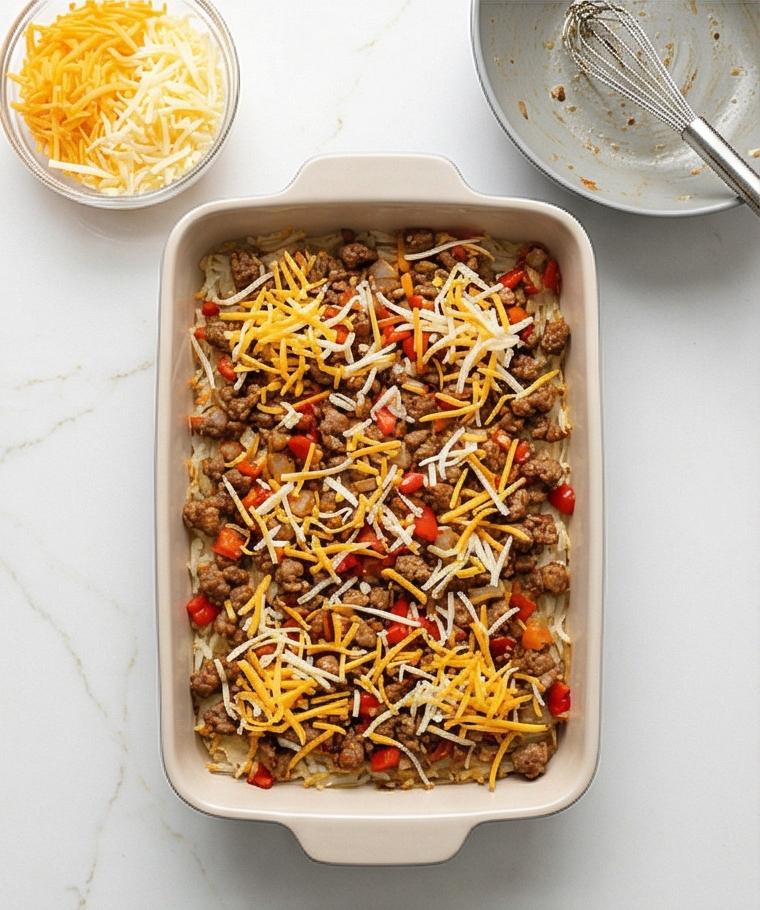
In a medium clear glass bowl combine 1 1/2 cups of shredded sharp cheddar with the shredded Monterey Jack (or mozzarella), reserving 1/2 cup cheddar for the top. Sprinkle the mixed cheeses evenly over the sausage layer so melted pockets will form across the casserole.
Step 8: Whisk the eggs until uniform
Crack and whisk the 8 large room-temperature eggs in the same matte-grey mixing bowl used earlier for visual continuity until yolks and whites are fully combined and slightly frothy, creating an airy pale-gold custard base.
Step 9: Enrich the custard and season
Add the whole milk, heavy cream, Dijon mustard, and optional hot sauce to the whisked eggs, then stir in the chopped fresh parsley. Whisk until the mixture is smooth and uniform; taste a cautious spoonful for salt and pepper and adjust gently, remembering the sausage and cheese already contain seasoning.
Step 10: Pour the custard over the assembled layers
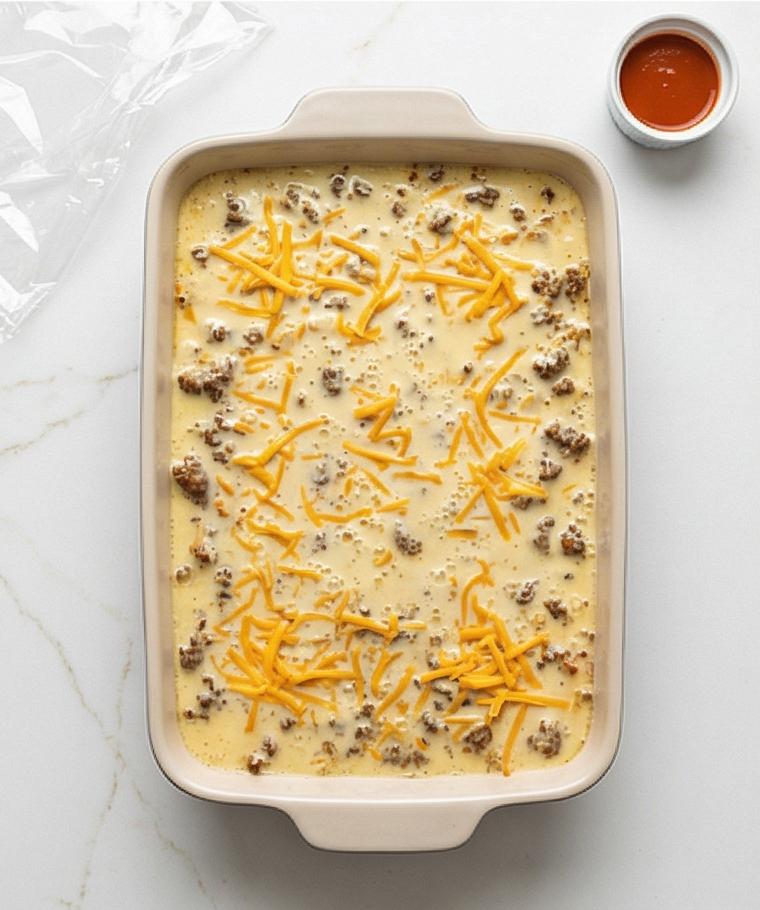
Slowly pour the egg–milk custard across the casserole, moving the bowl to allow it to soak through the cheese, sausage, and hash browns. Use the back of a spoon to gently press down any ingredients that remain above the liquid so most components are submerged and the custard pools evenly between potato strands.
Step 11: Top with reserved cheddar
Evenly sprinkle the reserved 1/2 cup shredded sharp cheddar over the custard surface to create golden-melting islands that will brown during baking.
Step 12: Short rest before baking (if baking immediately)
If baking right away, let the casserole rest at room temperature for 10–15 minutes so the hash browns begin absorbing the custard, which helps the bake set more evenly and prevents dry pockets.
Step 13: Overnight make-ahead option
For a make-ahead version, cover the baking dish tightly with plastic wrap or foil and refrigerate for 4–12 hours. When ready to bake, remove from the refrigerator and let the dish stand at room temperature for 20–30 minutes before baking to minimize uneven cooking.
Step 14: Bake until set and golden
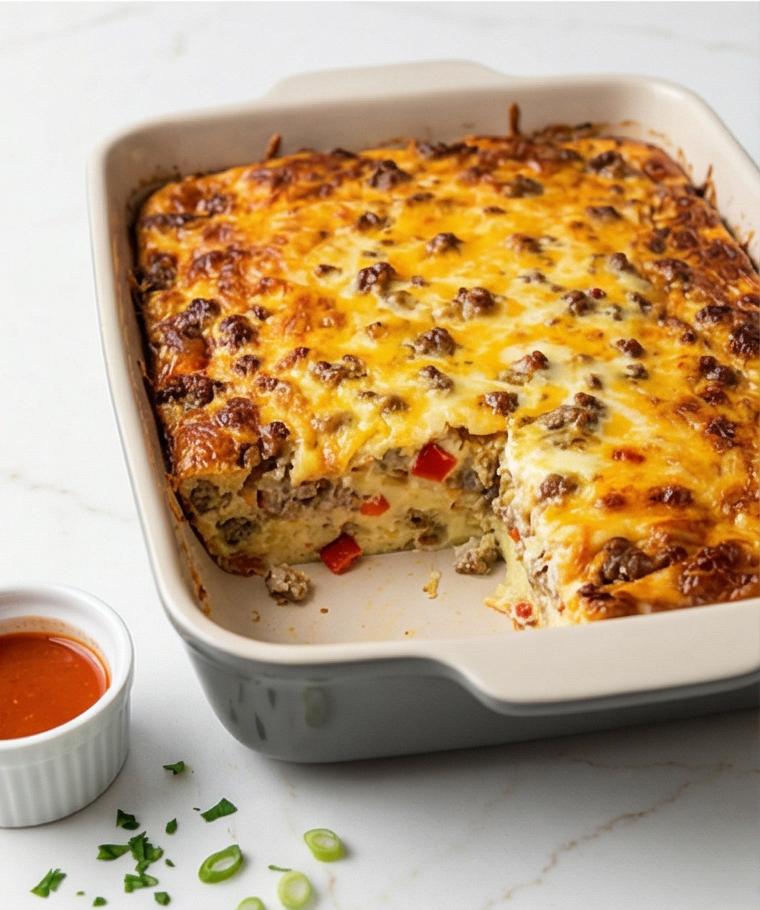
Place the assembled rectangular baking dish (still on the surface, no oven shown) and bake at 350°F (175°C) for 40–50 minutes from room temperature or 50–60 minutes from chilled, until the top is deep golden-brown in spots, the edges are bubbling, and the center is mostly set.
Step 15: Check for doneness
Gently jiggle the baking dish to verify the casserole is mostly firm with only a slight central wobble. A knife or toothpick inserted near the center should come out mostly clean, and the interior temperature should read at least 165°F (74°C) if using an instant-read thermometer.
Step 16: Rest to finish setting
Remove the baked casserole from heat and let it rest on a cooling rack for 10–15 minutes so the custard finishes setting and slices will cut cleanly into creamy, cohesive squares.
Step 17: Garnish for color and freshness
Just before serving, scatter additional chopped fresh parsley and thinly sliced green onions over the warm top for bright herbal color and a faint onion crunch.
Step 18: Slice and serve warm
Using a sharp knife wiped between cuts, cut the rectangular casserole into 8–10 neat squares. Serve warm straight from the rectangular baking dish with optional hot sauce on the side.
Step 19: Serving suggestions and storage
Pair slices with a simple green salad or fresh fruit for balance. Store leftovers tightly covered in the refrigerator for up to 3 days and reheat individual portions in a 325°F (165°C) oven for 10–15 minutes or briefly in the microwave until heated through.
Notes
- Pat the hash browns very dry to prevent a soggy casserole
- Let the casserole rest 10–15 minutes before slicing for clean squares
- Use an instant-read thermometer to confirm an interior temp of 165°F
- Make ahead: assemble and refrigerate 4–12 hours before baking
- Freeze portions in airtight containers for up to 2 months