Cinnamon Swirl Bread Recipe
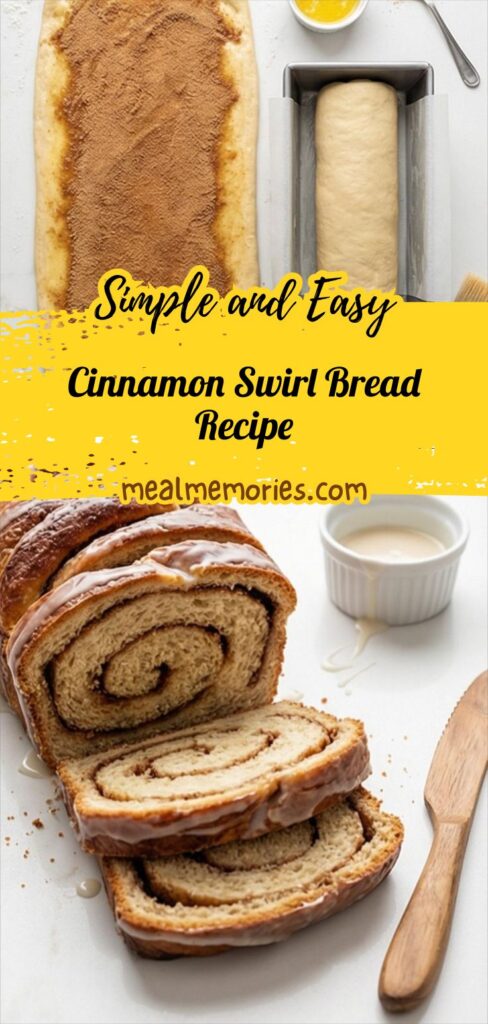
Bake Cinnamon Swirl Bread Recipe for a tender, cinnamon-swirled loaf perfect for breakfast or brunch.
Ingredients
- 3/4 cup (180 ml) whole milk, warmed to 105–110°F (40–43°C)
- 2 1/4 teaspoons (7 g) active dry yeast
- 1/4 cup (50 g) granulated sugar
- 2 large eggs, at room temperature
- 4 tablespoons (57 g) unsalted butter, melted and cooled to lukewarm
- 3 cups (360 g) all-purpose flour, plus an extra 2–3 tablespoons (15–25 g) for kneading and rolling
- 1 teaspoon fine sea salt
- 1/4 teaspoon ground nutmeg (optional, for flavor depth)
- Softened unsalted butter or neutral oil, for greasing the bowl and loaf pan
- 3 tablespoons (42 g) unsalted butter, melted and cooled slightly (for brushing the rolled-out dough)
- 1/3 cup (70 g) packed light brown sugar (for the cinnamon filling)
- 1/4 cup (50 g) granulated sugar (for the cinnamon filling)
- 1 1/2 tablespoons (12 g) ground cinnamon
- 1/8 teaspoon fine sea salt (for the cinnamon filling)
- 1 large egg, at room temperature (for egg wash)
- 1 tablespoon (15 ml) milk or water (for egg wash)
- 1/2 cup (60 g) powdered sugar, sifted (optional glaze)
- 1–2 tablespoons (15–30 ml) milk or heavy cream, plus more as needed (optional glaze)
- 1/4 teaspoon pure vanilla extract (optional glaze)
- Pinch of fine sea salt (optional glaze)
Instructions
Step 1: Warm the milk and bloom the yeast
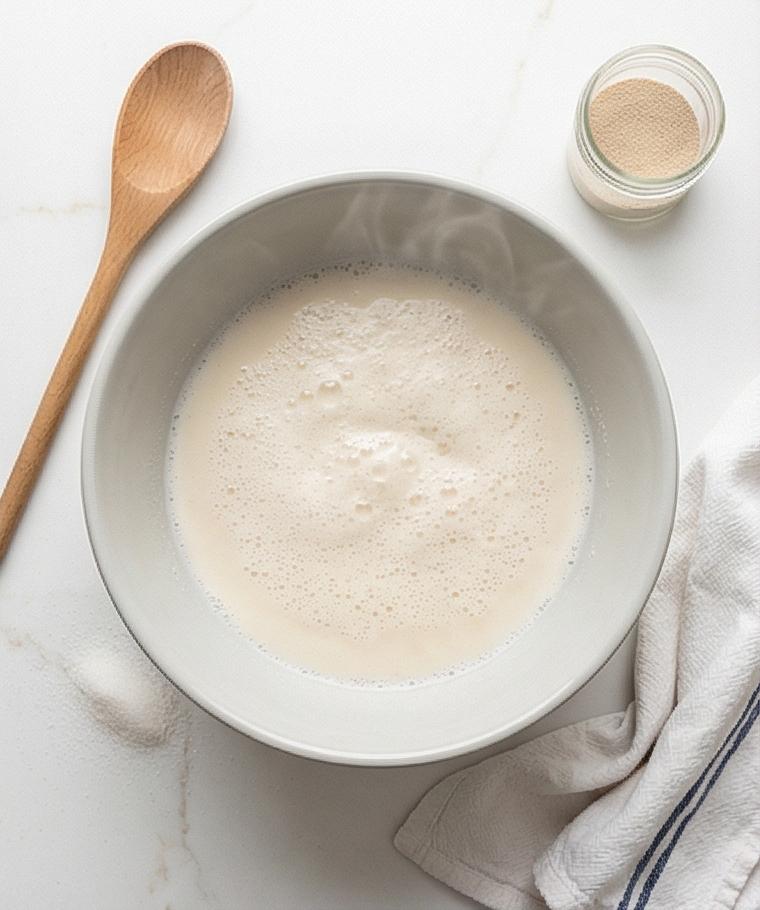
Gently warm the whole milk until it reaches a comfortably warm 105–110°F (40–43°C), feeling warm but not hot. Pour the warmed milk into a large glass or ceramic mixing bowl, sprinkle the active dry yeast over the surface, and add the granulated sugar; whisk briefly to combine and let it sit until foamy and aromatic, about 5–10 minutes. This foamy surface is the visual proof that the yeast is alive and ready to enrich the dough.
Step 2: Combine the wet ingredients and make the shaggy dough
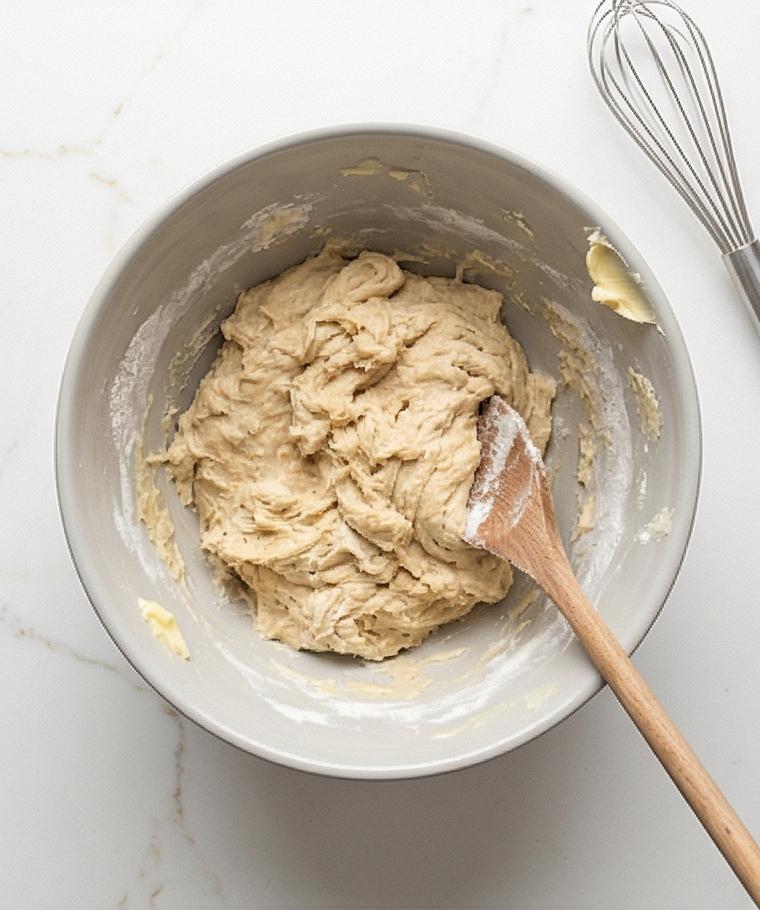
Lightly beat the room-temperature eggs and whisk them into the foamy yeast along with the melted, cooled butter. In a separate bowl whisk together most of the flour with the salt and optional nutmeg, then add the dry mixture to the wet and stir with a wooden spoon until a rough, shaggy dough forms. Gradually add small tablespoons of the remaining flour until the dough pulls away from the sides of the bowl but still feels soft and slightly tacky — this loose, uneven mass is the stage before formal kneading.
Step 3: Knead to a smooth, elastic ball
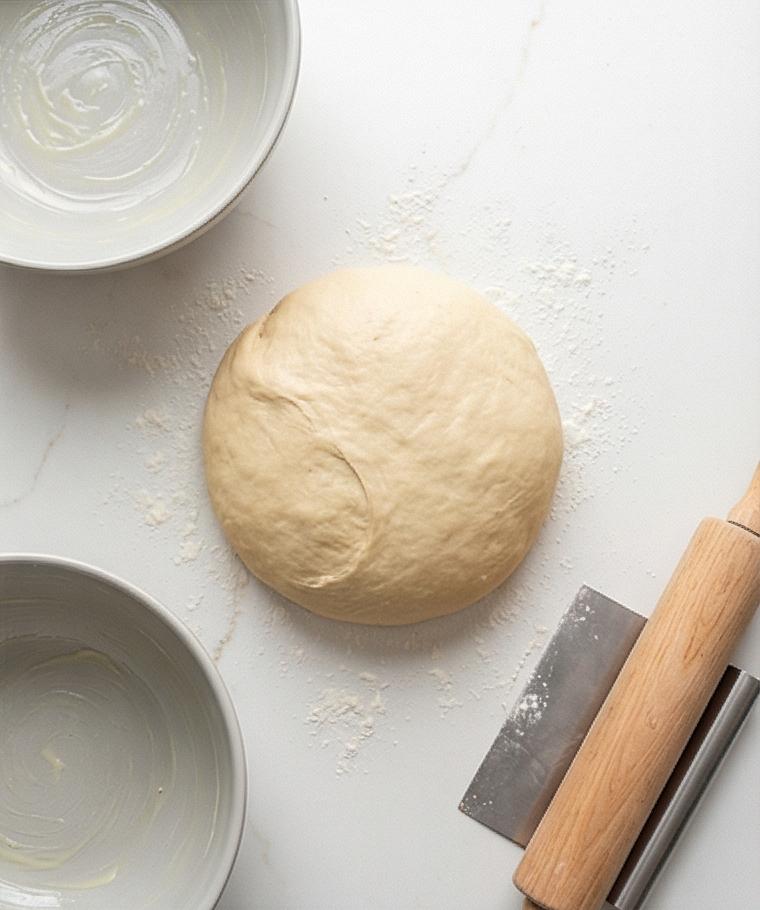
Turn the dough out onto a lightly floured surface and knead by hand (or with a stand mixer and hook) until the surface is smooth and springy and the dough can be stretched into a thin windowpane without tearing. Keep the focus on texture: from shaggy and sticky to taut, silky skin and a slightly glossy sheen. Shape it into a tight ball, showing elasticity and a soft bounce.
Step 4: First rise and gentle degassing
Lightly grease a clean bowl with softened butter or neutral oil, place the dough inside, turn it once to coat, then cover and let it rise in a warm, draft-free spot until doubled in size (about 60–90 minutes). Once doubled, gently punch down to deflate and let the dough rest five minutes to relax the gluten — this small pause makes the next rolling step smooth and even.
Step 5: Roll, butter, fill, and shape into a loaf
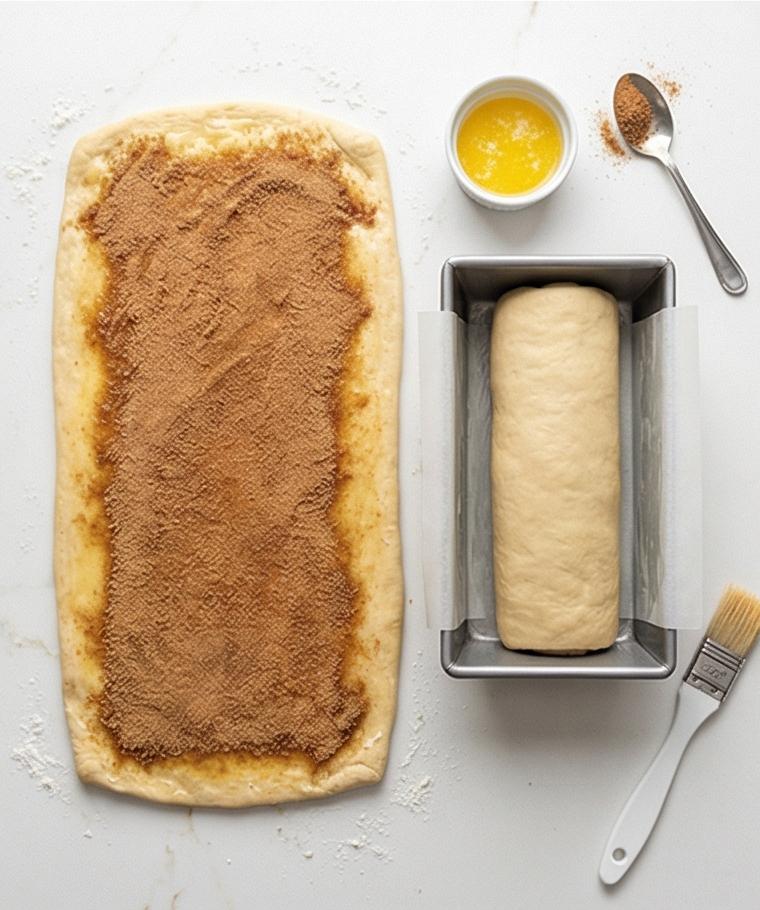
Roll the rested dough into an even rectangle roughly 8 x 18 inches, keeping thickness consistent and dusting lightly with flour as needed. Brush the entire surface with the melted butter, leaving a thin 1/2-inch border, then evenly sprinkle the cinnamon-brown-sugar filling and press it lightly so it adheres. Starting from the short side, roll tightly into a snug log, pinch the seam and ends to seal, then place the log seam-side-down into a greased 9 x 5-inch loaf pan (tucked to fit if needed). This lined, pan-ready log should read as a compact rectangular geometry ready for its final proof.
Step 6: Final proof, egg wash, bake, cool
Let the shaped loaf rise in the pan until it crowns about 1–1 1/2 inches above the rim, preheat the oven to 350°F (175°C) during the last part of the proof, then brush the top with an egg wash made of the remaining egg and a splash of milk. Bake until deeply golden and fully set (internal temp 190–195°F / 88–90°C), tenting with foil if browning too fast. Remove the pan to a wire rack, cool 15 minutes in-pan, then turn out upright to cool completely so the interior sets and the cinnamon swirl remains defined.
Step 7: Glaze, slice, and serve
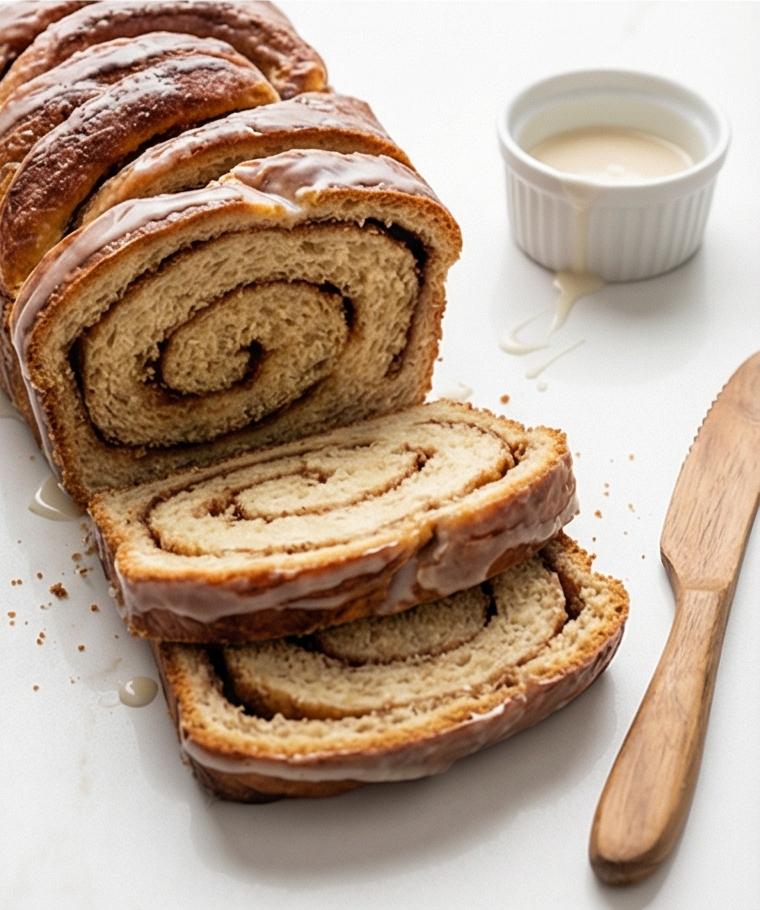
While the loaf cools to just-warm or room temperature, whisk a simple glaze of sifted powdered sugar, a splash of milk or cream, vanilla, and a pinch of salt to a thick-but-pourable consistency. Drizzle thin ribbons of glaze over the cooled loaf and let it set briefly before slicing into 1/2–3/4-inch slices. Present the slices plain or lightly toasted — the interior should show a clean, even spiral of cinnamon-sugar and a glossy ribbon of glaze.
Notes
- Warm the milk to 105-110°F to activate yeast without killing it.
- Use an instant-read thermometer to check internal doneness (190-195°F).
- For a richer flavor, use whole milk and fresh ground cinnamon.
- Freeze sliced portions in airtight bags for up to 3 months.
- If dough seems sticky, wait and resist adding too much flour; kneading will develop structure.